Kristīne Krūma – författare
Visar alla böcker från författaren Kristīne Krūma. Handla med fri frakt och snabb leverans.
5 produkter
5 produkter
Del 32 - Immigration and Asylum Law and Policy in Europe
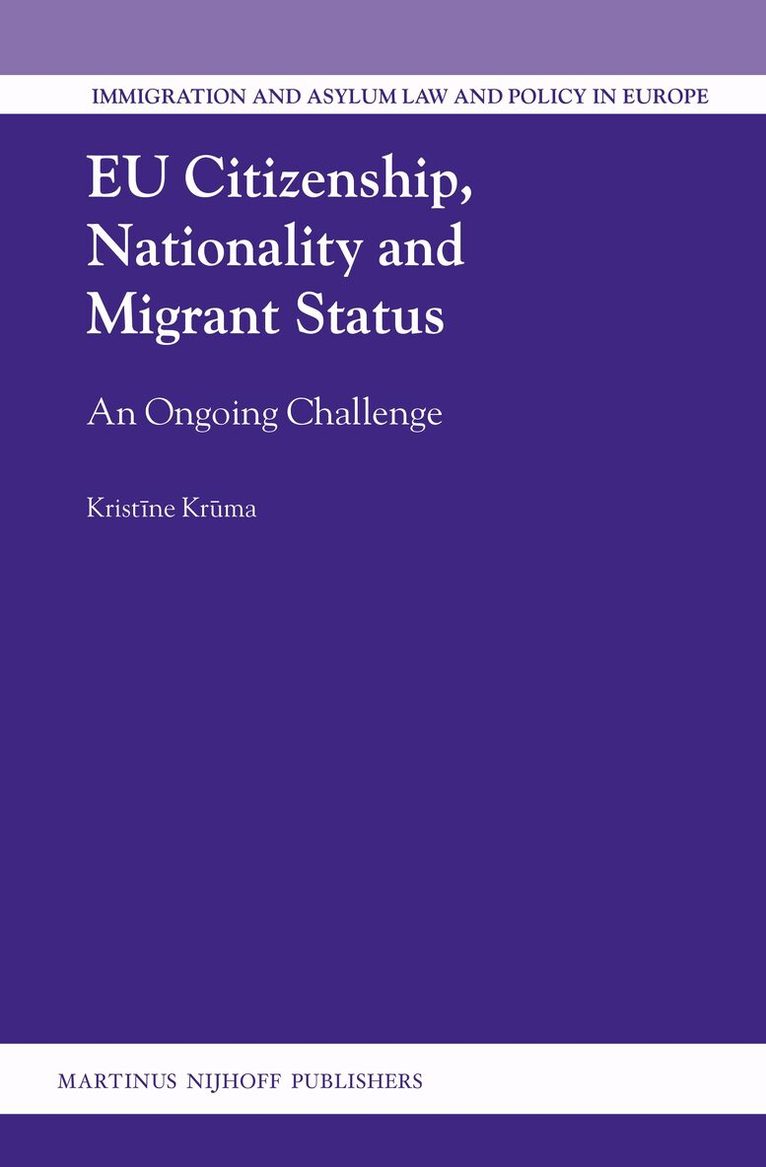
EU Citizenship, Nationality and Migrant Status
An Ongoing Challenge
Inbunden, Engelska, 2013
3 449 kr
Skickas inom 5-8 vardagar
In EU Citizenship, Nationality and Migrant Status: An Ongoing Challenge, Kristīne Krūma offers an account of the regulation of nationality at international, EU and national (Latvian) levels. Growing global migration and multiple individual loyalties lead to a fusion of national identities traditionally preserved by the EU Member States. Dismantling national borders and granting directly effective rights to EU citizens broadens our understanding about belonging only to the limited territory of a single State. The primary focus is the status of the EU citizenship, which has become a meaningful status capable of satisfying claims by citizens. The Latvian example shows that migrant status cannot be ignored because of the crucial role of migrants in the future construct of the EU.
Häftad, Engelska, 2016
1 225 kr
Skickas inom 3-6 vardagar
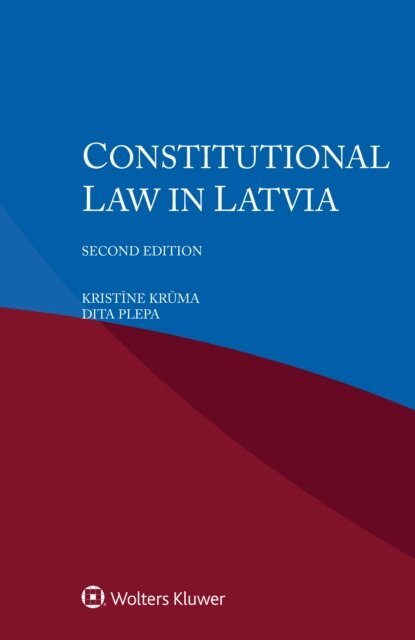
Häftad, Engelska, 2025
1 193 kr
Skickas inom 5-8 vardagar
E-bok
Engelska, 20251 009 kr
Läs direkt efter köp
Derived from the renowned multi-volume International Encyclopaedia of Laws, this very useful analysis of constitutional law in Latvia provides essential information on the country's sources of constitutional law, its form of government, and its administrative structure. Lawyers who handle transnational matters will appreciate the clarifications of particular terminology and its application. Throughout the book, the treatment emphasizes the specific points at which constitutional law affects the interpretation of legal rules and procedure.Thorough coverage by a local expert fully describes the political system, the historical background, the role of treaties, legislation, jurisprudence, and administrative regulations. The discussion of the form and structure of government outlines its legal status, the jurisdiction and workings of the central state organs, the subdivisions of the state, its decentralized authorities, and concepts of citizenship. Special issues include the legal position of aliens, foreign relations, taxing and spending powers, emergency laws, the power of the military, and the constitutional relationship between church and state. Details are presented in such a way that readers who are unfamiliar with specific terms and concepts in varying contexts will fully grasp their meaning and significance.Its succinct yet scholarly nature, as well as the practical quality of the information it provides, make this book a valuable time-saving tool for both practising and academic jurists. Lawyers representing parties with interests in Latvia will welcome this guide, and academics and researchers will appreciate its value in the study of comparative constitutional law.
E-bok
PDF, Engelska, 2025974 kr
Läs direkt efter köp
Derived from the renowned multi-volume International Encyclopaedia of Laws, this very useful analysis of constitutional law in Latvia provides essential information on the country's sources of constitutional law, its form of government, and its administrative structure. Lawyers who handle transnational matters will appreciate the clarifications of particular terminology and its application. Throughout the book, the treatment emphasizes the specific points at which constitutional law affects the interpretation of legal rules and procedure.Thorough coverage by a local expert fully describes the political system, the historical background, the role of treaties, legislation, jurisprudence, and administrative regulations. The discussion of the form and structure of government outlines its legal status, the jurisdiction and workings of the central state organs, the subdivisions of the state, its decentralized authorities, and concepts of citizenship. Special issues include the legal position of aliens, foreign relations, taxing and spending powers, emergency laws, the power of the military, and the constitutional relationship between church and state. Details are presented in such a way that readers who are unfamiliar with specific terms and concepts in varying contexts will fully grasp their meaning and significance.Its succinct yet scholarly nature, as well as the practical quality of the information it provides, make this book a valuable time-saving tool for both practising and academic jurists. Lawyers representing parties with interests in Latvia will welcome this guide, and academics and researchers will appreciate its value in the study of comparative constitutional law.