Kristof D'hulster – författare
Visar alla böcker från författaren Kristof D'hulster. Handla med fri frakt och snabb leverans.
2 produkter
2 produkter
Inbunden, Engelska, 2025
1 791 kr
Skickas inom 7-10 vardagar
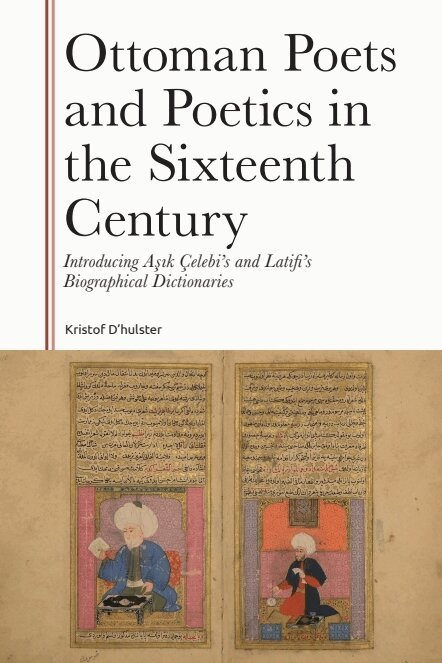
This book offers the first-ever partial English translation and commentary of what are arguably the two most important Ottoman biographical dictionaries of poets: the tezkires of As??k C?elebi and Latifi. While tezkires are mostly culled for their factual data, this book focuses on the non-entry materials, especially the prefaces. These offer intimate glimpses into the authors' lives, charting their professional ambitions, frustrations and feuds, set against the backdrop of the sixteenth-century Ottoman literary world a world in which patrimonial relations made and broke careers, poetry was appraised, attacked, monetised and stolen, and the ambitions of aspiring poets were fuelled and foiled.The two tezkires reflect this milieu, and their authors were personally acquainted, exchanging thoughts over their work and, finally, falling out over an accusation of plagiarism. The translations are supplemented with a reflection on the nature and translatability of Ottoman high prose, a discussion of the tezkire genre and a detailed presentation of the two authors and their dictionaries. Through a novel study of these interconnected works, this book provides a panorama of Ottoman literary history, as well as insights into the authors' personal struggles.
E-bok
PDF, Engelska, 2021700 kr
Läs direkt efter köp
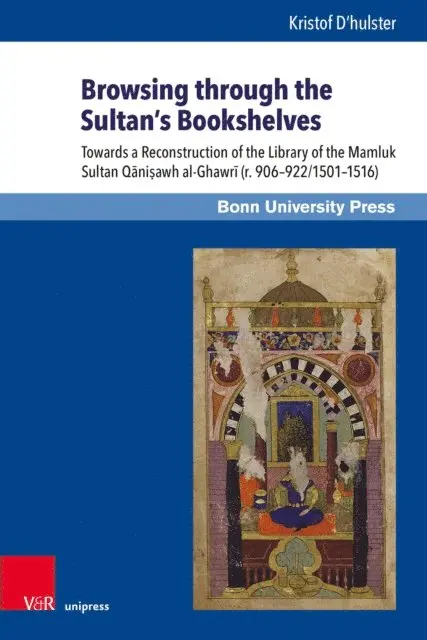
Starting from 135 manuscripts that were once part of the library of the late Mamluk sultan Qāniṣawh al-Ghawrī (r. 1501–1516), this book challenges the dominant narrative of a "post-court era", in which courts were increasingly marginalized in the field of adab. Rather than being the literary barren field that much of the Arabic and Arabic-centred sources, produced extra muros, would have us believe, it re-cognizes Qāniṣawh''s court as a rich and vibrant literary site and a cosmopolitan hub in a burgeoning Turkic literary ecumene. It also re-centres the ruler himself within this court. No longer the passive object of panegyric or the source of patronage alone, Qāniṣawh has an authorial voice in his own right, one that is idiosyncratic yet in conversation with other voices. As such, while this book is first and foremost a book about books, it is one that consciously aspires to be more than that: a book about a library, and, ultimately, a book about the man behind the library, Qāniṣawh al-Ghawrī.