
Kula Misra – författare
Visar alla böcker från författaren . Handla med fri frakt och snabb leverans.
3 produkter
3 produkter
2 556 kr
Skickas inom 10-15 vardagar
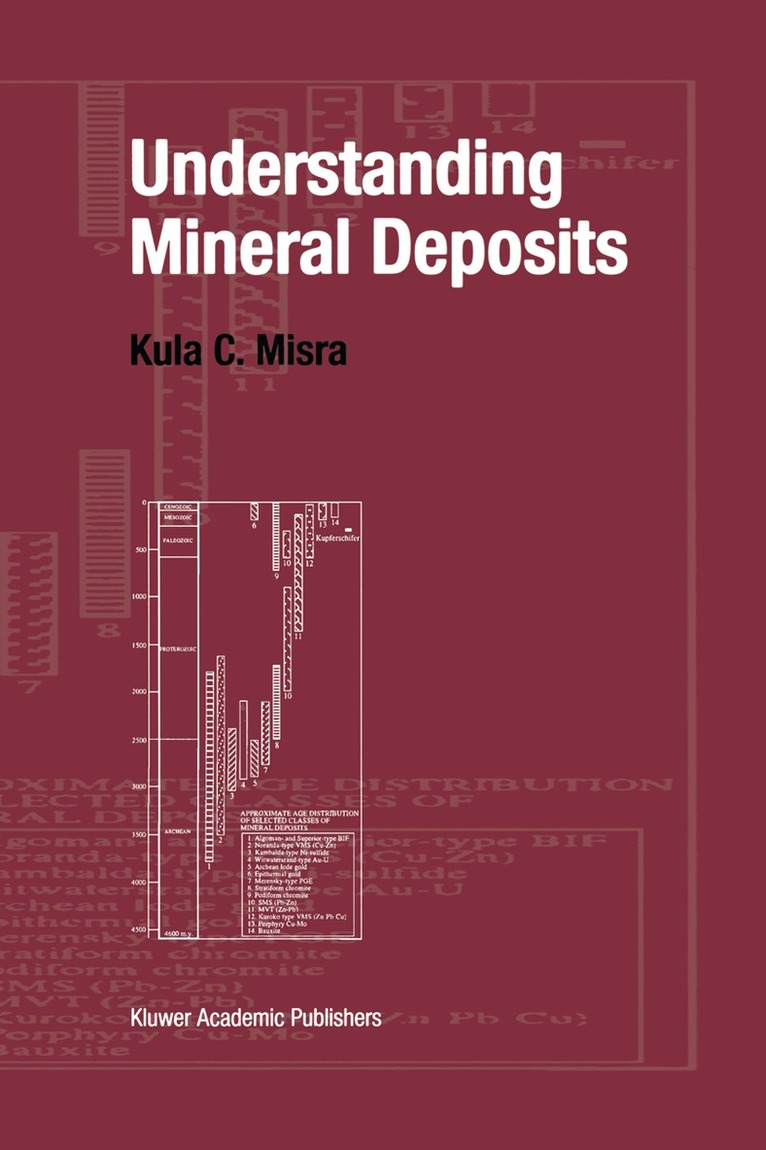
Mineral deposits have supplied useful or valuable material for human consumption long before they became objects of scientific curiosity or commercial exploitation. In fact, the earliest human interest in rocks was probably because of the easily accessible, useful (e. g. , red pigment in the form of earthy hematite) or valuable (e. g. , native gold and gemstones) materials they contained at places. In modem times, the study of mineral deposits has evolved into an applied science employing detailed field observations, sophisticated laboratory techniques for additional information, and computer modeling to build complex hypotheses. Understanding concepts that would someday help geologists to find new mineral deposits or exploit the known ones more efficiently have always been, and will continue to be, at the core of any course on mineral deposits, but it is a fascinating subject in its own right, even for students who do not intend to be professional economic geologists. I believe that a course on mineral deposits should be designed as a "capstone course" that illustrates a comprehensive application of concepts from many other disciplines in geology (mineralogy, stratigraphy and sedimentation, structure and tectonics, petrology, geochemistry, paleontology, geomorphology, etc. ). This book is intended as a text for such an introductory course in economic geology, primarily for senior undergraduate and graduate students in colleges and universities. It should also serve as a useful information resource for professional economic geologists.
Häftad, Engelska, 2012
2 384 kr
Skickas inom 10-15 vardagar
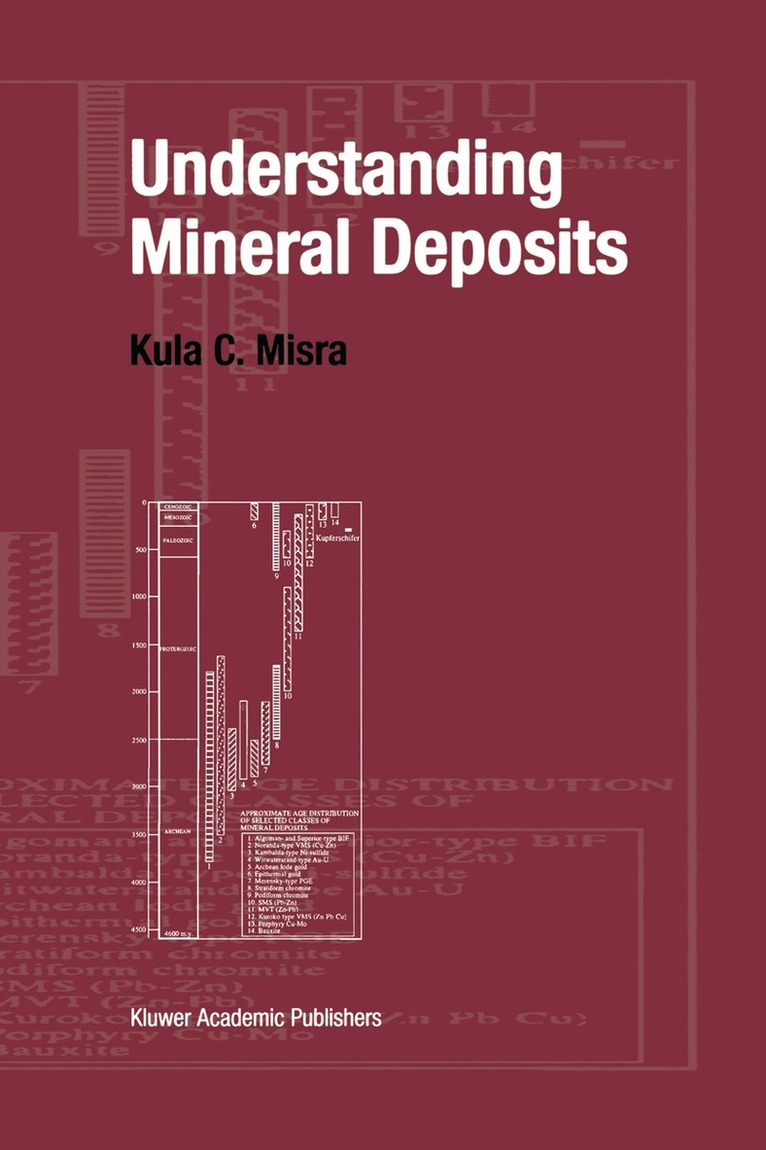
Mineral deposits have supplied useful or valuable material for human consumption long before they became objects of scientific curiosity or commercial exploitation. In fact, the earliest human interest in rocks was probably because of the easily accessible, useful (e. g. , red pigment in the form of earthy hematite) or valuable (e. g. , native gold and gemstones) materials they contained at places. In modem times, the study of mineral deposits has evolved into an applied science employing detailed field observations, sophisticated laboratory techniques for additional information, and computer modeling to build complex hypotheses. Understanding concepts that would someday help geologists to find new mineral deposits or exploit the known ones more efficiently have always been, and will continue to be, at the core of any course on mineral deposits, but it is a fascinating subject in its own right, even for students who do not intend to be professional economic geologists. I believe that a course on mineral deposits should be designed as a "capstone course" that illustrates a comprehensive application of concepts from many other disciplines in geology (mineralogy, stratigraphy and sedimentation, structure and tectonics, petrology, geochemistry, paleontology, geomorphology, etc. ). This book is intended as a text for such an introductory course in economic geology, primarily for senior undergraduate and graduate students in colleges and universities. It should also serve as a useful information resource for professional economic geologists.
E-bok
PDF, Engelska, 20122 765 kr
Läs direkt efter köp
Mineral deposits have supplied useful or valuable material for human consumption long before they became objects of scientific curiosity or commercial exploitation. In fact, the earliest human interest in rocks was probably because of the easily accessible, useful (e. g. , red pigment in the form of earthy hematite) or valuable (e. g. , native gold and gemstones) materials they contained at places. In modem times, the study of mineral deposits has evolved into an applied science employing detailed field observations, sophisticated laboratory techniques for additional information, and computer modeling to build complex hypotheses. Understanding concepts that would someday help geologists to find new mineral deposits or exploit the known ones more efficiently have always been, and will continue to be, at the core of any course on mineral deposits, but it is a fascinating subject in its own right, even for students who do not intend to be professional economic geologists. I believe that a course on mineral deposits should be designed as a "capstone course" that illustrates a comprehensive application of concepts from many other disciplines in geology (mineralogy, stratigraphy and sedimentation, structure and tectonics, petrology, geochemistry, paleontology, geomorphology, etc. ). This book is intended as a text for such an introductory course in economic geology, primarily for senior undergraduate and graduate students in colleges and universities. It should also serve as a useful information resource for professional economic geologists.