Kun-Shan Chen - Böcker
Visar alla böcker från författaren Kun-Shan Chen. Handla med fri frakt och snabb leverans.
8 produkter
8 produkter
711 kr
Skickas inom 10-15 vardagar
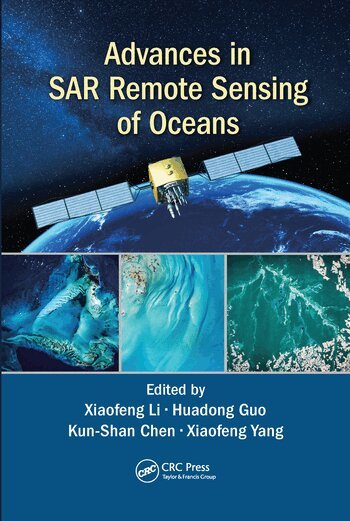
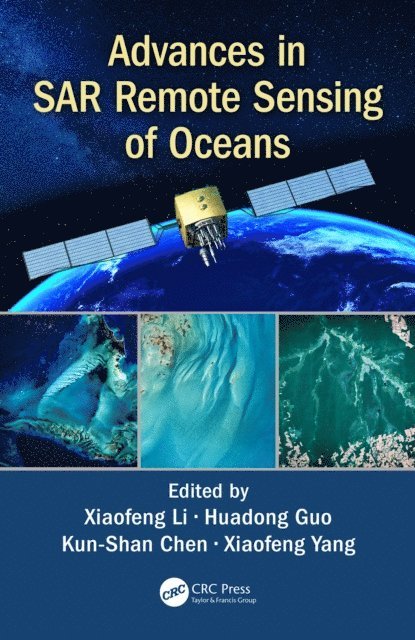
The oceans cover approximately 71% of Earth’s surface, 90% of the biosphere and contains 97% of Earth’s water. Since the first launch of SEASAT satellite in 1978, an increasing number of SAR satellites have or will become available, such as the European Space Agency’s ERS-1/-2, ENVISAT, and Sentinel-1 series; the Canadian RADARSAT-1/-2 and the upcoming RADARSAT Constellation Mission series satellites; the Italian COSMO-SkyMed satellites, the German TERRASAR-X and TANDEM-X, and the Chinese GAOFEN-3 SAR, among others. Recently, European Space Agency has launched a new generation of SAR satellites, Sentinel-1A in 2014 and Sentinel-1B in 2016. These SAR satellites provide researchers with free and open SAR images necessary to carry out their research on the global oceans. The scope of Advances in SAR Remote Sensing of Oceans is to demonstrate the types of information that can be obtained from SAR images of the oceans, and the cutting-edge methods needed for analysing SAR images. Written by leading experts in the field, and divided into four sections, the book presents the basic principles of radar backscattering from the ocean surface; introduces the recent progresses in SAR remote sensing of dynamic coastal environment and management; discusses the state-of-the-art methods to monitor parameters or phenomena related to the dynamic ocean environment; and deals specifically with new techniques and findings of marine atmospheric boundary layer observations.Advances in SAR Remote Sensing of Oceans is a very comprehensive and up-to-date reference intended for use by graduate students, researchers, practitioners, and R&D engineers working in the vibrant field of oceans, interested to understand how SAR remote sensing can support oceanography research and applications.
Radar Scattering and Imaging of Rough Surfaces
Modeling and Applications with MATLAB®
Häftad, Engelska, 2023
751 kr
Skickas inom 10-15 vardagar
Radar scattering and imaging of rough surfaces is an active interdisciplinary area of research with many practical applications in fields such as mineral and resource exploration, ocean and physical oceanography, military and national defense, planetary exploration, city planning and land use, environmental science, and many more. By focusing on the most advanced analytical and numerical modeling and describing both forward and inverse modeling, Radar Scattering and Imaging of Rough Surfaces: Modeling and Applications with MATLAB® connects the scattering process to imaging techniques by vivid examples through numerical and experimental demonstrations and provides computer codes and practical uses. This book is unique in its simultaneous treatment of radar scattering and imaging.Key Features Bridges physical modeling with simulation for resolving radar imaging problems (the first comprehensive work to do so) Provides excellent basic and advanced information for microwave remote-sensing professionals in various fields of science and engineering Covers most advanced analytical and numerical modeling for both backscattering and bistatic scattering Includes MATLAB® codes useful not only for academics but also for radar engineers and scientists to develop tools applicable in different areas of earth studiesCovering both the theoretical and the practical, Radar Scattering and Imaging of Rough Surfaces: Modeling and Applications with MATLAB® is an invaluable resource for professionals and students using remote sensing to study and explain the Earth and its processes. University and research institutes, electrical and radar engineers, remote-sensing image users, application software developers, students, and academics alike will benefit from this book.The author, Kun-Shan Chen, is an internationally known and respected engineer and scientist and an expert in the field of electromagnetic modeling.
765 kr
Skickas inom 10-15 vardagar
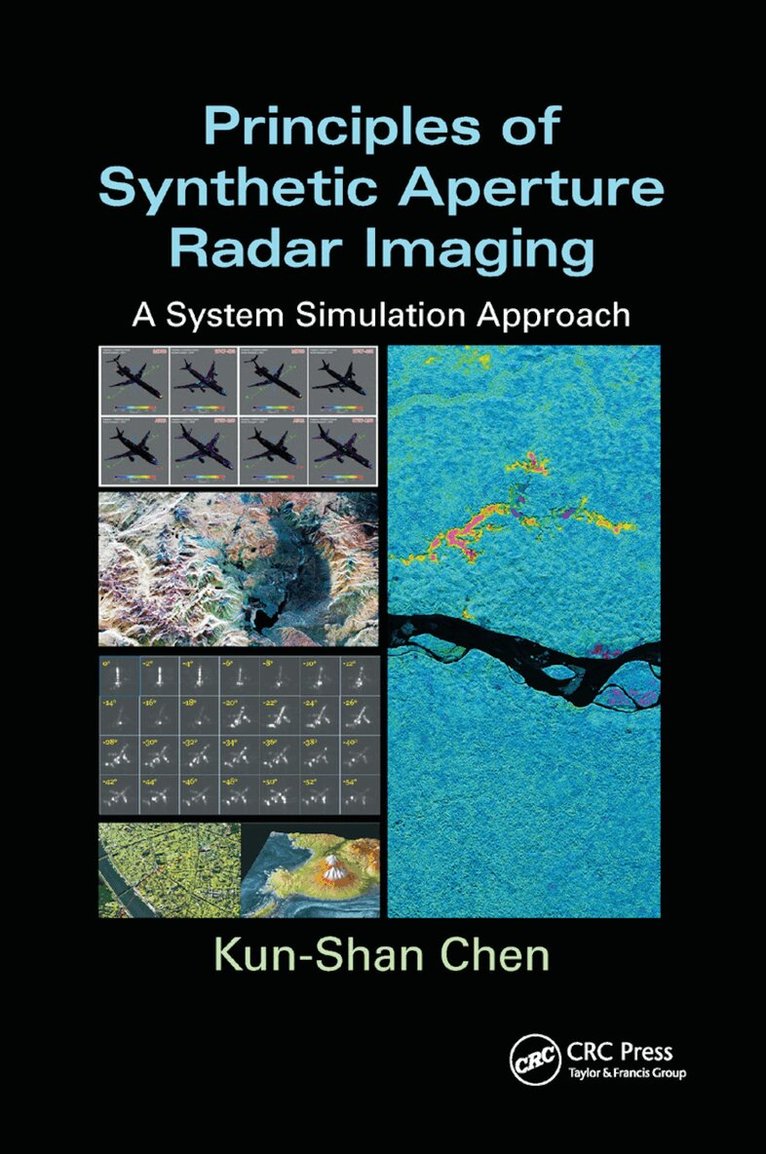
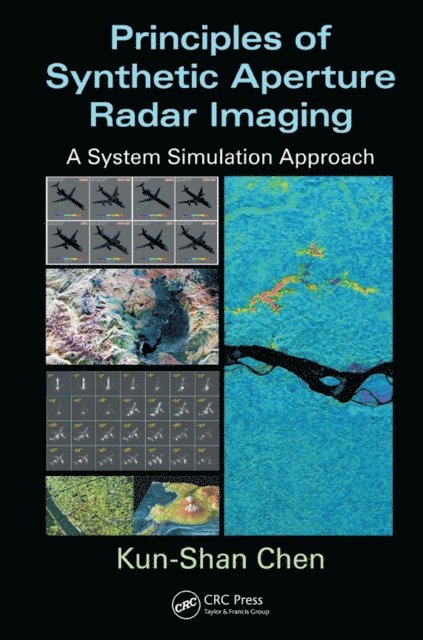
Principles of Synthetic Aperture Radar Imaging: A System Simulation Approach demonstrates the use of image simulation for SAR. It covers the various applications of SAR (including feature extraction, target classification, and change detection), provides a complete understanding of SAR principles, and illustrates the complete chain of a SAR operation. The book places special emphasis on a ground-based SAR, but also explains space and air-borne systems. It contains chapters on signal speckle, radar-signal models, sensor-trajectory models, SAR-image focusing, platform-motion compensation, and microwave-scattering from random media. While discussing SAR image focusing and motion compensation, it presents processing algorithms and applications that feature extraction, target classification, and change detection. It also provides samples of simulation on various scenarios, and includes simulation flowcharts and results that are detailed throughout the book. Introducing SAR imaging from a systems point of view, the author: Considers the recent development of MIMO SAR technologyIncludes selected GPU implementationProvides a numerical analysis of system parameters (including platforms, sensor, and image focusing, and their influence)Explores wave-target interactions, signal transmission and reception, image formation, motion compensationCovers all platform motion compensation and error analysis, and their impact on final image radiometric and geometric qualityDescribes a ground-based SFMCW system Principles of Synthetic Aperture Radar Imaging: A System Simulation Approach is dedicated to the use, study, and development of SAR systems. The book focuses on image formation or focusing, treats platform motion and image focusing, and is suitable for students, radar engineers, and micr
2 713 kr
Skickas inom 10-15 vardagar
The oceans cover approximately 71% of Earth’s surface, 90% of the biosphere and contains 97% of Earth’s water. Since the first launch of SEASAT satellite in 1978, an increasing number of SAR satellites have or will become available, such as the European Space Agency’s ERS-1/-2, ENVISAT, and Sentinel-1 series; the Canadian RADARSAT-1/-2 and the upcoming RADARSAT Constellation Mission series satellites; the Italian COSMO-SkyMed satellites, the German TERRASAR-X and TANDEM-X, and the Chinese GAOFEN-3 SAR, among others. Recently, European Space Agency has launched a new generation of SAR satellites, Sentinel-1A in 2014 and Sentinel-1B in 2016. These SAR satellites provide researchers with free and open SAR images necessary to carry out their research on the global oceans. The scope of Advances in SAR Remote Sensing of Oceans is to demonstrate the types of information that can be obtained from SAR images of the oceans, and the cutting-edge methods needed for analysing SAR images. Written by leading experts in the field, and divided into four sections, the book presents the basic principles of radar backscattering from the ocean surface; introduces the recent progresses in SAR remote sensing of dynamic coastal environment and management; discusses the state-of-the-art methods to monitor parameters or phenomena related to the dynamic ocean environment; and deals specifically with new techniques and findings of marine atmospheric boundary layer observations.Advances in SAR Remote Sensing of Oceans is a very comprehensive and up-to-date reference intended for use by graduate students, researchers, practitioners, and R&D engineers working in the vibrant field of oceans, interested to understand how SAR remote sensing can support oceanography research and applications.
2 240 kr
Skickas inom 10-15 vardagar
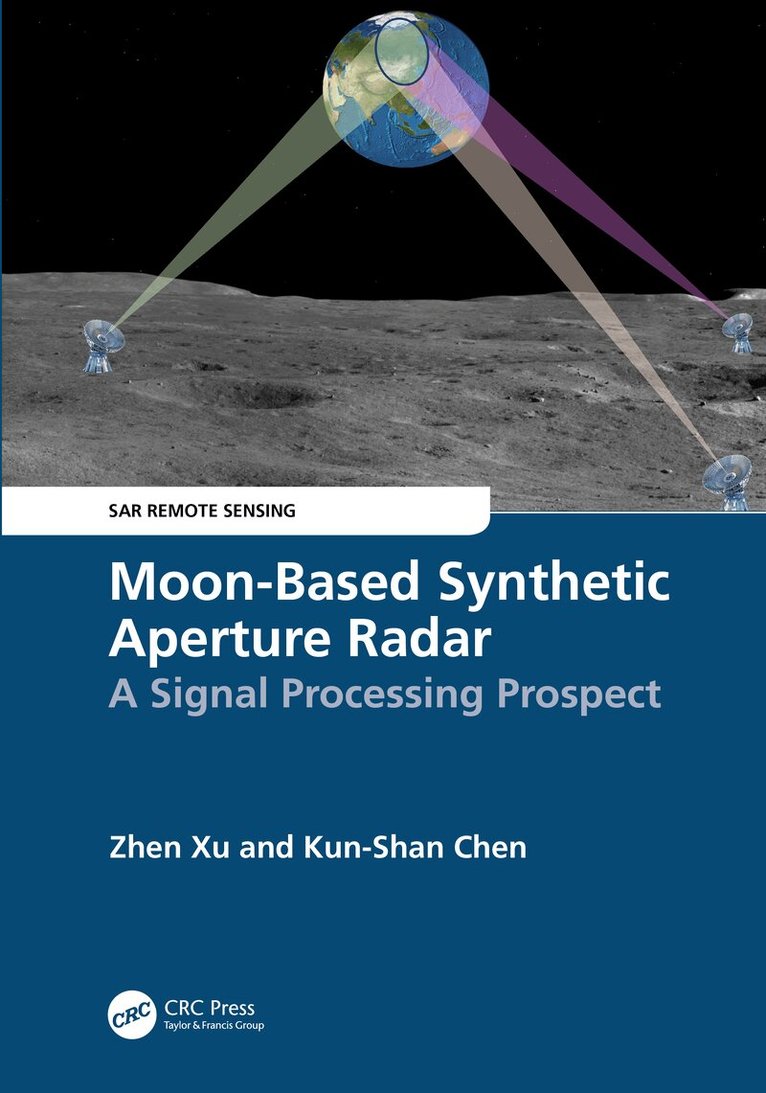
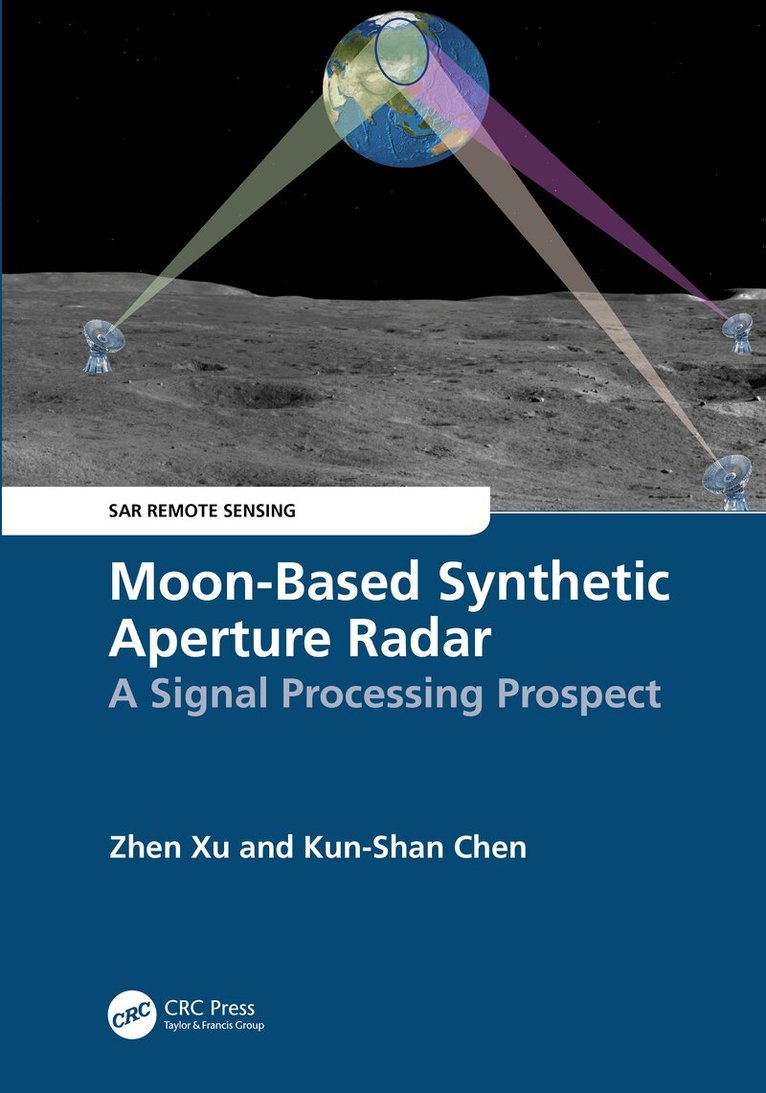
Lunar explorations have received increasing attention in recent years with tremendous application values, including using the Moon as a remote sensing platform for Earth observation. As an active sensor, the Synthetic Aperture Radar (SAR) can detect changes in the atmosphere, terrain, and ocean. Moon-based SAR, complementary to the spaceborne SAR systems, expands our capabilities of watching and understanding the Earth. This book explains the Moon-Earth observation geometry, generic parameters, image focusing, and outlook using the Moon-based SAR. Written as a SAR imaging of Earth on the lunar-based platform, it makes it an essential reference to those interested in planetary and Earth sciences.FEATURESUses the Moon as a remote sensing platform for Earth observationExplains how to obtain a high spatial resolution with a short revisit time using the Moon-based SARCovers the observation geometry, range and signal models, two-dimensional signal spectrum, and focusing algorithms for the Moon-based SARPresents a detailed analysis of sources of phase errors in the Moon-based SAR signalIncludes global case studies and introduces conceptual ideas for further researchThis book is intended for senior graduate students, professional researchers, and engineers studying and working in the fields of lunar exploration and remote sensing applications, especially when dealing with high-orbit SAR studies.
819 kr
Skickas inom 10-15 vardagar
Lunar explorations have received increasing attention in recent years with tremendous application values, including using the Moon as a remote sensing platform for Earth observation. As an active sensor, the Synthetic Aperture Radar (SAR) can detect changes in the atmosphere, terrain, and ocean. Moon-based SAR, complementary to the spaceborne SAR systems, expands our capabilities of watching and understanding the Earth. This book explains the Moon-Earth observation geometry, generic parameters, image focusing, and outlook using the Moon-based SAR. Written as a SAR imaging of Earth on the lunar-based platform, it makes it an essential reference to those interested in planetary and Earth sciences.FEATURESUses the Moon as a remote sensing platform for Earth observationExplains how to obtain a high spatial resolution with a short revisit time using the Moon-based SARCovers the observation geometry, range and signal models, two-dimensional signal spectrum, and focusing algorithms for the Moon-based SARPresents a detailed analysis of sources of phase errors in the Moon-based SAR signalIncludes global case studies and introduces conceptual ideas for further researchThis book is intended for senior graduate students, professional researchers, and engineers studying and working in the fields of lunar exploration and remote sensing applications, especially when dealing with high-orbit SAR studies.
Radar Scattering and Imaging of Rough Surfaces
Modeling and Applications with MATLAB®
Inbunden, Engelska, 2020
2 037 kr
Skickas inom 10-15 vardagar
Radar scattering and imaging of rough surfaces is an active interdisciplinary area of research with many practical applications in fields such as mineral and resource exploration, ocean and physical oceanography, military and national defense, planetary exploration, city planning and land use, environmental science, and many more. By focusing on the most advanced analytical and numerical modeling and describing both forward and inverse modeling, Radar Scattering and Imaging of Rough Surfaces: Modeling and Applications with MATLAB® connects the scattering process to imaging techniques by vivid examples through numerical and experimental demonstrations and provides computer codes and practical uses. This book is unique in its simultaneous treatment of radar scattering and imaging.Key Features Bridges physical modeling with simulation for resolving radar imaging problems (the first comprehensive work to do so) Provides excellent basic and advanced information for microwave remote-sensing professionals in various fields of science and engineering Covers most advanced analytical and numerical modeling for both backscattering and bistatic scattering Includes MATLAB® codes useful not only for academics but also for radar engineers and scientists to develop tools applicable in different areas of earth studiesCovering both the theoretical and the practical, Radar Scattering and Imaging of Rough Surfaces: Modeling and Applications with MATLAB® is an invaluable resource for professionals and students using remote sensing to study and explain the Earth and its processes. University and research institutes, electrical and radar engineers, remote-sensing image users, application software developers, students, and academics alike will benefit from this book.The author, Kun-Shan Chen, is an internationally known and respected engineer and scientist and an expert in the field of electromagnetic modeling.
2 446 kr
Skickas inom 10-15 vardagar
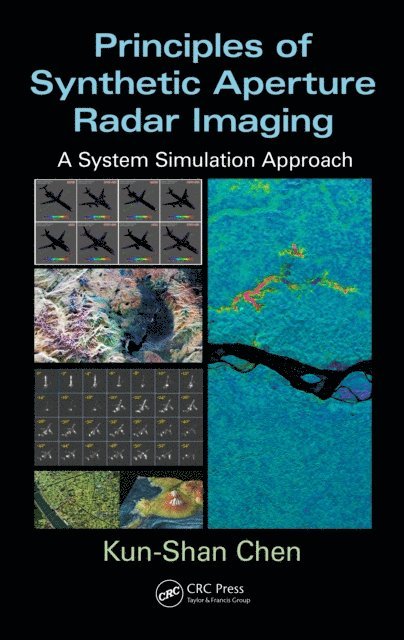
Principles of Synthetic Aperture Radar Imaging: A System Simulation Approach demonstrates the use of image simulation for SAR. It covers the various applications of SAR (including feature extraction, target classification, and change detection), provides a complete understanding of SAR principles, and illustrates the complete chain of a SAR operation. The book places special emphasis on a ground-based SAR, but also explains space and air-borne systems. It contains chapters on signal speckle, radar-signal models, sensor-trajectory models, SAR-image focusing, platform-motion compensation, and microwave-scattering from random media. While discussing SAR image focusing and motion compensation, it presents processing algorithms and applications that feature extraction, target classification, and change detection. It also provides samples of simulation on various scenarios, and includes simulation flowcharts and results that are detailed throughout the book. Introducing SAR imaging from a systems point of view, the author: Considers the recent development of MIMO SAR technologyIncludes selected GPU implementationProvides a numerical analysis of system parameters (including platforms, sensor, and image focusing, and their influence)Explores wave-target interactions, signal transmission and reception, image formation, motion compensationCovers all platform motion compensation and error analysis, and their impact on final image radiometric and geometric qualityDescribes a ground-based SFMCW systemPrinciples of Synthetic Aperture Radar Imaging: A System Simulation Approach is dedicated to the use, study, and development of SAR systems. The book focuses on image formation or focusing, treats platform motion and image focusing, and is suitable for students, radar engineers, and microwave remote sensing researchers.