L. Ann Jervis – författare
Visar alla böcker från författaren L. Ann Jervis. Handla med fri frakt och snabb leverans.
7 produkter
7 produkter
Häftad, Engelska, 2007
238 kr
Skickas inom 5-8 vardagar
E-bok
PDF, Engelska, 1991266 kr
Läs direkt efter köp
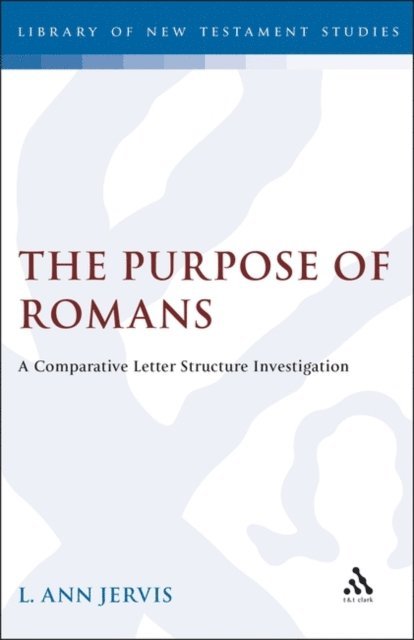
This book analyses the structure and content of the four epistolary sections of a Pauline letter most directly related to the question of purpose: the opening formula, the thanksgiving, the apostolic ''Parousia'' and the conclusion. Jervis proposes that while the concerns of the letter involve Paul''s missionary plans and his desire to establish himself as the Roman Christians'' leader in the faith, the primary function of Romans is for Paul to make available to Christians at Rome the good news in all of its power. Romans is written to fulfil Paul''s mandate to establish and nurture his Roman readers in a life of faith marked by obedience and holiness to preach the gospel to them.
E-bok
PDF, Engelska, 19941 051 kr
Läs direkt efter köp
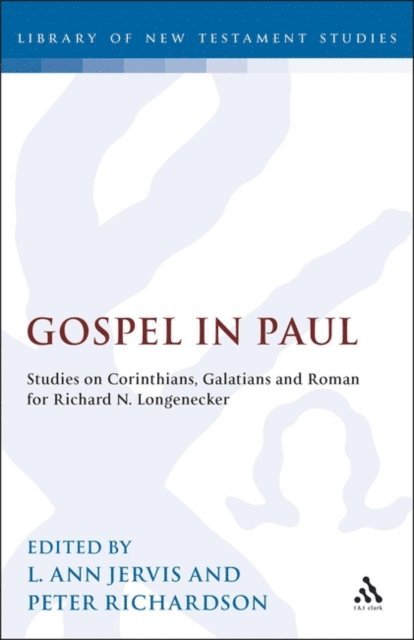
This Festschrift in honour of Richard N. Longenecker (author of Paul, Apostle of Liberty, The Christology of Early Jewish Christianity, The Ministry and Message of Paul, Biblical Exegesis in the Apostolic Period, ''The Acts of the Apostles'' in The Expositor''s Bible Commentary, New Testament Social Ethics for Today, and Galatians, Word Biblical Commentary) is centered on the theme of ''gospel'' in Paul. Notable Pauline scholars discuss ''gospel'' from five different perspectives: the historical, the theological, the hermeneutical, the rhetorical and the epistolary; each author discusses one of these five perspectives within one part of Paul''s correspondence: (1) Gospel in Romans (2) Gospel in Galatians and (3) Gospel in the Corinthian letters. The volume promotes discussion both on methods of reading Paul''s letters and on important historical, theological and hermenutical issues.
Häftad, Engelska, 2012
320 kr
Skickas inom 3-6 vardagar
E-bok
Engelska, 2011249 kr
Läs direkt efter köp
The Understanding the Bible Commentary Series helps readers navigate the strange and sometimes intimidating literary terrain of the Bible. These accessible volumes break down the barriers between the ancient and modern worlds so that the power and meaning of the biblical texts become transparent to contemporary readers. The contributors tackle the task of interpretation using the full range of critical methodologies and practices, yet they do so as people of faith who hold the text in the highest regard. Pastors, teachers, and lay people alike will cherish the truth found in this commentary series.
E-bok
Engelska, 2023323 kr
Läs direkt efter köp
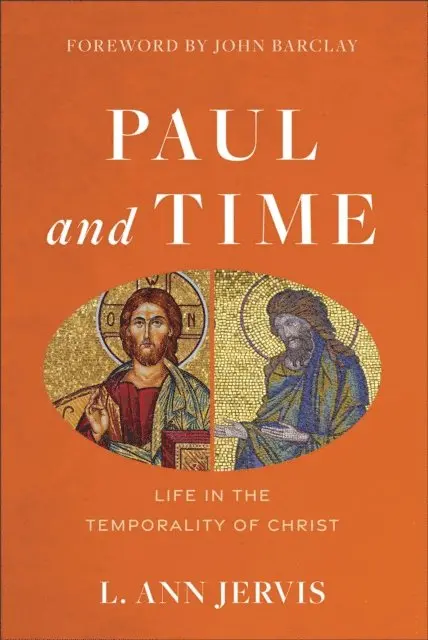
How did Paul understand time? Standard interpretations are that Paul modified his inherited Jewish apocalyptic sequential two-age temporality. Paul solved the conundrum of Christ''s resurrection occurring without the resurrection of the righteous by asserting that the ages are not sequential but rather that they overlap. Believers live in already-not yet temporality.In this groundbreaking book, Ann Jervis instead proposes that Paul thought not in terms of two ages but in terms of life in this age or life in Christ. Humans apart from Christ live in this age, whereas believers live entirely in the temporality of Christ.Christ''s temporality, like God''s, is time in which change occurs--at least between Christ and God and creation. Their temporality is tensed, but the tenses are nonsequential. The past is in their present, as is the future. However, this is not a changeless now but a now in which change occurs (though not in the way that human chronological time perceives change). Those joined to Christ live Christ''s temporality while also living chronological time.In clear writing, Jervis engages both philosophical and traditional biblical understandings of time. Her inquiry is motivated and informed by the long-standing recognition of the centrality of union with Christ for Paul. Jervis points out that union with Christ has significant temporal implications.Living Christ''s time transforms believers'' suffering, sinning, and physical dying. While in the present evil age these are instruments purposed for destruction, in Christ they are transformed in service of God''s life. Living Christ''s time also changes the significance of the eschaton. It is less important to those in Christ than it is for creation, for those joined to the One over whom death has no dominion are already released from bondage to corruption.Scholars and students will profit from this lively contribution to Pauline studies, which offers big-picture proposals based on detailed work with Paul''s letters. The book includes a foreword by John Barclay.
Inbunden, Engelska, 2024
303 kr
Skickas inom 5-8 vardagar
How did Paul understand time? Standard interpretations are that Paul modified his inherited Jewish apocalyptic sequential two-age temporality. Paul solved the conundrum of Christ's resurrection occurring without the resurrection of the righteous by asserting that the ages are not sequential but rather that they overlap. Believers live in already-not yet temporality.In this groundbreaking book, Ann Jervis instead proposes that Paul thought not in terms of two ages but in terms of life in this age or life in Christ. Humans apart from Christ live in this age, whereas believers live entirely in the temporality of Christ.Christ's temporality, like God's, is time in which change occurs--at least between Christ and God and creation. Their temporality is tensed, but the tenses are nonsequential. The past is in their present, as is the future. However, this is not a changeless now but a now in which change occurs (though not in the way that human chronological time perceives change). Those joined to Christ live Christ's temporality while also living chronological time.In clear writing, Jervis engages both philosophical and traditional biblical understandings of time. Her inquiry is motivated and informed by the long-standing recognition of the centrality of union with Christ for Paul. Jervis points out that union with Christ has significant temporal implications.Living Christ's time transforms believers' suffering, sinning, and physical dying. While in the present evil age these are instruments purposed for destruction, in Christ they are transformed in service of God's life. Living Christ's time also changes the significance of the eschaton. It is less important to those in Christ than it is for creation, for those joined to the One over whom death has no dominion are already released from bondage to corruption.Scholars and students will profit from this lively contribution to Pauline studies, which offers big-picture proposals based on detailed work with Paul's letters. The book includes a foreword by John Barclay.