L. Phlips – författare
Visar alla böcker från författaren L. Phlips. Handla med fri frakt och snabb leverans.
7 produkter
7 produkter
Inbunden, Engelska, 1990
1 667 kr
Skickas inom 10-15 vardagar
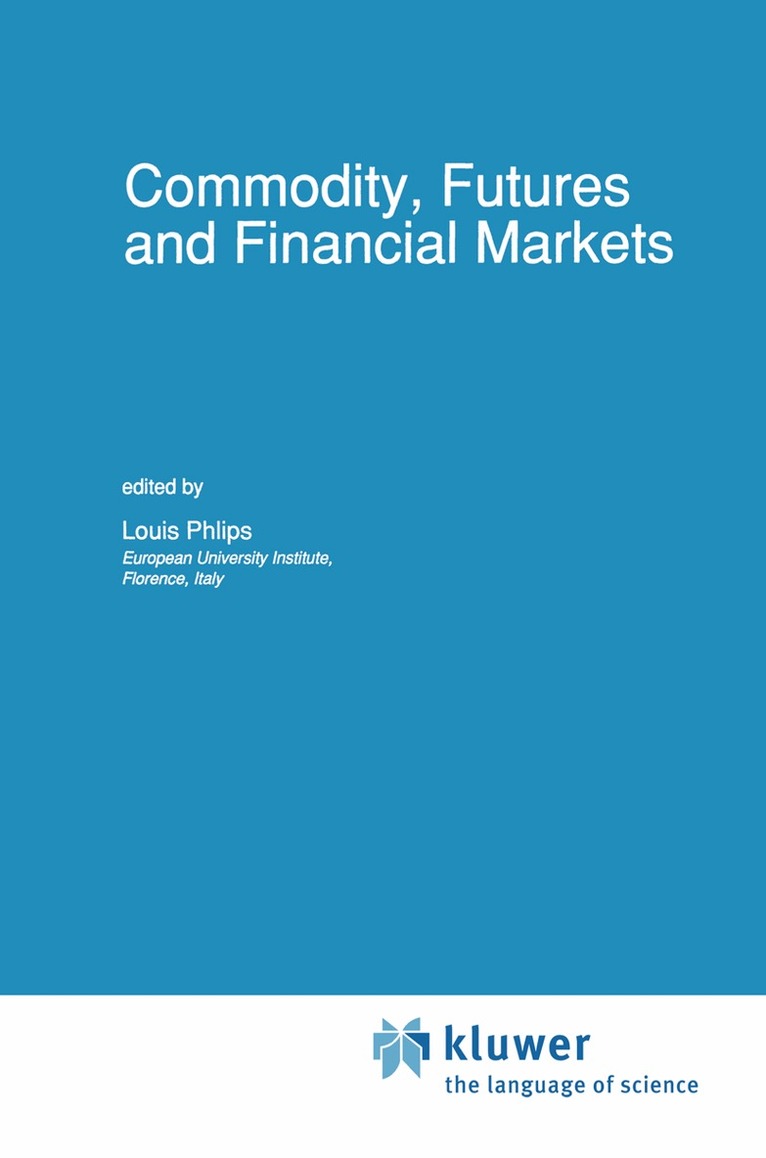
Louis Phlips The stabilisation of primary commodity prices, and the related issue of the stabilisation of export earnings of developing countries, have traditionally been studied without reference to the futures markets (that exist or could exist) for these commodities. These futures markets have in turn been s~udied in isolation. The same is true for the new developments on financial markets. Over the last few years, in particular sine the 1985 tin crisis and the October 1987 stock exchange crisis, it has become evident that there are inter actions between commodity, futures, and financial markets and that these inter actions are very important. The more so as trade on futures and financial markets has shown a spectacular increase. This volume brings together a number of recent and unpublished papers on these interactions by leading specialists (and their students). A first set of papers examines how the use of futures markets could help stabilising export earnings of developing countries and how this compares to the rather unsuccessful UNCTAD type interventions via buffer stocks, pegged prices and cartels. A second set of papers faces the fact, largely ignored in the literature, that commodity prices are determined in foreign currencies, with the result that developing countries suffer from the volatility of exchange rates of these currencies (even in cases where commodity prices are relatively stable). Financial markets are thus explicitly linked to futures and commodity markets.
Inbunden, Engelska, 1992
1 114 kr
Skickas inom 10-15 vardagar
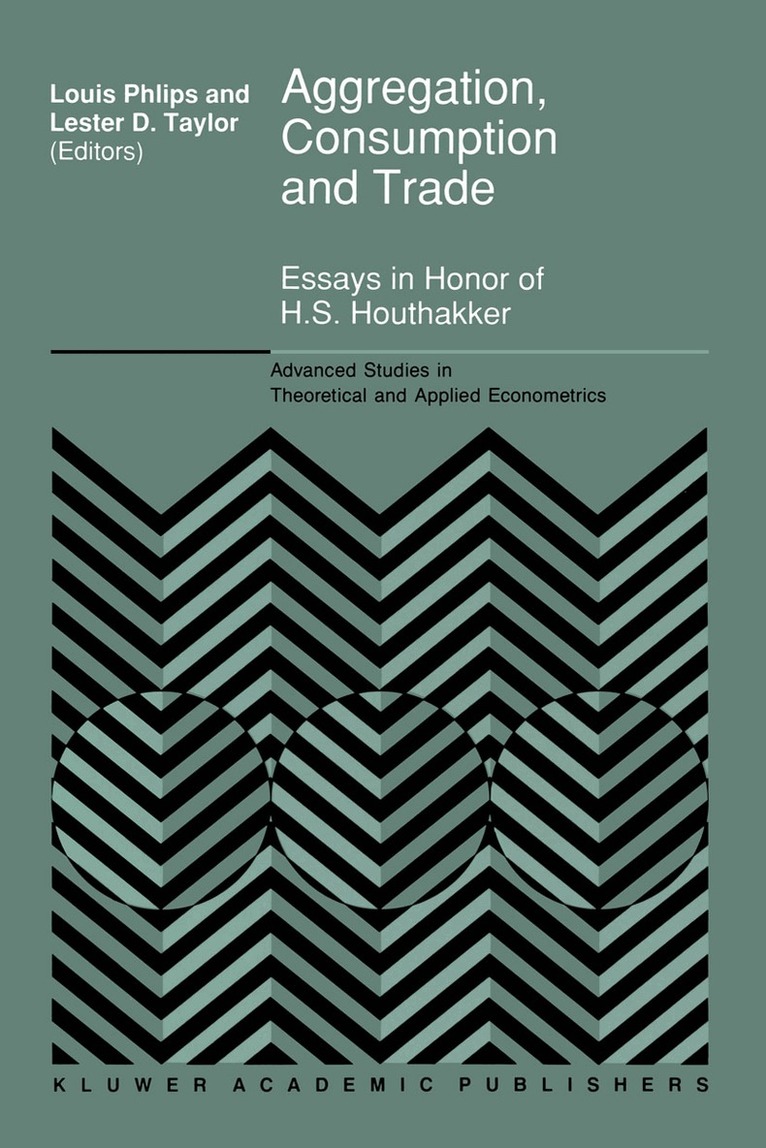
In this testament to the distinguished career of H.S. Houthakker a number of Professor Houthakker's friends, former colleagues and former students offer essays which build upon and extend his many contributions to economics in aggregation, consumption, growth and trade. Among the many distinguished contributors are Paul Samuelson, Werner Hildenbrand, John Muellbauer and Lester Telser. The book also includes four previously unpublished papers and notes by its distinguished dedicatee.
E-bok
PDF, Engelska, 2014779 kr
Läs direkt efter köp
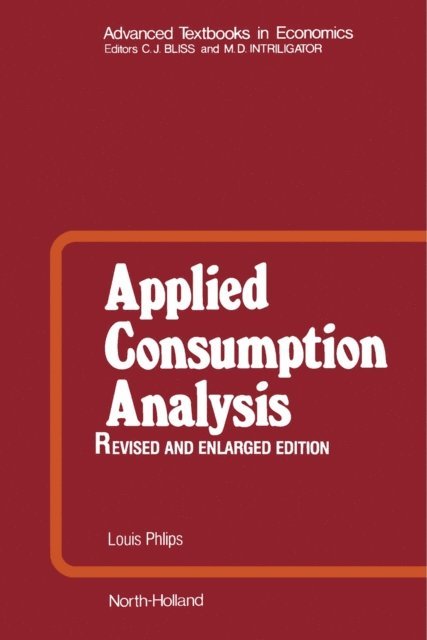
This volume links the abstract theory of demand with its econometric implementation. Exercises lead the reader from elementary utility maximization to the most sophisticated recent techniques, highlighting the main steps in the historical evolution of the subject. The first part presents a brief discussion of duality and flexible forms, and in particular of Deaton and Muellbauer''s ``almost ideal demand system''''. Part two includes the author''s work on true wage indexes, and on intertemporal utility maximization.
Häftad, Engelska, 2012
1 124 kr
Skickas inom 10-15 vardagar
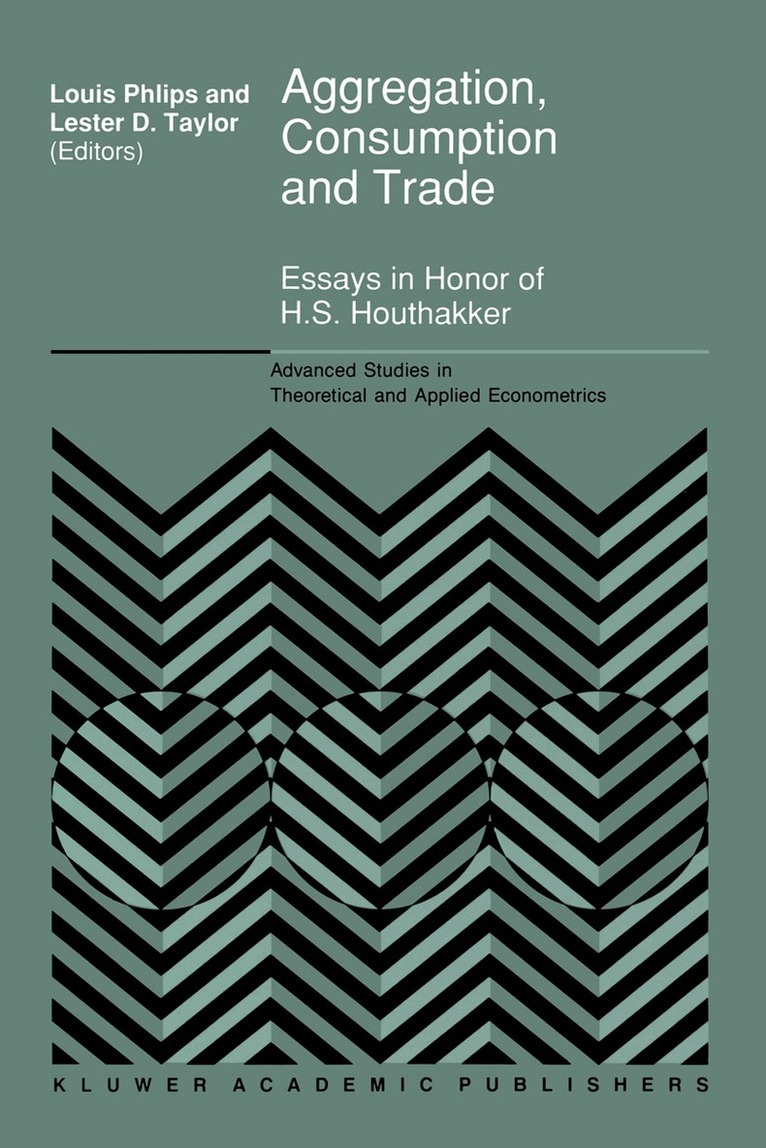
In this testament to the distinguished career of H.S. Houthakker a number of Professor Houthakker's friends, former colleagues and former students offer essays which build upon and extend his many contributions to economics in aggregation, consumption, growth and trade. Among the many distinguished contributors are Paul Samuelson, Werner Hildenbrand, John Muellbauer and Lester Telser. The book also includes four previously unpublished papers and notes by its distinguished dedicatee.
Häftad, Engelska, 2012
1 682 kr
Skickas inom 10-15 vardagar
Louis Phlips The stabilisation of primary commodity prices, and the related issue of the stabilisation of export earnings of developing countries, have traditionally been studied without reference to the futures markets (that exist or could exist) for these commodities. These futures markets have in turn been s~udied in isolation. The same is true for the new developments on financial markets. Over the last few years, in particular sine the 1985 tin crisis and the October 1987 stock exchange crisis, it has become evident that there are inter actions between commodity, futures, and financial markets and that these inter actions are very important. The more so as trade on futures and financial markets has shown a spectacular increase. This volume brings together a number of recent and unpublished papers on these interactions by leading specialists (and their students). A first set of papers examines how the use of futures markets could help stabilising export earnings of developing countries and how this compares to the rather unsuccessful UNCTAD type interventions via buffer stocks, pegged prices and cartels. A second set of papers faces the fact, largely ignored in the literature, that commodity prices are determined in foreign currencies, with the result that developing countries suffer from the volatility of exchange rates of these currencies (even in cases where commodity prices are relatively stable). Financial markets are thus explicitly linked to futures and commodity markets.
E-bok
PDF, Engelska, 20121 408 kr
Läs direkt efter köp
E-bok
PDF, Engelska, 20122 036 kr
Läs direkt efter köp
Louis Phlips The stabilisation of primary commodity prices, and the related issue of the stabilisation of export earnings of developing countries, have traditionally been studied without reference to the futures markets (that exist or could exist) for these commodities. These futures markets have in turn been s~udied in isolation. The same is true for the new developments on financial markets. Over the last few years, in particular sine the 1985 tin crisis and the October 1987 stock exchange crisis, it has become evident that there are inter actions between commodity, futures, and financial markets and that these inter actions are very important. The more so as trade on futures and financial markets has shown a spectacular increase. This volume brings together a number of recent and unpublished papers on these interactions by leading specialists (and their students). A first set of papers examines how the use of futures markets could help stabilising export earnings of developing countries and how this compares to the rather unsuccessful UNCTAD type interventions via buffer stocks, pegged prices and cartels. A second set of papers faces the fact, largely ignored in the literature, that commodity prices are determined in foreign currencies, with the result that developing countries suffer from the volatility of exchange rates of these currencies (even in cases where commodity prices are relatively stable). Financial markets are thus explicitly linked to futures and commodity markets.