L. W. B. Brockliss – författare
Visar alla böcker från författaren L. W. B. Brockliss. Handla med fri frakt och snabb leverans.
3 produkter
3 produkter
E-bok
PDF, Engelska, 2016661 kr
Läs direkt efter köp
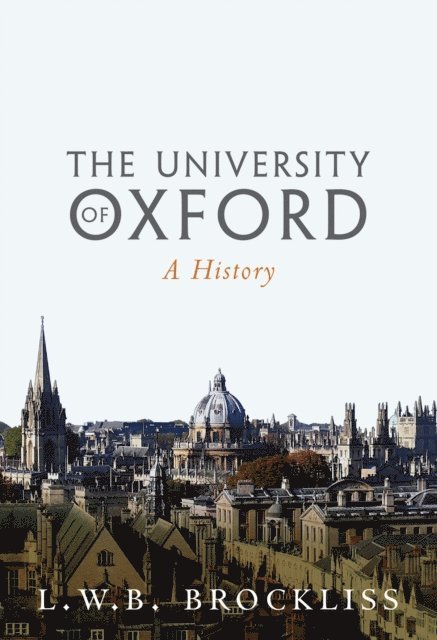
This fresh and readable account gives a complete history of the University of Oxford, from its beginnings in the eleventh century to the present day. Written by one of the leading authorities on the history of universities internationally, it traces Oxford''s improbable rise from provincial backwater to one of the world''s leading centres of research and teaching.Laurence Brockliss sees Oxford''s history as one of discontinuity as much as continuity, describing it in four distinct parts. First he explores Oxford as ''The Catholic University'' in the centuries before the Reformation, when it was principally a clerical studium serving the needs of the Western church. Then as ''The Anglican University'', in the years from 1534 to 1845 when Oxford was confessionally closed to other religions, it trained the next generation of ministers of the Church ofEngland, and acted as a finishing school for the sons of the gentry and the well-to-do. After 1845 ''The Imperial University'' saw the emergence over the following century of a new Oxford - a university which was still elitist but now non-confessional; became open to women as well as men; took students from allround the Empire; and was held together at least until 1914 by a novel concept of Christian service. The final part, ''The World University'', takes the story forward from 1945 to the present day, and describes Oxford''s development as a modern meritocratic and secular university with an ever-growing commitment to high-quality academic research. Throughout the book, Oxford''s history is placed in the wider context of the history of higher education in the UK, Europe, and the world. This helps toshow how singular Oxford''s evolution has been: a story not of entitlement but of hard work, difficult decisions, and a creative use of limited resources and advantages to keep its destiny in its own hands.
E-bok
PDF, Engelska, 20022 496 kr
Läs direkt efter köp
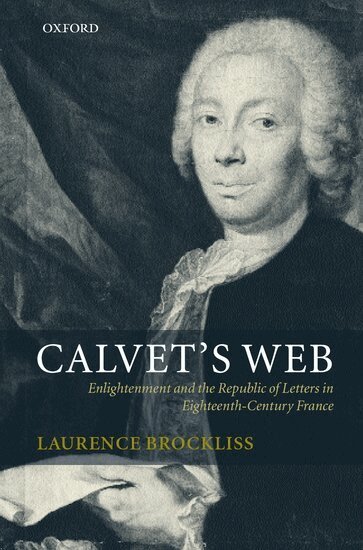
Calvet's Web is a study of the correspondence network of an Avignon physician in the period 1750-1810. Esprit Calvet was an antiquarian, natural historian, and bibliophile, and was at the centre of a circle of like-minded intellectuals from various backgrounds, chiefly based in the Rhone valley. Laurence Brockliss explores for the first time in detail the intellectual interests and relationships of a representative sample of the French Republic of Letters. He traces the destruction of the Republic during the Revolution, and its reconstruction, in different guise, under Napoleon.Calvet's Web is an important contribution to our understanding of the social construction of knowledge, the history of collecting, and the history of the book. In addition, by examining the circle's attitude to the philosophes and their programme of material and moral progress, it offers a new picture of the relationship between the Republic of Letters and the Enlightenment.
Inbunden, Engelska, 2002
3 707 kr
Skickas inom 5-8 vardagar
Calvet's Web is a study of the correspondence network of an Avignon physician in the period 1750-1810. Esprit Calvet was an antiquarian, natural historian, and bibliophile, and was at the centre of a circle of like-minded intellectuals from various backgrounds, chiefly based in the Rhone valley. Laurence Brockliss explores for the first time in detail the intellectual interests and relationships of a representative sample of the French Republic of Letters. He traces the destruction of the Republic during the Revolution, and its reconstruction, in different guise, under Napoleon.Calvet's Web is an important contribution to our understanding of the social construction of knowledge, the history of collecting, and the history of the book. In addition, by examining the circle's attitude to the philosophes and their programme of material and moral progress, it offers a new picture of the relationship between the Republic of Letters and the Enlightenment.