Larissa J Taylor – författare
Visar alla böcker från författaren Larissa J Taylor. Handla med fri frakt och snabb leverans.
2 produkter
2 produkter
Häftad, Engelska, 2002
420 kr
Skickas inom 5-8 vardagar
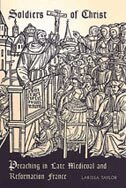
In an age when the printed book was still in its infancy, the pulpit was the mass medium. A vital part of religious life, sermons were the chief occasions on which the church attempted to bridge the gap between high theology and popular religious culture. The preaching event provided the opportunity for men and women to socialize, flirt, dispute with or mock the preacher and, in a more positive way, to heed the preacher's words and change their lives. Larissa Taylor has examined over 1600 sermons given by the leading lay preachers in France between 1460 and 1560, and examines the social context of preaching and the sermon while reconstructing popular attitudes towards original sin, free will, purgatory, the Devil, the sacraments, and the magical arts. Previously published by Oxford University Press, 1992. Winner of the 1996 John Nicholas Brown Prize of the Medieval Academy of America.
Inbunden, Engelska, 1992
1 004 kr
Tillfälligt slut
In an age when the printed book was still in its infancy, the pulpit was the mass medium of the era. Cities competed with one another to attract the leading preachers, and thousands of people from all classes of society flocked from miles around to hear them speak. A vital part of medieval religious life, sermons were the chief occasions on which the church attempted to bridge the gap between high theology and popular religious culture. Taylor's study of preaching in France offers intriguing clues into the beliefs and behaviour of ordinary Christians in the crucial era that saw the onset of the Protestant Reformation. By examining hundreds of surviving sermons from the most influential preachers of the time, Taylor is able to reconstruct popular attitudes to such issues as original sin, free will, purgatory, the devil, the sacraments, the magical arts, the inequalities in society, and the status of women. A concluding section examines the beginnings of Protestant preaching in France and Catholic responses to this challenge.