Laura Dahl - Böcker
Visar alla böcker från författaren Laura Dahl. Handla med fri frakt och snabb leverans.
4 produkter
4 produkter
256 kr
Skickas inom 3-6 vardagar
620 kr
Skickas inom 10-15 vardagar
As a living tradition, Wesleyan-Methodism has continued to grow and develop through the twentieth and twenty-first centuries. Since their establishment in 1965, the Wesleyan Theological Society and Wesleyan Theological Journal have played a decisive role in stewarding the tradition's rich theological inheritance, with some of the most influential essays of the past sixty years appearing in WTJ's pages. The Wesleyan Theological Heritage brings these landmark essays together in a single volume for the first time. The result is a collection capable of serving not only as a reader for contemporary Wesleyan theology, historical studies, and biblical studies, but as a window into the issues and figures that have shaped both the last sixty years of the tradition and its future trajectory. The volume is divided into two parts. Part 1 looks back to the key themes and developments in Wesley studies, Early American Methodist studies, and Holiness Movement studies. Various models for interpreting John Wesley's writings emerge, as do questions of historiographical methodology, the impact of women leaders, and the influence of particular doctrines. Part 2 surveys the current state of Wesleyan scholarship as well as the issues at stake in its future trajectory. The volume further examines the contribution and place of Wesleyan theology within the ecumenical church and indicates new horizons of Wesleyan scholarship. Together, these essays give voice to the past, present, and future of the Wesleyan theological tradition, as well as the society and Journal's.
806 kr
Skickas inom 10-15 vardagar
As a living tradition, Wesleyan-Methodism has continued to grow and develop through the twentieth and twenty-first centuries. Since their establishment in 1965, the Wesleyan Theological Society and Wesleyan Theological Journal have played a decisive role in stewarding the tradition's rich theological inheritance, with some of the most influential essays of the past sixty years appearing in WTJ's pages. The Wesleyan Theological Heritage brings these landmark essays together in a single volume for the first time. The result is a collection capable of serving not only as a reader for contemporary Wesleyan theology, historical studies, and biblical studies, but as a window into the issues and figures that have shaped both the last sixty years of the tradition and its future trajectory. The volume is divided into two parts. Part 1 looks back to the key themes and developments in Wesley studies, Early American Methodist studies, and Holiness Movement studies. Various models for interpreting John Wesley's writings emerge, as do questions of historiographical methodology, the impact of women leaders, and the influence of particular doctrines. Part 2 surveys the current state of Wesleyan scholarship as well as the issues at stake in its future trajectory. The volume further examines the contribution and place of Wesleyan theology within the ecumenical church and indicates new horizons of Wesleyan scholarship. Together, these essays give voice to the past, present, and future of the Wesleyan theological tradition, as well as the society and Journal's.
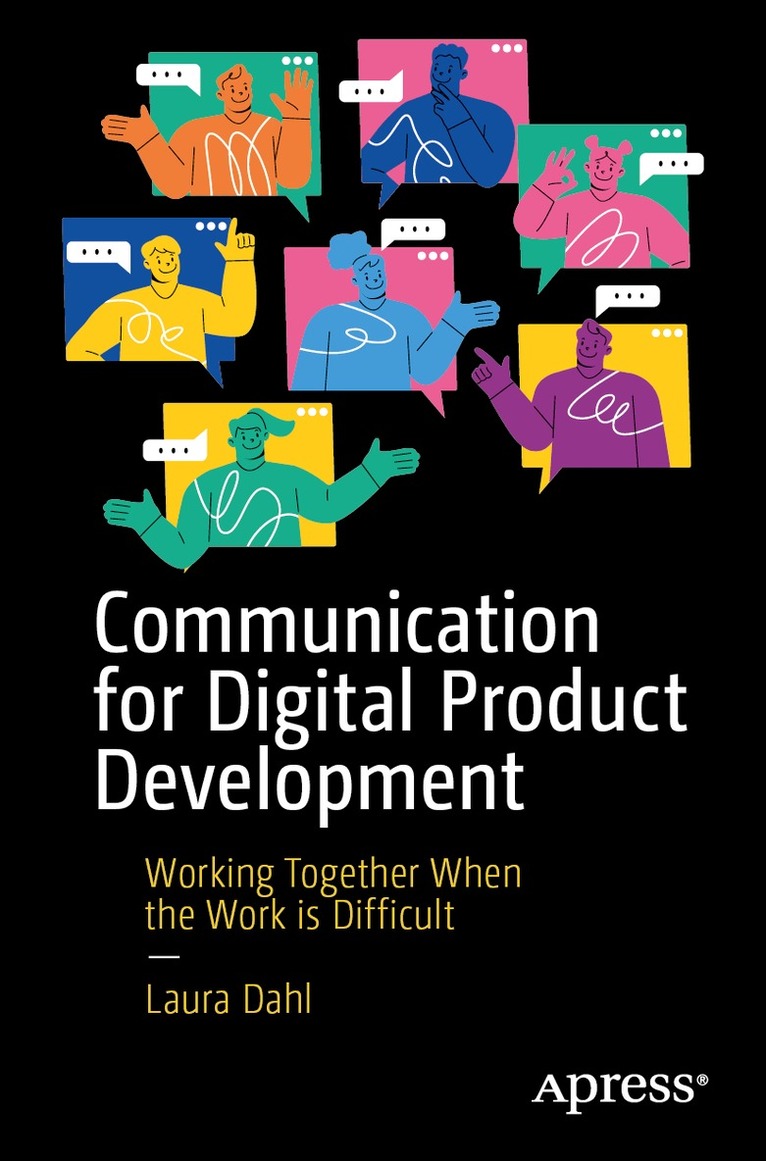
Communication for Digital Product Development
Working Together When the Work is Difficult
Häftad, Engelska, 2026
432 kr
Kommande
This book is a practical, research-driven guide to improving team communication in software and digital product development. Based on qualitative field research, including case studies from product teams and interviews with industry experts, this book reveals how even experienced teams struggle with misunderstanding, misalignment, and conflict: often without realizing it. It offers specific, actionable strategies for improving collaboration and making communication a consistent strength, rather than a recurring risk.The book focuses on the parts of collaboration that are too often neglected: when to speak up, how to structure feedback, how to document decisions, how to resolve tension between roles, and how to build shared understanding in hybrid or asynchronous environments. Each chapter addresses a key communication challenge with real examples, research-backed explanations, and tools teams can apply immediately. Case studies show what happens when communication breaks down and how high-functioning teams succeed by creating structure, shared understanding, and feedback routines.Chapters include guidance for balancing synchronous and asynchronous work, clarifying ownership, building psychological safety, and navigating power dynamics. You will learn how to prevent silence from masquerading as agreement, how to resolve tension between designers and developers, and how to improve collaboration with product owners, analysts, and stakeholders. Rather than offering abstract advice, each chapter ends with team-based discussion questions, individual reflection prompts, and actionable steps. The appendix includes publicly available templates and tools for decision logs, meeting cadences, communication charters, conflict resolution guides, and retrospective formats.As tools change, remote work grows, and teams become more cross-functional, structured communication becomes even more critical. This book offers a field-tested approach for teams that want to go beyond collaboration as a buzzword and build a foundation for long-term shared understanding.What You Will LearnBridge the gap between developers and designers using shared documentation, critique rituals, and collaborative planningDesign communication routines that balance synchronous and asynchronous work to reduce fatigue and support alignmentUse self-assessment tools and templates to strengthen psychological safety, decision visibility, and team cohesionSupport team development by applying strategies matched to each stage of team growthWho This Book is ForUX designers, interaction designers, and design researchers, front-end and full-stack developers, product managers, and owners coordinating multiple roles, individuals leading or facilitating cross-functional teams