Lawrence C.H. Wang – författare
Visar alla böcker från författaren Lawrence C.H. Wang. Handla med fri frakt och snabb leverans.
3 produkter
3 produkter
E-bok
PDF, Engelska, 2012672 kr
Läs direkt efter köp
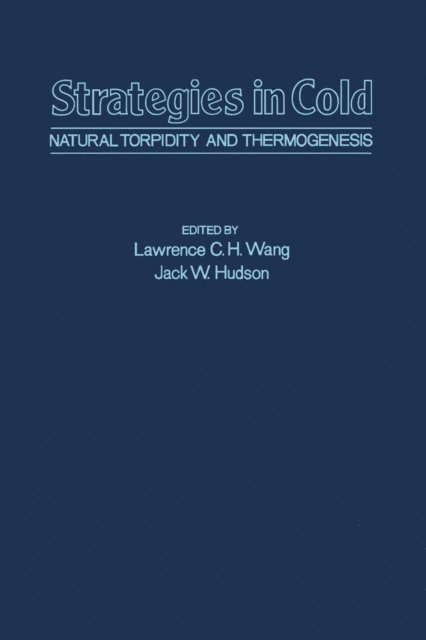
Strategies in Cold: Natural Torpidity and Thermogenesis is a collection of review papers presented at the Fifth International Symposium on Mammalian Hibernation, held at Jasper Park Lodge, Alberta, Canada on October 3-8, 1977. The book is organized into four sections encompassing 20 chapters that cover the advances made since the 1971 symposium in the areas of molecular, biochemical, and cellular adaptations of natural torpidity and the role of the central nervous system in regulation of natural torpidity. The opening section discusses the possible ways of generating circannual cycle in constant condition and the historical progress in understanding the mechanism of shallow, daily torpor and its distribution in various families predominantly from the marsupial, insectivore, and rodent orders. The application of simple economic models to biological systems to illustrate the principles of torpor in non-mammalian organisms and temperature regulation is also described in this text. Section II examines the central nervous structures involved in thermoregulation in hibernators and compares these data with the results of corresponding experiments in non-hibernators. Topics on the influence of serotonergic pathways in the brain on hypothalamic hormonal factor release and the maintenance and regulation of hibernation through a parasympathetic response are discussed in this section. Section III deals with the cellular and biochemical adaptations in natural torpidity, with an emphasis on the metabolic and endocrine changes in hibernation. Section IV tackles postulated mechanisms for nonshivering thermogenesis and the neurohumoral factors regulating these mechanisms in mammals exposed to short-term as well as to prolonged periods of cold. A discussion on significance and possible central mechanisms of thermoregulatory threshold deviations in the course of thermal adaptation is also provided.
E-bok
PDF, Engelska, 20121 408 kr
Läs direkt efter köp
When survival is challenged by the cold, animals react by employing both behavioral and physiological solutions. Depending on the magni tude of the cold stress and the nature of the adjustment, simple avoidance or sophisticated capacity or resistance compensations may be used. Thus, migration, shelter seeking, metabolic and insulative compen sation, torpor, and freezing avoidance and tolerance are successful tac tics used by diverse groups of animals. To understand and appreciate the benefits of these tactics, it is necessary to examine not only the well being of the whole animal but also their basic underlying mechanisms. In ad dition, it is also of fundamental importance to grasp how seasonal cold affects the survivorship and reproductive success of populations when confronted by a general reduction in primary productivity and an elevated energy cost for maintenance (e. g. in endotherms). In this regard, a synthetic overview which integrates aspects of cell biology, biochem istry, physiology, neurobiology, behavior, and population biology should be a fruitful approach in providing a holistic understanding on how animals adapt to cold. The present volume is an attempt to achieve such an overview; its objective is to provide a depth and breadth of coverage that is essential to a full appreciation of animal adaptation to cold. It is the hope of the contributing authors that this book will serve as an effective reference text for all senior undergraduate and graduate students as well as research scientists with an interest in cold physiology.
Häftad, Engelska, 2011
1 123 kr
Skickas inom 10-15 vardagar
When survival is challenged by the cold, animals react by employing both behavioral and physiological solutions. Depending on the magni tude of the cold stress and the nature of the adjustment, simple avoidance or sophisticated capacity or resistance compensations may be used. Thus, migration, shelter seeking, metabolic and insulative compen sation, torpor, and freezing avoidance and tolerance are successful tac tics used by diverse groups of animals. To understand and appreciate the benefits of these tactics, it is necessary to examine not only the well being of the whole animal but also their basic underlying mechanisms. In ad dition, it is also of fundamental importance to grasp how seasonal cold affects the survivorship and reproductive success of populations when confronted by a general reduction in primary productivity and an elevated energy cost for maintenance (e. g. in endotherms). In this regard, a synthetic overview which integrates aspects of cell biology, biochem istry, physiology, neurobiology, behavior, and population biology should be a fruitful approach in providing a holistic understanding on how animals adapt to cold. The present volume is an attempt to achieve such an overview; its objective is to provide a depth and breadth of coverage that is essential to a full appreciation of animal adaptation to cold. It is the hope of the contributing authors that this book will serve as an effective reference text for all senior undergraduate and graduate students as well as research scientists with an interest in cold physiology.