Lawrence M. Eppard – författare
Visar alla böcker från författaren Lawrence M. Eppard. Handla med fri frakt och snabb leverans.
12 produkter
12 produkter
Inbunden, Engelska, 2021
320 kr
Skickas inom 5-8 vardagar
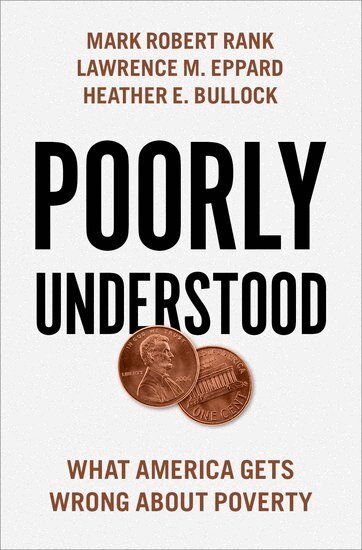
What if the idealized image of American society—a land of opportunity that will reward hard work with economic success—is completely wrong?Few topics have as many myths, stereotypes, and misperceptions surrounding them as that of poverty in America. The poor have been badly misunderstood since the beginnings of the country, with the rhetoric only ratcheting up in recent times. Our current era of fake news, alternative facts, and media partisanship has led to a breeding ground for all types of myths and misinformation to gain traction and legitimacy.Poorly Understood is the first book to systematically address and confront many of the most widespread myths pertaining to poverty. Mark Robert Rank, Lawrence M. Eppard, and Heather E. Bullock powerfully demonstrate that the realities of poverty are much different than the myths; indeed in many ways they are more disturbing. The idealized image of American society is one of abundant opportunities, with hard work being rewarded by economic prosperity. But what if this picture is wrong? What if poverty is an experience that touches the majority of Americans? What if hard work does not necessarily lead to economic well-being? What if the reasons for poverty are largely beyond the control of individuals? And if all of the evidence necessary to disprove these myths has been readily available for years, why do they remain so stubbornly pervasive? These are much more disturbing realities to consider because they call into question the very core of America's identity.Armed with the latest research, Poorly Understood not only challenges the myths of poverty and inequality, but it explains why these myths continue to exist, providing an innovative blueprint for how the nation can move forward to effectively alleviate American poverty.
E-bok
PDF, Engelska, 2021222 kr
Läs direkt efter köp
What if the idealized image of American society?a land of opportunity that will reward hard work with economic success?is completely wrong? Few topics have as many myths, stereotypes, and misperceptions surrounding them as that of poverty in America. The poor have been badly misunderstood since the beginnings of the country, with the rhetoric only ratcheting up in recent times. Our current era of fake news, alternative facts, and media partisanship has led to a breeding ground for all types of myths and misinformation to gain traction and legitimacy. Poorly Understood is the first book to systematically address and confront many of the most widespread myths pertaining to poverty. Mark Robert Rank, Lawrence M. Eppard, and Heather E. Bullock powerfully demonstrate that the realities of poverty are much different than the myths; indeed in many ways they are more disturbing. The idealized image of American society is one of abundant opportunities, with hard work being rewarded by economic prosperity. But what if this picture is wrong? What if poverty is an experience that touches the majority of Americans? What if hard work does not necessarily lead to economic well-being? What if the reasons for poverty are largely beyond the control of individuals? And if all of the evidence necessary to disprove these myths has been readily available for years, why do they remain so stubbornly pervasive? These are much more disturbing realities to consider because they call into question the very core of America''s identity. Armed with the latest research, Poorly Understood not only challenges the myths of poverty and inequality, but it explains why these myths continue to exist, providing an innovative blueprint for how the nation can move forward to effectively alleviate American poverty.
E-bok
Engelska, 2021222 kr
Läs direkt efter köp
What if the idealized image of American society?a land of opportunity that will reward hard work with economic success?is completely wrong? Few topics have as many myths, stereotypes, and misperceptions surrounding them as that of poverty in America. The poor have been badly misunderstood since the beginnings of the country, with the rhetoric only ratcheting up in recent times. Our current era of fake news, alternative facts, and media partisanship has led to a breeding ground for all types of myths and misinformation to gain traction and legitimacy. Poorly Understood is the first book to systematically address and confront many of the most widespread myths pertaining to poverty. Mark Robert Rank, Lawrence M. Eppard, and Heather E. Bullock powerfully demonstrate that the realities of poverty are much different than the myths; indeed in many ways they are more disturbing. The idealized image of American society is one of abundant opportunities, with hard work being rewarded by economic prosperity. But what if this picture is wrong? What if poverty is an experience that touches the majority of Americans? What if hard work does not necessarily lead to economic well-being? What if the reasons for poverty are largely beyond the control of individuals? And if all of the evidence necessary to disprove these myths has been readily available for years, why do they remain so stubbornly pervasive? These are much more disturbing realities to consider because they call into question the very core of America''s identity. Armed with the latest research, Poorly Understood not only challenges the myths of poverty and inequality, but it explains why these myths continue to exist, providing an innovative blueprint for how the nation can move forward to effectively alleviate American poverty.
Inbunden, Engelska, 2022
478 kr
Skickas inom 5-8 vardagar
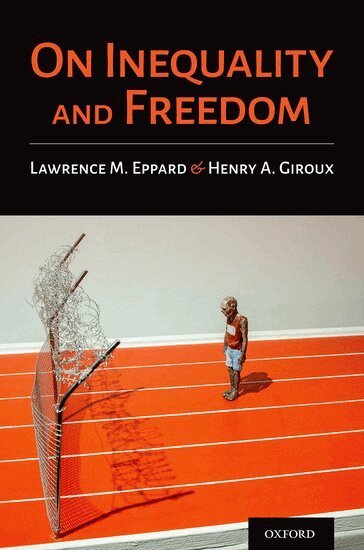
When Americans conceptualize freedom, they often disproportionately focus on negative freedom, or freedom from government constraint-being told what they cannot say, which religion they cannot practice, where they cannot move, etc. By this measure, Americans are remarkably free. However, such a conceptualization of freedom is incomplete without including notions of positive freedom--possession of agency, to be able to think and act autonomously in pursuit of one's desired life. Positive freedom unlocks agency through more than the absence of something, but the presence of something else--the conditions which enable people's development of their abilities and access to crucial resources and opportunities. If we measure the freedom of Americans by positive freedom measures, we are falling behind our perceived status. In On Inequality and Freedom, a diverse group of authors discuss how a variety of contemporary American inequalities-from racial, economic, and gender, to health, environmental, and political inequalities-actually limit American freedom, regardless of how much negative freedom we possess. This book provides readers with a deeper understanding of what true freedom is and concrete steps toward restoring it.
E-bok
PDF, Engelska, 2021374 kr
Läs direkt efter köp
When Americans conceptualize freedom, they often disproportionately focus on negative freedom, or freedom from government constraint-being told what they cannot say, which religion they cannot practice, where they cannot move, etc. By this measure, Americans are remarkably free. However, such a conceptualization of freedom is incomplete without including notions of positive freedom--possession of agency, to be able to think and act autonomously in pursuit of one''s desired life. Positive freedom unlocks agency through more than the absence of something, but the presence of something else--the conditions which enable people''s development of their abilities and access to crucial resources and opportunities. If we measure the freedom of Americans by positive freedom measures, we are falling behind our perceived status. In On Inequality and Freedom, a diverse group of authors discuss how a variety of contemporary American inequalities-from racial, economic, and gender, to health, environmental, and political inequalities-actually limit American freedom, regardless of how much negative freedom we possess. This book provides readers with a deeper understanding of what true freedom is and concrete steps toward restoring it.
E-bok
Engelska, 2021361 kr
Läs direkt efter köp
When Americans conceptualize freedom, they often disproportionately focus on negative freedom, or freedom from government constraint-being told what they cannot say, which religion they cannot practice, where they cannot move, etc. By this measure, Americans are remarkably free. However, such a conceptualization of freedom is incomplete without including notions of positive freedom--possession of agency, to be able to think and act autonomously in pursuit of one''s desired life. Positive freedom unlocks agency through more than the absence of something, but the presence of something else--the conditions which enable people''s development of their abilities and access to crucial resources and opportunities. If we measure the freedom of Americans by positive freedom measures, we are falling behind our perceived status. In On Inequality and Freedom, a diverse group of authors discuss how a variety of contemporary American inequalities-from racial, economic, and gender, to health, environmental, and political inequalities-actually limit American freedom, regardless of how much negative freedom we possess. This book provides readers with a deeper understanding of what true freedom is and concrete steps toward restoring it.
Inbunden, Engelska, 2020
1 527 kr
Skickas inom 10-15 vardagar
Rugged Individualism and the Misunderstanding of American Inequalityexplores and critiques the widespread perception in the United States that one’s success or failure in life is largely the result of personal choices and individual characteristics. As the authors show, the distinctively individualist ideology of American politics and culture shapes attitudes toward poverty and economic inequality in profound ways, fostering social policies that de-emphasize structural remedies. Drawing on a variety of unique methodologies, the book synthesizes data from large-scale surveys of the American population, and it features both conversations with academic experts and interviews with American citizens intimately familiar with the consequences of economic disadvantage. This mixture of approaches gives readers a fuller understanding of “skeptical altruism,” a concept the authors use to describe the American public’s hesitancy to adopt a more robust and structurally-oriented approach to solving the persistent problem of economic disadvantage.
E-bok
Engelska, 2020545 kr
Läs direkt efter köp
Rugged Individualism and the Misunderstanding of American Inequalityexplores and critiques the widespread perception in the United States that one’s success or failure in life is largely the result of personal choices and individual characteristics. As the authors show, the distinctively individualist ideology of American politics and culture shapes attitudes toward poverty and economic inequality in profound ways, fostering social policies that de-emphasize structural remedies. Drawing on a variety of unique methodologies, the book synthesizes data from large-scale surveys of the American population, and it features both conversations with academic experts and interviews with American citizens intimately familiar with the consequences of economic disadvantage. This mixture of approaches gives readers a fuller understanding of “skeptical altruism,” a concept the authors use to describe the American public’s hesitancy to adopt a more robust and structurally-oriented approach to solving the persistent problem of economic disadvantage.
Häftad, Engelska, 2022
504 kr
Skickas inom 10-15 vardagar
Rugged Individualism and the Misunderstanding of American Inequalityexplores and critiques the widespread perception in the United States that one’s success or failure in life is largely the result of personal choices and individual characteristics. As the authors show, the distinctively individualist ideology of American politics and culture shapes attitudes toward poverty and economic inequality in profound ways, fostering social policies that de-emphasize structural remedies. Drawing on a variety of unique methodologies, the book synthesizes data from large-scale surveys of the American population, and it features both conversations with academic experts and interviews with American citizens intimately familiar with the consequences of economic disadvantage. This mixture of approaches gives readers a fuller understanding of “skeptical altruism,” a concept the authors use to describe the American public’s hesitancy to adopt a more robust and structurally-oriented approach to solving the persistent problem of economic disadvantage.
Häftad, Engelska, 2026
289 kr
Kommande
Many American liberals believe that misinformation is just a right-wing problem. As a result, they ignore a similar crisis of misinformation occurring on the left—particularly within higher education—and reflexively dismiss any such claim as just another right-wing talking point. Yet, as Virtuous Nonsense makes clear, the epistemic problems in blue America are not only real but also worsening and can no longer be ignored. With contributions from a wide range of liberal-minded scholars and thinkers, including Musa al-Gharbi, Jonathan Haidt, Carol Tavris, and Matthew Yglesias, among many others, the volume demonstrates how large segments of the academy—namely, in the social sciences, the humanities, and education—have become captive to progressive ideology.Where universities once sought to produce and disseminate reliable knowledge, far too many academics today prioritize activism and political projects. This results in poorly supported academic theories and distorted claims that eventually proliferate beyond the university—through the graduation of students who’ve received a flawed education, through a mainstream media that all too often credulously parrots even the most biased claims as “the truth,” and ultimately through public institutions increasingly shaped by politicized expertise.On subjects ranging from race and gender to single parenthood and free markets, Virtuous Nonsense exposes the most damaging of these academic distortions, which not only undermine public trust and sound policymaking but also artificially narrow the boundaries of acceptable debate. In so doing, it presents a challenge to the left: face the crisis, or remain complicit in the degradation of our intellectual and civic life. Until more liberals acknowledge the problem of malfunctioning disciplines and uncritical media environments, America cannot hope to repair its engines of knowledge—or recover from an epistemic crisis that sickens our culture, society, and politics.
Häftad, Engelska, 2024
363 kr
Skickas inom 5-8 vardagar
E-bok
Engelska, 2024144 kr
Läs direkt efter köp
What would you have to believe in order to dress up as a shaman, paint your face, and storm the U.S. Capitol? What could possibly lead somebody to claim that it upholds white supremacy to encourage hard work, self-reliance, rational thinking, punctuality, and politeness? Such behaviors would have been unimaginable only a few years ago. And yet here we are, witnessing millions of people across the political spectrum displaying these clear indications of an epistemically poisoned mind. Both red America and blue America are retreating into their own information bubbles, seceding from a common reality. Both consume far too much misinformation and disinformation, developing worldviews that can sometimes be unintelligible to others. This book explores these disturbing developments and what they mean for our society and implores us all to recover a shared sense of what is true.