Leah Ruppanner – författare
Visar alla böcker från författaren Leah Ruppanner. Handla med fri frakt och snabb leverans.
3 produkter
3 produkter
177 kr
Skickas
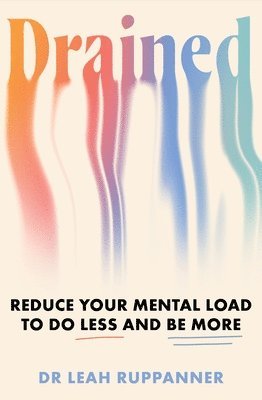
Do less. Be more. With eye-opening, research-based insights Drained offers a powerful toolkit to help women create richer, less overwhelming lives filled with meaning and joy.For so many women, mental load is a heavy burden that goes far beyond managing a list of household chores and logistics: it's a complex form of emotional labour that requires thinking five steps ahead, keeping relationships intact, creating experiences that keep all members of the family happy and thriving, and more.It's a hidden struggle that leaves many women feeling burned out. But what if we stopped blaming ourselves for feeling overwhelmed and instead made practical, impactful changes to our lives to prioritize our energy?In Drained, sociologist and host of the MissPerceived podcast Dr. Leah Ruppanner outlines eight distinct types of mental load performed across seven unique stages, highlighting what makes mental load so uniquely heavy for women, and offers practical strategies to reallocate your responsibilities and reclaim your sense of self.Offering new research presented with clarity and compassion from a world-leading expert, Drained is a must-read guide to help women build better, more balanced, joyous lives.'Urgent and transformative...a must-read for all women to help them reset how they spend their energy, and lead more balanced, fulfilling, joyful lives' -Eve Rodsky, bestselling author of Fair Play'This book is a revelation' -Anne-Marie Slaughter, author of Unfinished Business'An essential blueprint for happier, healthier relationships and lives' -Brigid Schulte, New York Times bestselling author of Overwhelmed'If we want to tackle the care gap and the pay gap, burnout, parents' mental health and women's leadership, we need to understand the mental load, and we need to tackle it. And our first step is to read Drained' -Kate Mangino, author of Equal Partners
1 001 kr
Skickas inom 5-8 vardagar
In the absence of federal legislation, each state in the United States has its own policies regarding family leave, job protection for women and childcare. No wonder working mothers encounter such a significant disparity when it comes to childcare resources in America! Whereas conservative states like Nebraska offer affordable, readily available, and high quality childcare, progressive states that advocate for women’s economic and political power, like California, have expensive childcare, shorter school days, and mothers who are more likely to work part-time or drop out of the labor market altogether to be available for their children. In Motherlands, Leah Ruppanner cogently argues that states should look to each other to fill their policy voids. She provides suggestions and solutions for policy makers interested in supporting working families. Whether a woman lives in a state with stronger childcare or gender empowerment regimes, at stake is mothers’ financial dependence on their partners. Ruppanner advocates for reducing the institutional barriers mothers face when re-entering the workforce. As a result, women would have greater autonomy in making employment decisions following childbirth.
259 kr
Skickas inom 5-8 vardagar
In the absence of federal legislation, each state in the United States has its own policies regarding family leave, job protection for women and childcare. No wonder working mothers encounter such a significant disparity when it comes to childcare resources in America! Whereas conservative states like Nebraska offer affordable, readily available, and high quality childcare, progressive states that advocate for women’s economic and political power, like California, have expensive childcare, shorter school days, and mothers who are more likely to work part-time or drop out of the labor market altogether to be available for their children. In Motherlands, Leah Ruppanner cogently argues that states should look to each other to fill their policy voids. She provides suggestions and solutions for policy makers interested in supporting working families. Whether a woman lives in a state with stronger childcare or gender empowerment regimes, at stake is mothers’ financial dependence on their partners. Ruppanner advocates for reducing the institutional barriers mothers face when re-entering the workforce. As a result, women would have greater autonomy in making employment decisions following childbirth.