Leo S. Klejn – författare
Visar alla böcker från författaren Leo S. Klejn. Handla med fri frakt och snabb leverans.
3 produkter
3 produkter
Inbunden, Engelska, 2012
2 003 kr
Skickas inom 7-10 vardagar
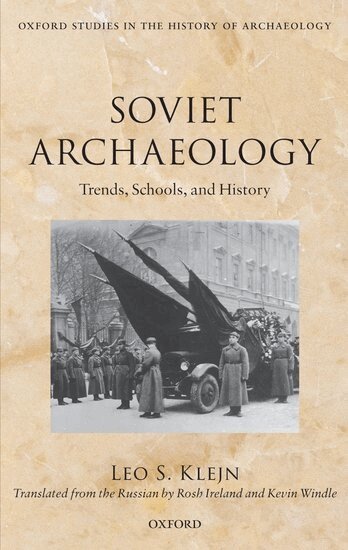
In Soviet Archaeology: Trends, Schools, and History the Russian archaeologist Leo Klejn examines the peculiar phenomenon which was Soviet archaeology, showing where it differs from Western archaeology and the archaeology of pre-revolutionary Russia, and where it reveals similarities. In this revised and expanded volume, he asks whether Soviet archaeology can be regarded as Marxist, and, if so, whether Marxism was to Russian archaeology a help or a hindrance at that time. Were the writings of Soviet archaeologists mere propaganda, driving their own political agenda, or can they be read as objective studies of our past? Klejn shows that Soviet archaeology was no monolithic bloc, though Soviet ideologists attempted to present it as such. Rather it was divided into competing schools and trends and, even beneath the veil of Marxist ideology, was often closely related to movements current in Western archaeology. Inside the system, however, the slightest deviation from the Party line was regarded as hostile, those guilty being often dismissed from their posts and condemned to life imprisonment in the Gulag, or even to death. As an archaeologist working during the turbulent years of Soviet rule, Klejn presents an account which is at once scholarly and vivid. He traces the history of archaeology in Russia from 1917 to 1991 and through the years which followed, recounting the lives and fates of prominent Soviet archaeologists in graphic descriptions with accompanying illustrations.
Häftad, Engelska, 1982
391 kr
Skickas inom 3-6 vardagar
Inbunden, Engelska, 2012
1 261 kr
Tillfälligt slut
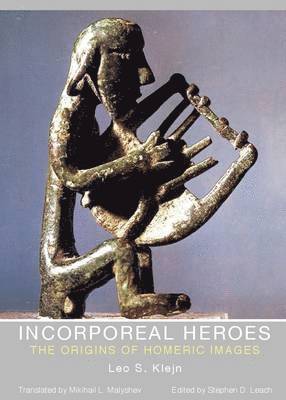
The author investigates the origins of the heroes of the Iliad, to establish if they were real historical figures or purely artistic creations. His conclusion is that neither of these ideas is correct: the prototypes of the heroes existed previously in Greek cults. They originated as local cult heroes, protectors of certain spheres of life, in the manner of later Christian saints – and had nothing to do with the Trojan War.Via an analysis of the standard formulas within the Iliad, the author investigates the sequence in which these heroes entered the epic. He argues that the main plot of the Trojan cycle originated from the ancient story of the abduction of the beautiful wife of a king followed by the raid of the king, and his brother, aiming to recapture her. Just such a plot can be found in an Egyptian tale even older than the Iliad. Agamemnon was a later inclusion – becoming a Mycenaean king, though earlier he had been a Spartan hero, like his brother Menelaus. Achilles joined the story later yet.