Leonard Shatzkin – författare
Visar alla böcker från författaren Leonard Shatzkin. Handla med fri frakt och snabb leverans.
2 produkter
2 produkter
E-bok
Engelska, 2012101 kr
Läs direkt efter köp
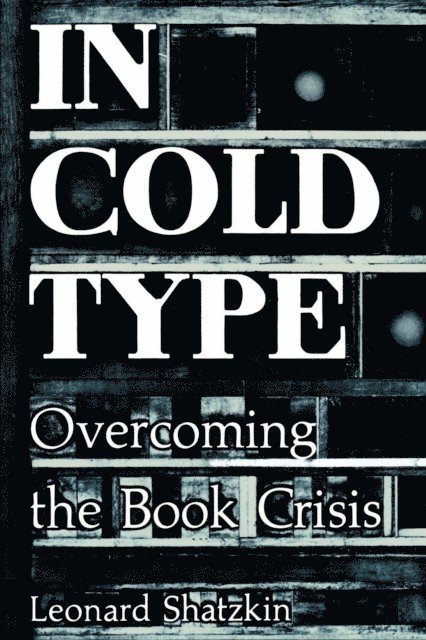
During the nineteen seventies and early eighties, the trade book publishing industry faced financial and philosophical problems of a magnitude unparalleled in its existence. It appeared that without undertaking urgent and far-reaching reforms, the profits of publishing houses would decline to a level that would make the survival of many established firms extremely doubtful. The expansion of the major bookselling chains, coupled with antiquated distribution and marketing methods, would cause many indie bookstores to close. Authors of talent, vision, and intellect would find it harder to be published than ever before. Readers would grow more jaded by a glut of formula books, or more frustrated finding that special title to suit their needs. Leonard Shatzkin''s "In Cold Type" explores the reasons behind the publishing crisis of that time. Neither an essay about the perils of the best-seller list syndrome nor a bland sociological study, "In Cold Type" is a sharp critique of exactly what was wrong with the nuts and bolts of publishing and the ingrained attitudes that resisted change and reform. Backed by more than thirty-five years of experience in executive positions at major houses, Leonard Shatzkin describes publishing''s nineteenth-century methods of distribution, the marginal profitability of booksellers, unnecessary evils of remaindering, waste in book production, decline of the editorial function to a clerkship, collapse of the paperback book publishers, what authors need to know about their publishers'' "skills," and why the common complaint "We publish too many books!" is not true.Shatzkin not only saw what was, he also what could be, and offered new solutions that helped the book industry overcome its malaise. His solutions were immediate, practical, and necessary, and many of his insights, particularly about inventory management and standardization ultimately revitalized the publishing industry.
E-bok
Engelska, 2012101 kr
Läs direkt efter köp
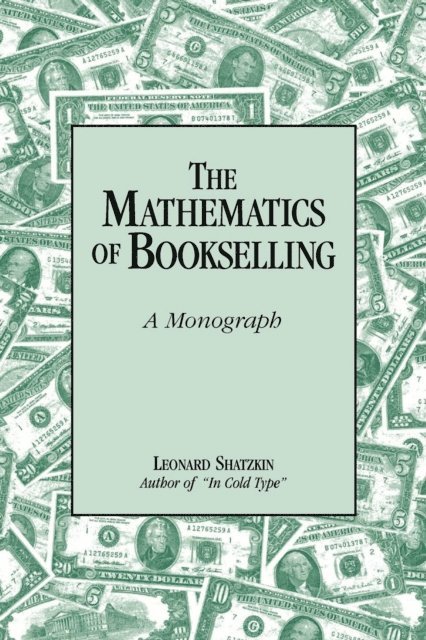
The Mathematics of Bookselling is a definitive resource for book retailers looking to maximize margins and profits through the proven pricing and inventory management practices developed by Leonard Shatzkin, one of 20th century book publishing''s most innovative executives. Because bookselling involves dealing with so many different products from so many different suppliers with so many different prices and margins, it is perhaps the most complex retailing challenge there is. The Mathematics of Bookselling, a monograph by Leonard Shatzkin, explores a variety of the real-life challenges booksellers face -- what and when to buy, how margin (the amount made on a sale) and turn (the speed at which inventory brought in gets sold) affect profitability, whether to add or subtract titles from the mix -- and lays out the logic and calculations by which the "right" answers can be found. Leonard Shatzkin was perhaps the most far-sighted and groundbreaking executive in American trade publishing after World War II, working for Viking, Doubleday, Macmillan, and McGraw-Hill. He showed publishers the benefits of more extensive sales coverage when he more than doubled the size of Doubleday''s field force in the 1950s. He pioneered vendor-managed inventory in the book business during the same time period. But, most important, he was the first publishing executive to concern himself with the intricacies of bookstore profitability. He came to the conclusion that there was much more leverage for both publisher and store in picking the right books at the right time than in increasing store discounts (which is, ultimately, a zero-sum game). And he had the rather unconventional view that returns were a good thing for both publisher and retailer, although he makes it clear in The Mathematics of Bookselling that intelligent inventory management minimizes them and uses them as a tool, not a crutch or a substitute for poor buying.