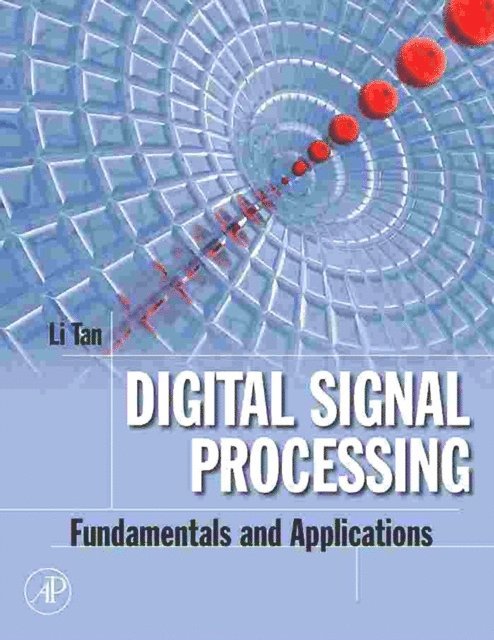
Li Tan – författare
977 kr
Läs direkt efter köp
739 kr
Läs direkt efter köp
807 kr
Läs direkt efter köp
1 223 kr
Skickas inom 5-8 vardagar
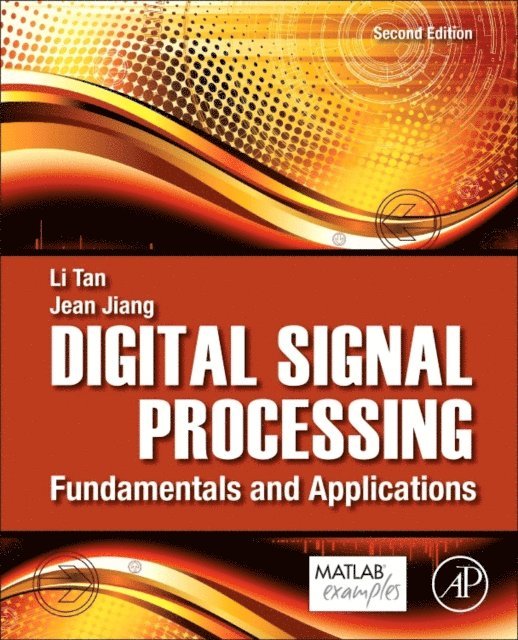
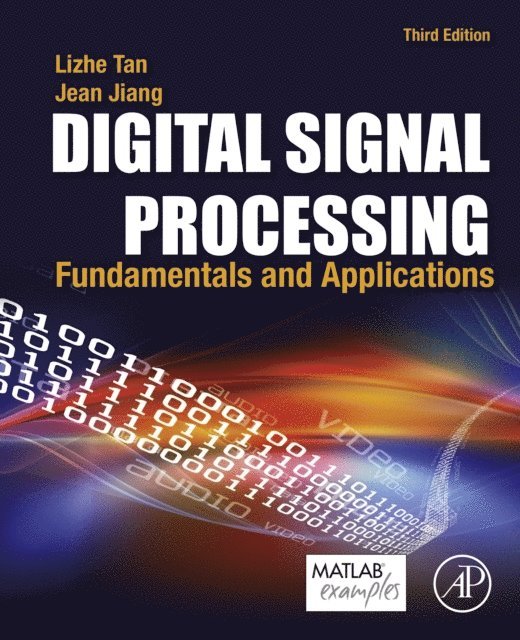
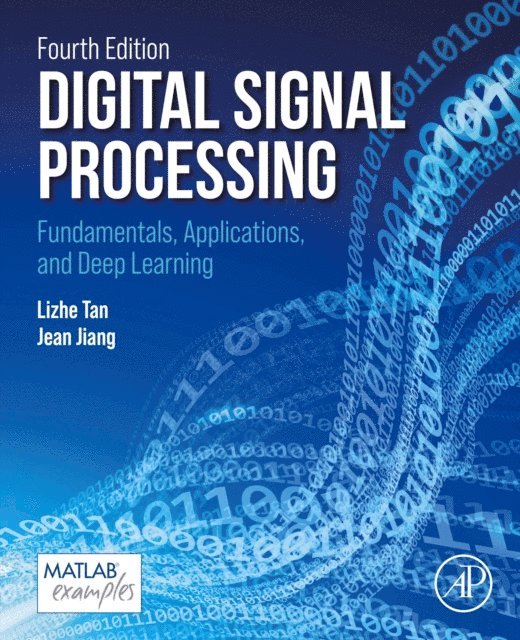
Digital Signal Processing: Fundamentals, Applications, and Deep Learning, Fourth Edition introduces students to the fundamental principles of digital signal processing (DSP) while also providing a working knowledge that they take with them into their engineering careers. Many instructive, worked examples are used to illustrate the material, and the use of mathematics is minimized for an easier grasp of concepts. As such, this title is also useful as a reference for non-engineering students and practicing engineers.This book goes beyond DSP theory, showing the implementation of algorithms in hardware and software. Additional topics covered include DSP for artificial intelligence, adaptive filtering with noise reduction and echo cancellations, speech compression, signal sampling, digital filter realizations, filter design, multimedia applications, over-sampling, etc. More advanced topics are also covered, such as adaptive filters, speech compression such as pulse-code modulation, µ-law, adaptive differential pulse-code modulation, multi-rate DSP, oversampling analog-to-digital conversion, sub-band coding, wavelet transform, and neural networks.
Covers DSP principles with various examples of real-world DSP applications on noise cancellation, communications, control applications, and artificial intelligenceIncludes application examples using DSP techniques for deep learning neural networks to solve real-world problemsProvides a new chapter to cover principles of artificial neural networks and convolution neural networks with back-propagation algorithmsProvides hands-on practice, with MATLAB code for worked examples and C programs for real-time DSP for students at https://www.elsevier.com/books-and-journals/book-companion/9780443273353Offers teaching support, including an image bank, full solutions manual, and MATLAB projects for qualified instructors, available for request at https://educate.elsevier.com/97804432733531 357 kr
Läs direkt efter köp
752 kr
Läs direkt efter köp
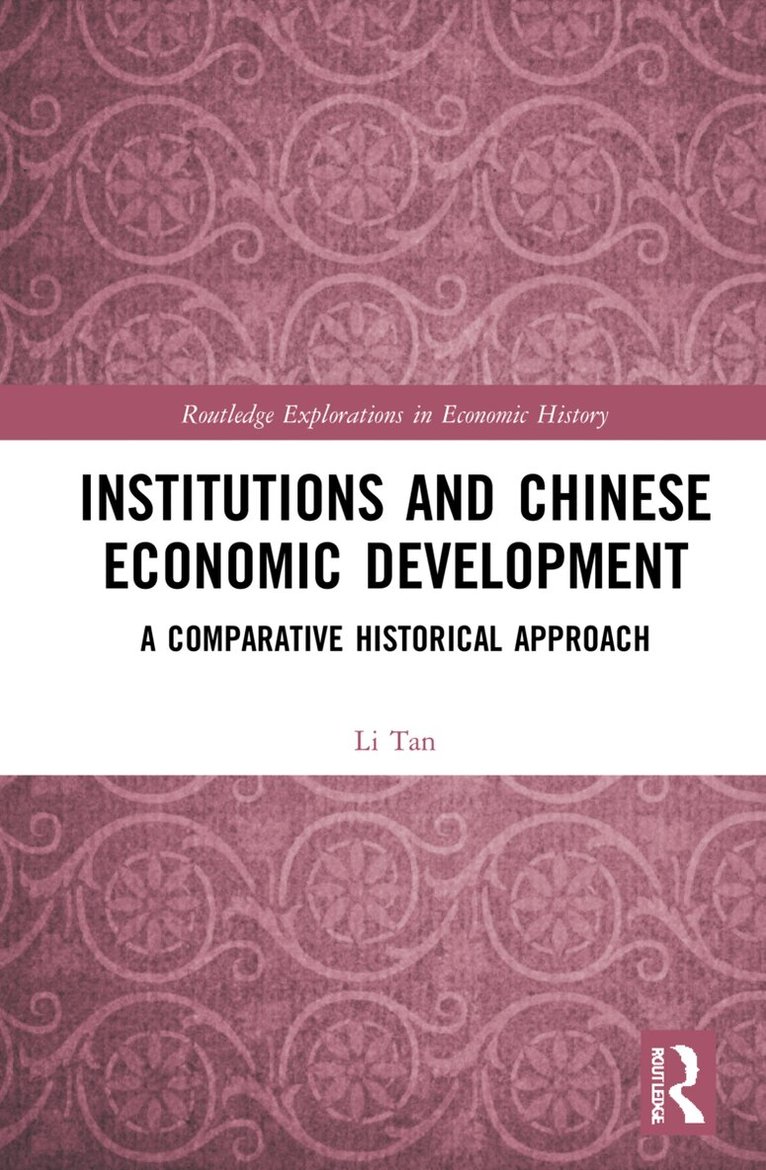
China’s rise as an economic power has posed some challenging questions: how did China achieve GDP growth that was even faster than the Four Asian Tigers? Is the "Chinese model" superior? Why hasn’t the rapid economic growth lead to democracy in the country as many observers expected? And can China sustain its rapid economic growth with its existing social system?
Institutions and Chinese Economic Development: A Comparative Historical Approach explores these questions by studying the historical relationship between institutions and economic development in China, drawing comparisons with England, Japan and other Asian economies as appropriate. The investigation focuses on several junctures in China’s economic development: the starting point of the divergence between China and the West; the externally-provoked industrial development in the late 19th century; and the contemporary Chinese Miracle. The analysis foregrounds the role played by Chinese institutions and examines their effects on both the country’s failure to industrialize in the past and its economic achievements in recent time. The book also asks whether, without reform to the existing state institutions, China might still be subject to the historical dynastic cycles today, despite its recent economic success.
This work is of great interest to students and scholars of the Chinese economy, economic history and institutional economics, as well as comparative history and Chinese studies more broadly.
759 kr
Läs direkt efter köp
China’s rise as an economic power has posed some challenging questions: how did China achieve GDP growth that was even faster than the Four Asian Tigers? Is the "Chinese model" superior? Why hasn’t the rapid economic growth lead to democracy in the country as many observers expected? And can China sustain its rapid economic growth with its existing social system?
Institutions and Chinese Economic Development: A Comparative Historical Approach explores these questions by studying the historical relationship between institutions and economic development in China, drawing comparisons with England, Japan and other Asian economies as appropriate. The investigation focuses on several junctures in China’s economic development: the starting point of the divergence between China and the West; the externally-provoked industrial development in the late 19th century; and the contemporary Chinese Miracle. The analysis foregrounds the role played by Chinese institutions and examines their effects on both the country’s failure to industrialize in the past and its economic achievements in recent time. The book also asks whether, without reform to the existing state institutions, China might still be subject to the historical dynastic cycles today, despite its recent economic success.
This work is of great interest to students and scholars of the Chinese economy, economic history and institutional economics, as well as comparative history and Chinese studies more broadly.
2 244 kr
Skickas inom 10-15 vardagar
656 kr
Skickas inom 10-15 vardagar
267 kr
Skickas inom 5-8 vardagar