Linus Bylund - Böcker
Visar alla böcker från författaren Linus Bylund. Handla med fri frakt och snabb leverans.
3 produkter
3 produkter
Education for Sustainable Development in an Unequal World
Biopolitics, Differentiation and Affirmative Alternatives
Inbunden, Engelska, 2024
1 178 kr
Skickas inom 7-10 vardagar
Education for Sustainable Development (ESD) is recurrently depicted as an enterprise that unites humanity in a common pursuit of a more just and sustainable world. But how is this enterprise pursued on a planet that is enormously unequal? Drawing on biopolitical theory and rich empirical data from different contexts around the world, this book explores how ESD is unpacked depending on whether people are rich or poor. The book demonstrates how ESD is adapted to the lifestyles and living conditions of different populations. The implication of this depoliticized sensitivity to local ‘realities’, the book argues, is that inequality becomes accommodated and that different responsibilities are assigned to rich and poor. Ultimately, the book considers alternatives to this biopolitical divide.
Education for Sustainable Development in an Unequal World
Biopolitics, Differentiation and Affirmative Alternatives
Häftad, Engelska, 2026
385 kr
Skickas
Education for Sustainable Development (ESD) is recurrently depicted as an enterprise that unites humanity in a common pursuit of a more just and sustainable world. But how is this enterprise pursued on a planet that is enormously unequal? Drawing on biopolitical theory and rich empirical data from different contexts around the world, this book explores how ESD is unpacked depending on whether people are rich or poor. The book demonstrates how ESD is adapted to the lifestyles and living conditions of different populations. The implication of this depoliticized sensitivity to local ‘realities’, the book argues, is that inequality becomes accommodated and that different responsibilities are assigned to rich and poor. Ultimately, the book considers alternatives to this biopolitical divide.
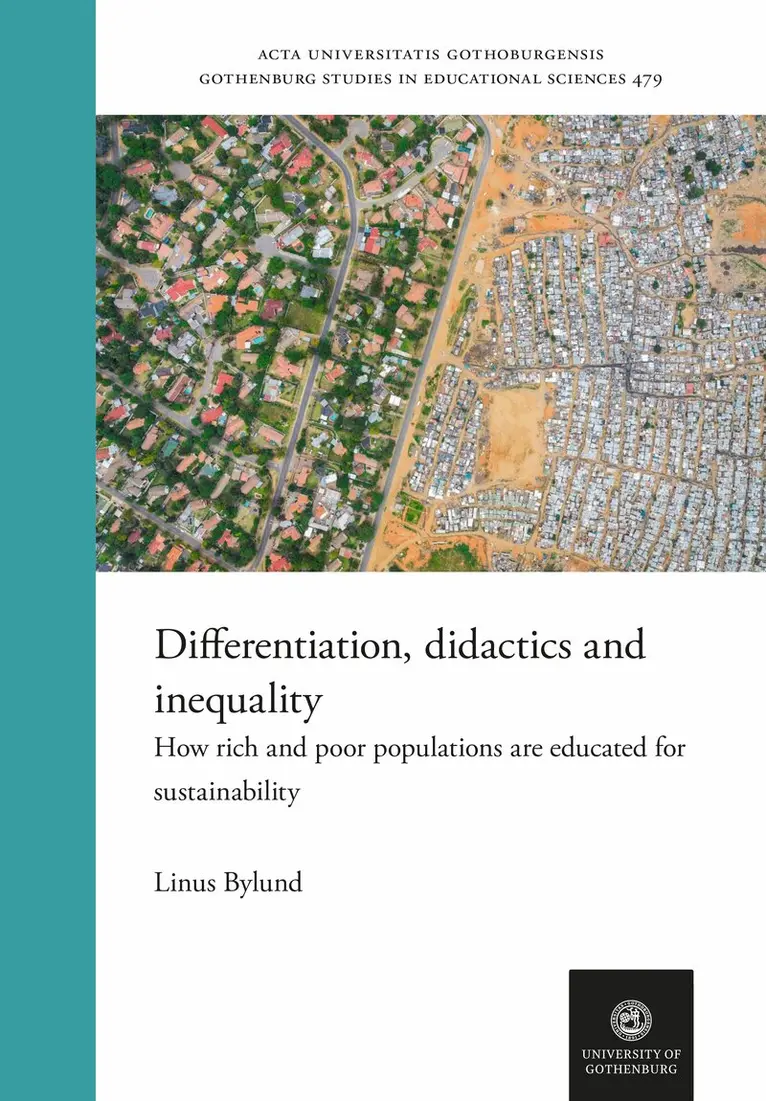
Differentiation, didactics and inequality: How rich and poor populations are educated for sustainability
Häftad, Engelska, 2023
336 kr
Skickas inom 5-8 vardagar
The world is facing pressing challenges arising from human activities, such as climate change, biodiversity loss, and depletion of resources. To meet these challenges, UNESCO has launched three initiatives on education for sustainable development (ESD) over the course of the past two decades. These educational initiatives have been global in their scope and the ambition with UNESCO’s work is to engage humanity collectively in a common endeavor for a just and sustainable future. However, this compilation thesis critically examines the viability of implementing ESD in an equal and just manner in a world marked by staggering inequality. It can be questioned whether all of humanity is addressed in a just and equal way or whether ESD is rather adapted and differentiated to “suit” rich and poor populations’ perceived lives and lifestyles. The thesis takes a starting point in these queries by exploring and problematizing how educational differentiation, didactics and inequality are interlaced in ESD. Drawing on Foucauldian biopolitical theory, the thesis thus aims to explore and problematize educational differentiation between rich and poor populations in the global implementation of ESD from a didactical perspective. This is done through a problematization of educational differentiation through the didactic who?-question, understood as a governing tool that can accommodate difference and diversity among students, but also a tool that carries the risk of perpetuating societal inequalities. Furthermore, the thesis empirically explores how different student populations are separated and constructed as in need of different interventions in global ESD policy, and how a global ESD programme is locally adapted to students’ lives and lifestyles in schools in different contexts in Rwanda, Sweden, South Africa and Uganda. Ultimately, the thesis locates “problems” associated with biopolitical differentiation in ESD and elaborates on potential didactical responses to such problems.