Lippi-Green Rosina L. Lippi-Green – författare
Visar alla böcker från författaren Lippi-Green Rosina L. Lippi-Green. Handla med fri frakt och snabb leverans.
3 produkter
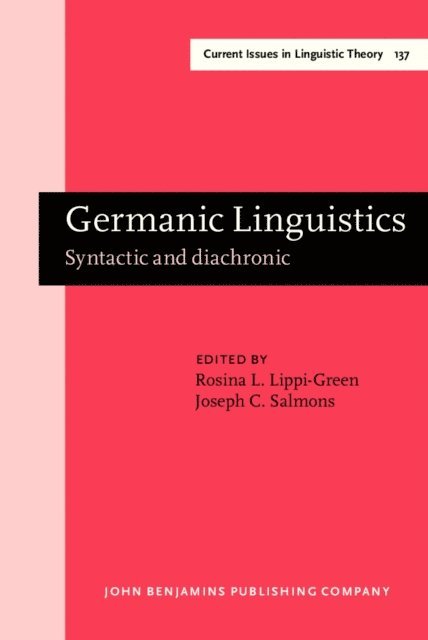
Germanic Linguistics
Syntactic and diachronic
Av Salmons Joseph C. Salmons, Lippi-Green Rosina L. Lippi-Green
E-bok, 1996
1477 kr
Lägg i varukorg
This volume contains ten revised and expanded papers selected from the dozens presented at the last Michigan-Berkeley Germanic Linguistics Roundtable, five contributions each from syntax (by Werner Abraham, Sarah Fagan, Isabella Barbier, John te Velde, and Ruth Lanouette) and historical linguistics …
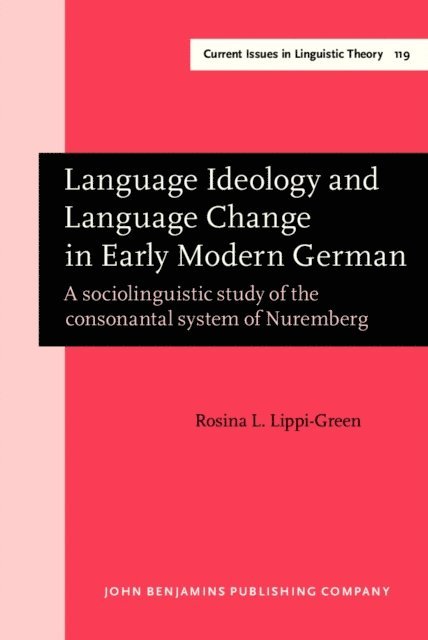
Language Ideology and Language Change in Early Modern German
A sociolinguistic study of the consonantal system of Nuremberg
Av Lippi-Green Rosina L. Lippi-Green
E-bok, 1994
1445 kr
Lägg i varukorg
This quantitative study, based on a computerized corpus of texts written by five men in early 16th-century Nuremberg, employs multivariate GLM statistical procedures to analyze the way linguistic, social and stylistic factors work individually and in interaction to influence variation observed in …
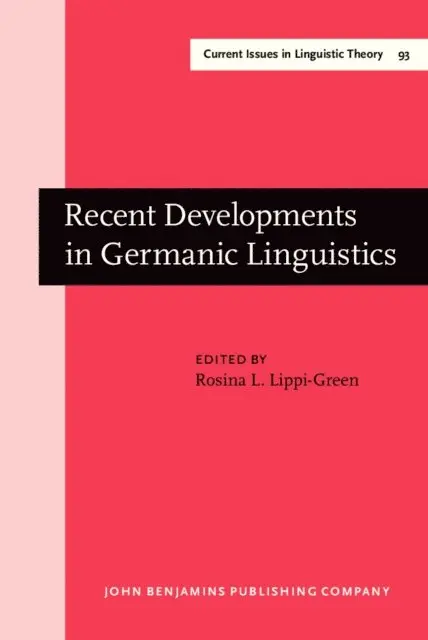
Recent Developments in Germanic Linguistics
Av Lippi-Green Rosina L. Lippi-Green
E-bok, 1992
1477 kr
Lägg i varukorg
These are selected papers from the Second Annual Michigan/Berkeley Germanic Linguistics Roundtable held in April of 1991 at Ann Arbor. Topics include the evolution of the gender system, the delineation of the relative clause in historical texts, and language as a political tool in the new Europe.