Lisa T. Sarasohn - Böcker
Visar alla böcker från författaren Lisa T. Sarasohn. Handla med fri frakt och snabb leverans.
4 produkter
4 produkter
1 191 kr
Skickas inom 10-15 vardagar
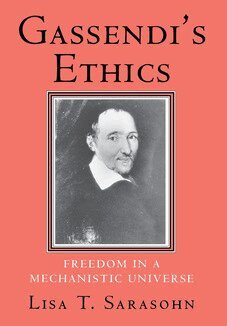
This is the first book to explore the ethical thought of Pierre Gassendi, the seventeenth-century French priest who rehabilitated Epicurean philosophy in the Western tradition. Lisa T. Sarasohn's discussion of the relationship between Gassendi's philosophy of nature and his ethics discloses the underlying unity of his philosophy and elucidates this critical figure in the intellectual revolution.Sarasohn demonstrates that Gassendi's ethics was an important part of his attempt to Christianize Epicureanism. She shows how Gassendi integrated ideas of human freedom into a neo-Epicurean ethic where pleasure is the highest good, yet maintained a consistent belief in Christian providence. These views challenged what were then the new systems of philosophy, Hobbesian materialism and Cartesian rationalism. Sarasohn places Gassendi in his historical and intellectual context, considering him in relation to contemporary philosophers and within the patronage system that conditioned his own freedom. She investigates the links between his ethical thought and philosophy of science and makes sense of his attacks on astrology. Finally, her work clarifies Pierre Gassendi's considerable influence on seventeenth-century ethical and political philosophy, particularly on the work of John Locke—and thus on the whole English liberal tradition in political philosophy.
Del 128 - The Johns Hopkins University Studies in Historical and Political Science
Natural Philosophy of Margaret Cavendish
Reason and Fancy during the Scientific Revolution
Inbunden, Engelska, 2010
854 kr
Skickas
Margaret Cavendish, Duchess of Newcastle, led a remarkable-and controversial-life, writing poetry and prose and philosophizing on the natural world at a time when women were denied any means of a formal education. Lisa T. Sarasohn acutely examines the brilliant work of this untrained mind and explores the unorthodox development of her natural philosophy. Cavendish wrote copiously on such wide-ranging topics as gender, power, manners, scientific method, and animal rationality. The first woman to publish her own natural philosophy, Cavendish was not afraid to challenge the new science and even ridiculed the mission of the Royal Society. Her philosophy reflected popular culture and engaged with the most radical philosophies of her age. To understand Cavendish's scientific thought, Sarasohn explains, is to understand the reception of new knowledge through both insider and outsider perspectives in early modern England. In close readings of Cavendish's writings-poetry, treatises, stories, plays, romances, and letters-Sarasohn explores the fantastic and gendered elements of her natural philosophy.Cavendish saw knowledge as a continuum between reason and fancy, and her work integrated imaginative speculation and physical science. Because she was denied the university education available to her male counterparts, she embraced an epistemology that favored contemplation and intuition over logic and empiricism. The Natural Philosophy of Margaret Cavendish serves as a guide to the unusual and complex philosophy of one of the seventeenth century's most intriguing minds. It not only celebrates Cavendish as a true figure of the scientific age but also contributes to a broader understanding of the contested nature of the scientific revolution.
363 kr
Skickas inom 7-10 vardagar
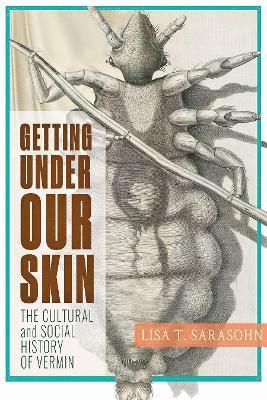
How vermin went from being part of everyone's life to a mark of disease, filth, and lower status.For most of our time on this planet, vermin were considered humanity's common inheritance. Fleas, lice, bedbugs, and rats were universal scourges, as pervasive as hunger or cold, at home in both palaces and hovels. But with the spread of microscopic close-ups of these creatures, the beginnings of sanitary standards, and the rising belief that cleanliness equaled class, vermin began to provide a way to scratch a different itch: the need to feel superior, and to justify the exploitation of those pronounced ethnically—and entomologically—inferior. In Getting Under Our Skin, Lisa T. Sarasohn tells the fascinating story of how vermin came to signify the individuals and classes that society impugns and ostracizes. How did these creatures go from annoyance to social stigma? And how did people thought verminous become considered almost a species of vermin themselves? Focusing on Great Britain and North America, Sarasohn explains how the label "vermin" makes dehumanization and violence possible. She describes how Cromwellians in Ireland and US cavalry on the American frontier both justified slaughter by warning "Nits grow into lice." Nazis not only labeled Jews as vermin, they used insecticides in the gas chambers to kill them during the Holocaust.Concentrating on the insects living in our bodies, clothes, and beds, Sarasohn also looks at rats and their social impact. Besides their powerful symbolic status in all cultures, rats' endurance challenges all human pretentions. From eighteenth-century London merchants anointing their carved bedsteads with roasted cat to repel bedbugs to modern-day hedge fund managers hoping neighbors won't notice exterminators in their penthouses, the studies in this book reveal that vermin continue to fuel our prejudices and threaten our status. Getting Under Our Skin will appeal to cultural historians, naturalists, and to anyone who has ever scratched—and then gazed in horror.
2 419 kr
Skickas inom 10-15 vardagar
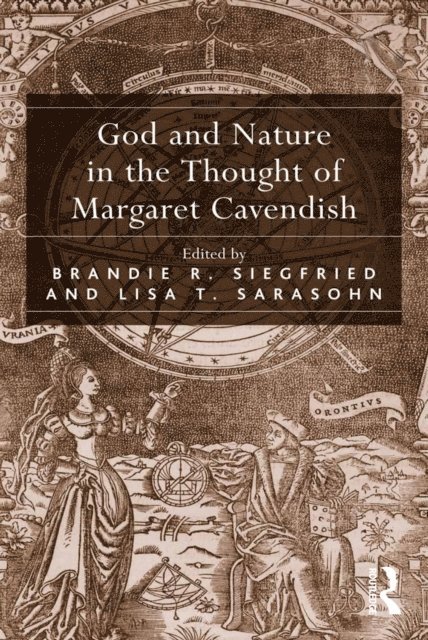
Only recently have scholars begun to note Margaret Cavendish’s references to 'God,' 'spirits,' and the 'rational soul,' and little has been published in this regard. This volume addresses that scarcity by taking up the theological threads woven into Cavendish’s ideas about nature, matter, magic, governance, and social relations, with special attention given to Cavendish’s literary and philosophical works. Reflecting the lively state of Cavendish studies, God and Nature in the Thought of Margaret Cavendish allows for disagreements among the contributing authors, whose readings of Cavendish sometimes vary in significant ways; and it encourages further exploration of the theological elements evident in her literary and philosophical works. Despite the diversity of thought developed here, several significant points of convergence establish a foundation for future work on Cavendish’s vision of nature, philosophy, and God. The chapters collected here enhance our understanding of the intriguing-and sometimes brilliant-contributions Cavendish made to debates about God’s place in the scientific cosmos.