Lois R. Harris – författare
Visar alla böcker från författaren Lois R. Harris. Handla med fri frakt och snabb leverans.
4 produkter
4 produkter
Häftad, Engelska, 2026
1 606 kr
Kommande
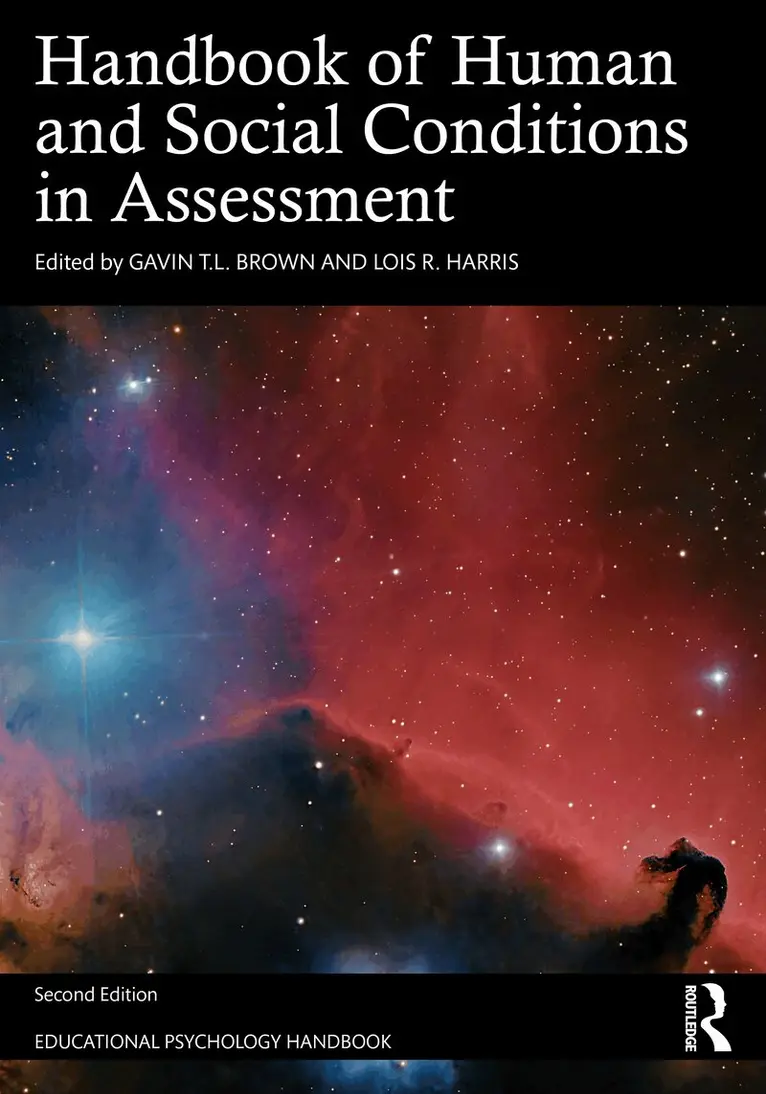
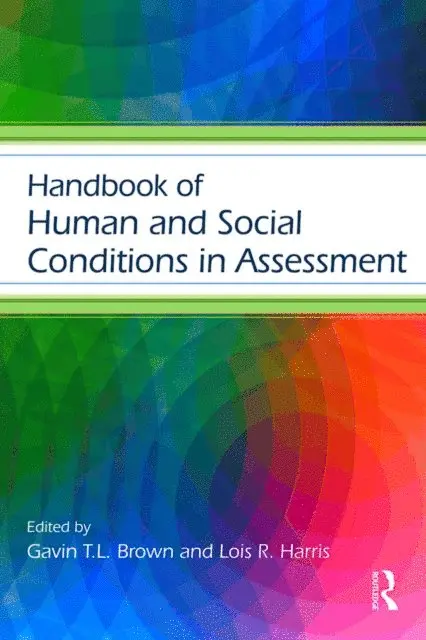
The Handbook of Human and Social Conditions in Assessment is the first book to explore assessment issues and opportunities occurring due to the real world of human, cultural, historical, and societal influences upon assessment practices, policies, and statistical modeling. This book engages with numerous forms of assessment, from classroom-level formative assessment practices to national accountability and international comparative testing practices, all of which are significantly influenced by social and cultural conditions. Across four sections, assessment foundations and practice are examined in relation to teachers, students, classroom conditions, and cultural factors.A unique contribution to the field of educational psychology, this revised and expanded second edition extends its coverage into studies of diversity. Original and synthesized research on individual differences (gifted and talented, physical and intellectual disabilities, gender identities) and populations (cultures, language, religion, region, socio-economic status, educational level) offer a path into assessment beyond what has been established through the field’s historic reliance on “WEIRD” samples. In addition, each chapter will examine evidence or theories that offer counterarguments or contradictions to its perspectives to ensure that diversity of thought is well-represented.Taken together, the chapters in this volume will provide educators, scholars, test developers, and policymakers with an understanding of the human and social complexities that shape assessment at all levels of learning.
Inbunden, Engelska, 2026
3 415 kr
Kommande
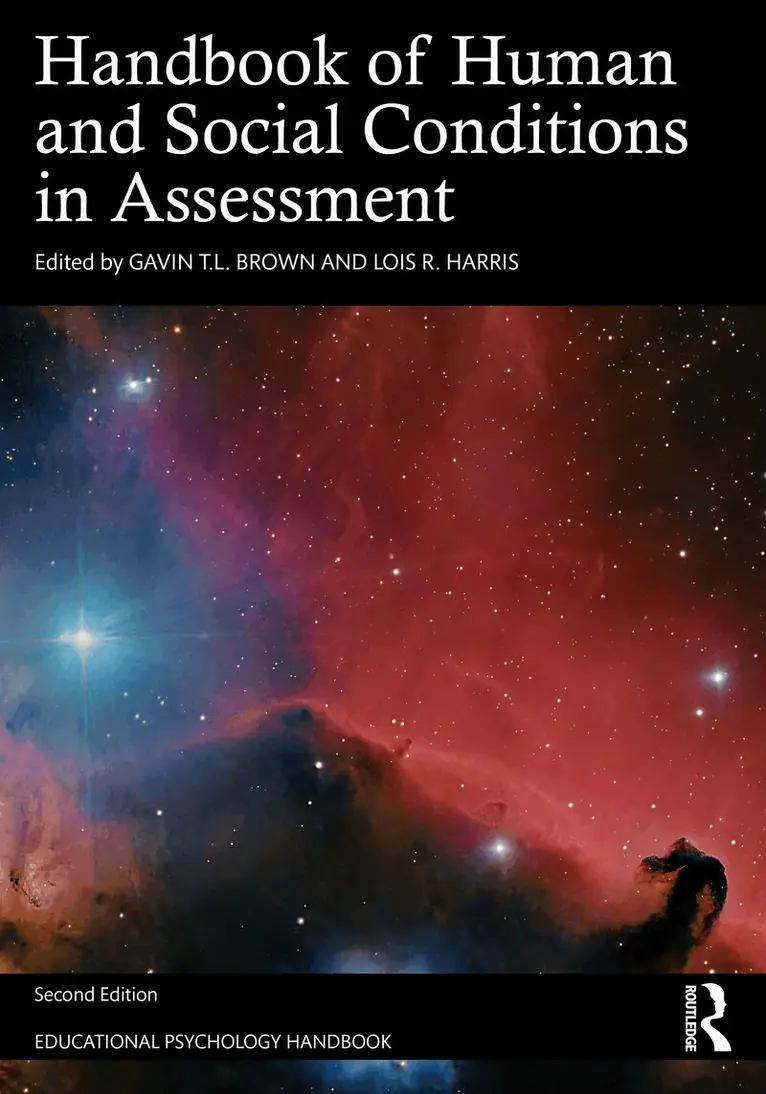
The Handbook of Human and Social Conditions in Assessment is the first book to explore assessment issues and opportunities occurring due to the real world of human, cultural, historical, and societal influences upon assessment practices, policies, and statistical modeling. This book engages with numerous forms of assessment, from classroom-level formative assessment practices to national accountability and international comparative testing practices, all of which are significantly influenced by social and cultural conditions. Across four sections, assessment foundations and practice are examined in relation to teachers, students, classroom conditions, and cultural factors.A unique contribution to the field of educational psychology, this revised and expanded second edition extends its coverage into studies of diversity. Original and synthesized research on individual differences (gifted and talented, physical and intellectual disabilities, gender identities) and populations (cultures, language, religion, region, socio-economic status, educational level) offer a path into assessment beyond what has been established through the field’s historic reliance on “WEIRD” samples. In addition, each chapter will examine evidence or theories that offer counterarguments or contradictions to its perspectives to ensure that diversity of thought is well-represented.Taken together, the chapters in this volume will provide educators, scholars, test developers, and policymakers with an understanding of the human and social complexities that shape assessment at all levels of learning.
Inbunden, Engelska, 2016
3 855 kr
Skickas inom 10-15 vardagar
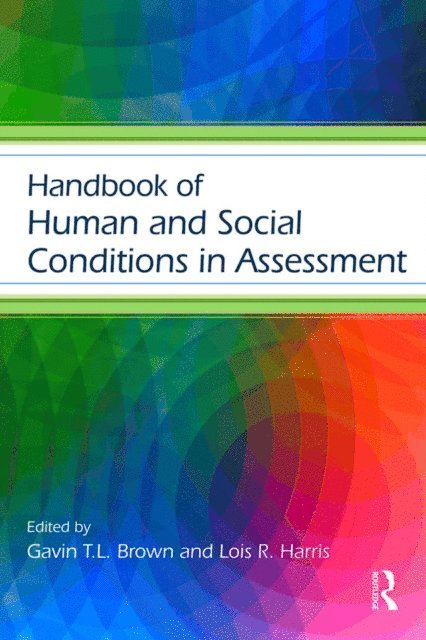
The Handbook of Human and Social Conditions in Assessment is the first book to explore assessment issues and opportunities occurring due to the real world of human, cultural, historical, and societal influences upon assessment practices, policies, and statistical modeling. With chapters written by experts in the field, this book engages with numerous forms of assessment: from classroom-level formative assessment practices to national accountability and international comparative testing practices all of which are significantly influenced by social and cultural conditions. A unique and timely contribution to the field of Educational Psychology, the Handbook of Human and Social Conditions in Assessment is written for researchers, educators, and policy makers interested in how social and human complexity affect assessment at all levels of learning. Organized into four sections, this volume examines assessment in relation to teachers, students, classroom conditions, and cultural factors. Each section is comprised of a series of chapters, followed by a discussant chapter that synthesizes key ideas and offers directions for future research. Taken together, the chapters in this volume demonstrate that teachers, test creators, and policy makers must account for the human and social conditions that shape assessment if they are to implement successful assessment practices which accomplish their intended outcomes.
Häftad, Engelska, 2016
1 762 kr
Skickas inom 10-15 vardagar
The Handbook of Human and Social Conditions in Assessment is the first book to explore assessment issues and opportunities occurring due to the real world of human, cultural, historical, and societal influences upon assessment practices, policies, and statistical modeling. With chapters written by experts in the field, this book engages with numerous forms of assessment: from classroom-level formative assessment practices to national accountability and international comparative testing practices all of which are significantly influenced by social and cultural conditions. A unique and timely contribution to the field of Educational Psychology, the Handbook of Human and Social Conditions in Assessment is written for researchers, educators, and policy makers interested in how social and human complexity affect assessment at all levels of learning. Organized into four sections, this volume examines assessment in relation to teachers, students, classroom conditions, and cultural factors. Each section is comprised of a series of chapters, followed by a discussant chapter that synthesizes key ideas and offers directions for future research. Taken together, the chapters in this volume demonstrate that teachers, test creators, and policy makers must account for the human and social conditions that shape assessment if they are to implement successful assessment practices which accomplish their intended outcomes.