Lorna Martens - Böcker
Visar alla böcker från författaren Lorna Martens. Handla med fri frakt och snabb leverans.
5 produkter
5 produkter
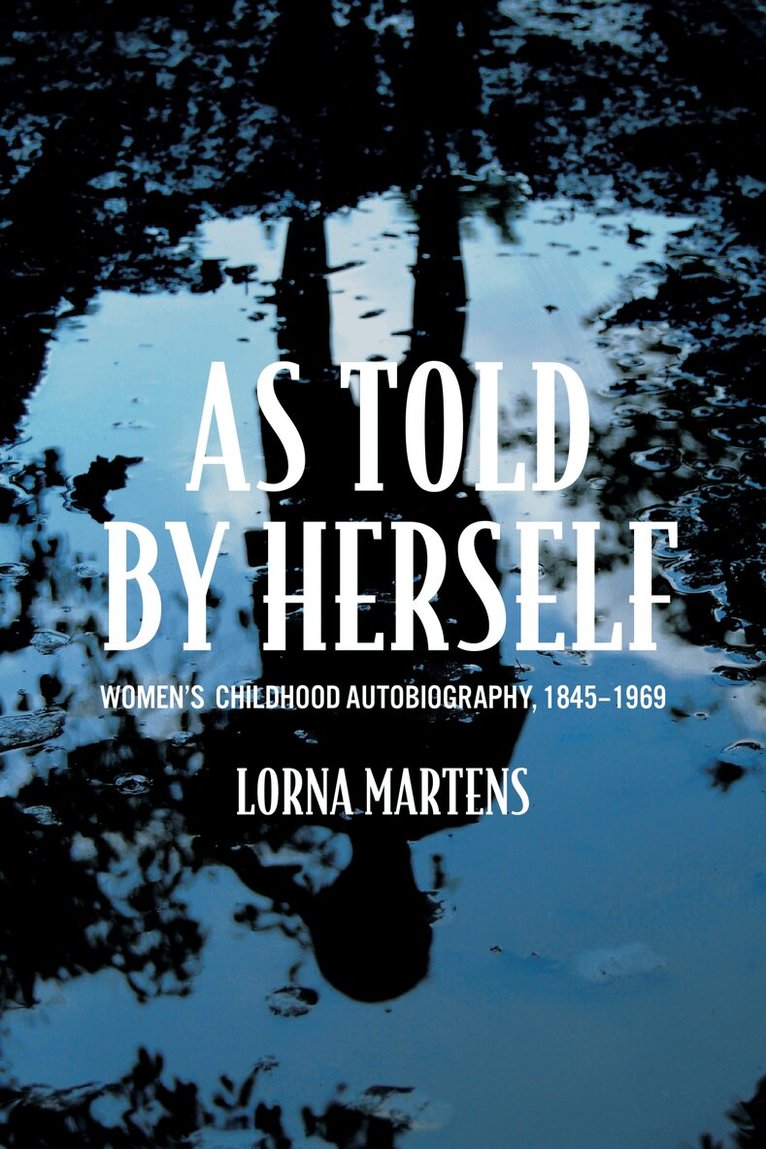
909 kr
Skickas inom 10-15 vardagar
As Told by Herself offers the first systematic study of women's autobiographical writing about childhood. More than 175 works—primarily from English-speaking countries and France, as well as other European countries—are presented here in historical sequence, allowing Lorna Martens to discern and reveal patterns as they emerge and change over time. What do the authors divulge, conceal, and emphasize? How do they understand the experience of growing up as girls? How do they understand themselves as parts of family or social groups, and what role do other individuals play in their recollections? To what extent do they concern themselves with issues of memory, truth, and fictionalization?Stopping just before second-wave feminism brought an explosion in women's childhood autobiographical writing, As Told by Herself explores the genre's roots and development from the mid-nineteenth century, and recovers many works that have been neglected or forgotten. The result illustrates how previous generations of women—in a variety of places and circumstances—understood themselves and their upbringing, and how they thought to present themselves to contemporary and future readers.
493 kr
Skickas inom 7-10 vardagar
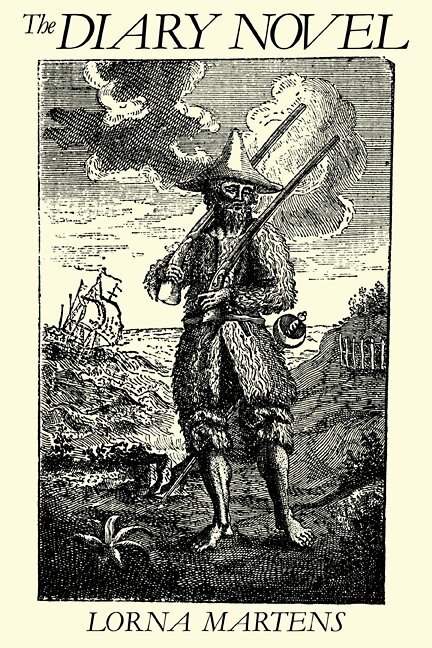
Although the diary novel is often regarded as a twentieth-century genre due to its particular popularity in this century, the form actually has a long history that originates in the eighteenth century. The Diary Novel is the first book to trace that history, concentrating on French, German and English works with some attention given to Russian and Scandinavian traditions as well. Beginning with a discussion of the definition of the diary novel and some observations about genre study and criticism, Lorna Martens proceeds with interpretations of major diary novels by writers such as Defoe, Gide, Rilke, Frisch, Butor and Lessing. The Diary Novel includes sections on the influence of Richardson and the letter journal novel, the publication of the journaux intimes, psychological fiction, reliability of the narrator and the contemporary diary novel.
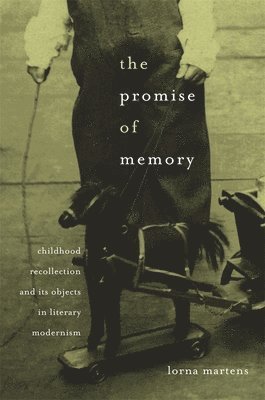
Promise of Memory
Childhood Recollection and Its Objects in Literary Modernism
Inbunden, Engelska, 2011
490 kr
Skickas inom 10-15 vardagar
Readers once believed in Proust’s madeleine and in Wordsworth’s recollections of his boyhood—but that was before literary culture began to defer to Freud’s questioning of adult memories of childhood. In this first sustained look at childhood memories as depicted in literature, Lorna Martens reveals how much we may have lost by turning our attention the other way. Her work opens a new perspective on early recollection—how it works, why it is valuable, and how shifts in our understanding are reflected in both scientific and literary writings.Science plays an important role in The Promise of Memory, which is squarely situated at the intersection of literature and psychology. Psychologists have made important discoveries about when childhood memories most often form, and what form they most often take. These findings resonate throughout the literary works of the three writers who are the focus of Martens’ book. Proust and Rilke, writing in the modernist period before Freudian theory penetrated literary culture, offer original answers to questions such as “Why do writers consider it important to remember childhood? What kinds of things do they remember? What do their memories tell us?” In Walter Benjamin, Martens finds a writer willing to grapple with Freud, and one whose writings on childhood capture that struggle.For all three authors, places and things figure prominently in the workings of memory. Connections between memory and materiality suggest new ways of understanding not just childhood recollection but also the artistic inclination, which draws on a childlike way of seeing: object-focused, imaginative, and emotionally intense.
440 kr
Tillfälligt slut
Analyzes East German feminism for an American audience through an exploration of their women writers.From the 1960s on, women writers in the German Democratic Republic (GDR), including Christa Wolf, Irmtraud Morgner, Sarah Kirsch, Brigitte Reimann, Charlotte Worgitzky, Lia Pirskawetz, and Maya Wiens, produced a large, interesting body of writing on women's issues. The Promised Land? is the first book to interrogate the work of these writers as a group for their feminist ideas, ideas that are original, often upbeat, and mostly different from those of the Western feminist movement. In the GDR, a state that existed from 1949 to 1990, women had not only equal rights and good jobs, but also lavish maternity leave and generous childcare benefits designed to make work compatible with motherhood. The ideas presented by the writers discussed here include women as the subject of desire, femininity as a politically progressive model, remaking of the image of woman, and liberating women's speech. By studying these ideas through the lenses of cultural studies, feminist theory, and literary criticism, this book draws comparisons between the situation of women in the GDR and the United States, and between the GDR and Western feminism, and asks whether the GDR really was the "promised land" for women.
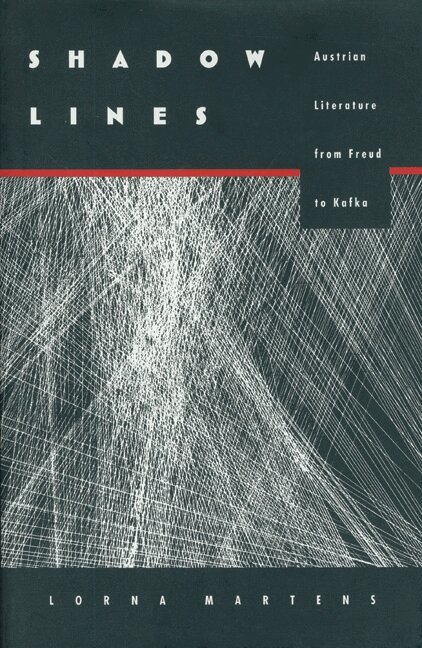
740 kr
Skickas inom 10-15 vardagar
Intellectual culture in early twentieth-century Austria reached levels of originality and excellence that have rarely been equalled before or since. Shadow Lines examines works by major novelists, dramatists, poets, and intellectuals of that extraordinary era—among them, Sigmund Freud, Arthur Schnitzler, Robert Musil, Hugo von Hofmannsthal, Rainer Maria Rilke, Ludwig Wittgenstein, and Franz Kafka. Lorna Martens considers how each of these authors contributed to a decisive transformation in Austrian culture, involving a shift away from the dialectical syntheses of much nineteenth-century German thought and culture to potent, unresolvable dualisms of known and unknown—orderly and chaotic—features of human experience: consciousness and the unconscious, reason and the irrational, language and the inexpressible. In most of these writers, according to Martens, all that is knowable, reasonable, and orderly is grounded in that which is dark, irrational, chaotic. What Martens calls "the dark area" emerges variously "as the unconscious (Freud), the sexual drive (Freud, Schnitzler, Musil), the death instinct (Freud, Schnitzler), the dangerous chaos below the surface of things (Rilke), the inaccessible totality (von Hofmannsthal), or the unsayable (Mauthner, von Hofmannsthal, Musil, Wittgenstein)." The essential yet enigmatic relation between the known and the unknown leads to much that is unsettling—and strangely fascinating—in these writers' works. A book that shrewdly relates the works of these authors to the intellectual and political turmoil of the times, Shadow Lines is a new critical appraisal of Austrian literature and intellectual culture at the dawn of the century.