Lorne Sossin – författare
Visar alla böcker från författaren Lorne Sossin. Handla med fri frakt och snabb leverans.
13 produkter
13 produkter
Häftad, Engelska, 2006
374 kr
Skickas inom 10-15 vardagar
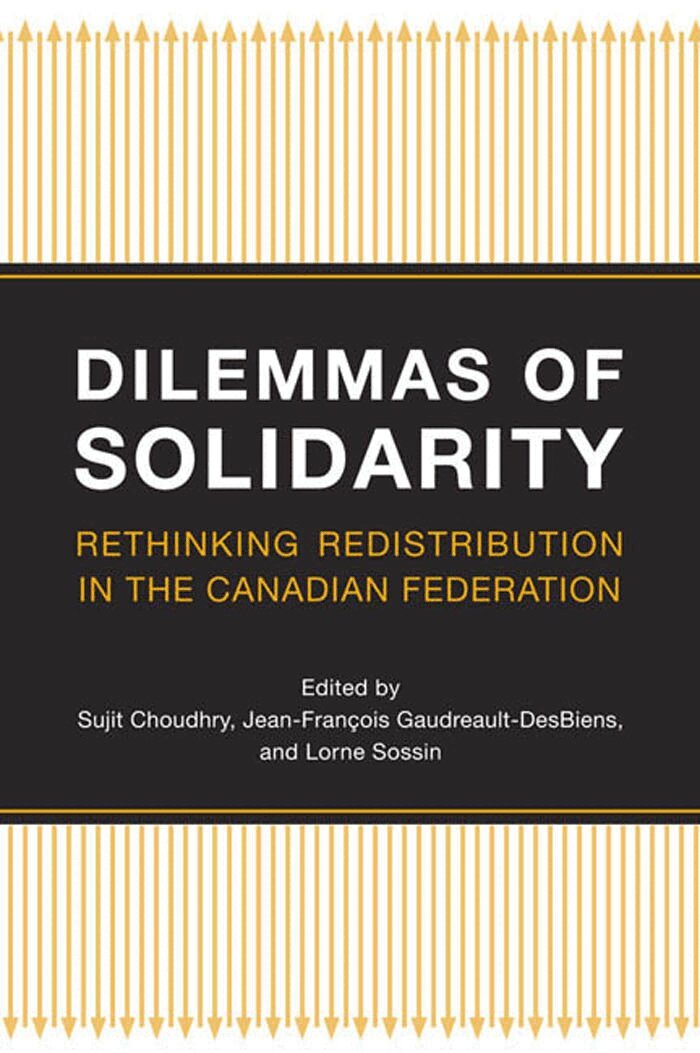
Since the rise of the Canadian welfare state in the aftermath of the Second World War, the politics of social policy and fiscal federalism have been at the centre of federal-provincial relations. Recent events have given impetus for scholars to re-examine these issues. In 2002, the Quebec Commission on Fiscal Imbalance released its report, which introduced the term 'vertical fiscal imbalance' into the vocabulary of Canadian politics. Essentially, the commission determined that a disjunction between revenue-raising capacity and expenditures involving different orders of government - vertical fiscal imbalance - was an urgent problem that must be addressed. Dilemmas of Solidarity is both a reflection on and response to that finding.Editors Sujit Choudhry, Jean-Francois Graudreault-Desbiens, and Lorne Sossin bring together an array of respected legal and political scholars to reflect on the Quebec Commission's findings. The contributors to this volume illustrate how recent debates surrounding Canada's equalization program suggest alternative ways to approach the issue. The goal of Dilemmas of Solidarity is to stand back from the particulars of different policy debates, to enable scholars to reflect on basic questions regarding redistribution. This fascinating collection will undoubtedly inform a more nuanced and wide-ranging debate both among academics and policy practitioners than has occurred in this past. Contributors:Paul BootheKatherine Boothe Sujit ChoudhryDavid DuffJean-Francois Gaudreault-DesBiensAndree LajoieAlain NoelPeter H. RussellRichard SimeonLorne SossinFrançois VaillancourtDaniel Weinstock.
Häftad, Engelska, 2009
604 kr
Skickas inom 5-8 vardagar
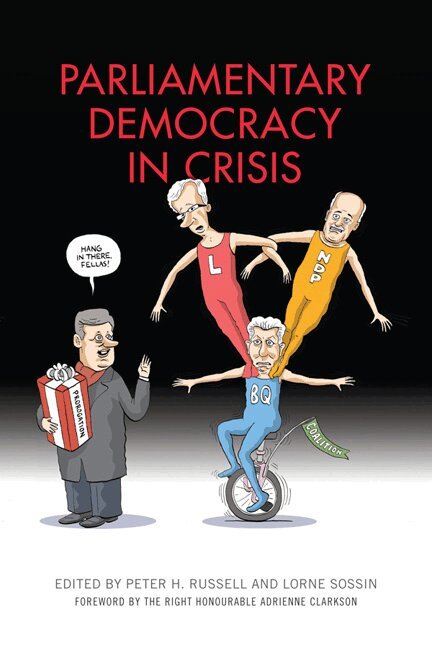
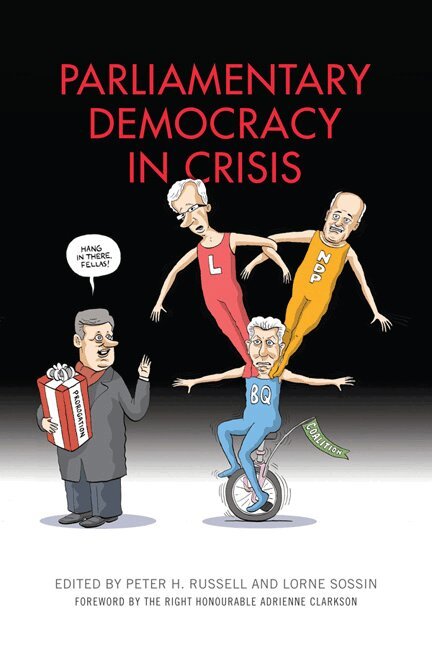
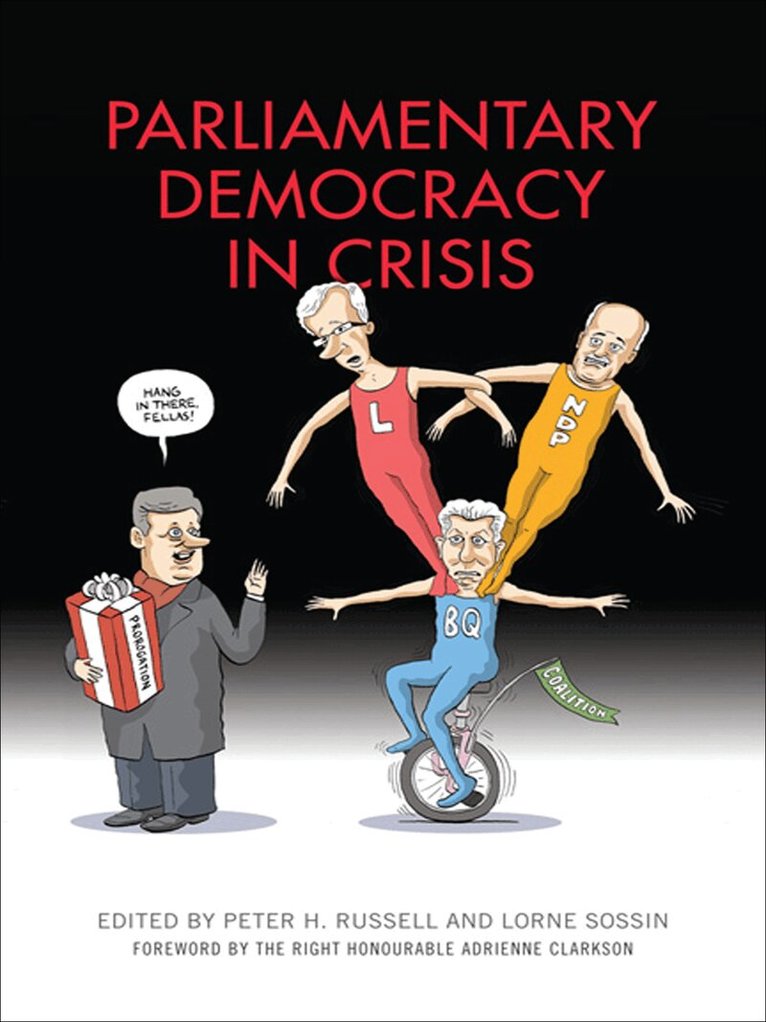
In November 2008, as the economic decline was being fully realized, Canada's newly elected minority government, led by Conservative Stephen Harper, presented a highly divisive fiscal update in advance of a proposed budget. Unable to support the motion, the Liberal and New Democratic Parties, with the backing of the Bloc Québécois, formed a coalition in order to seek a no-confidence vote and to form a new government. In response, Conservative cabinet ministers launched a media blitz, informing Canadians that the opposition was mounting a 'coup d'état.' Ultimately Governor General Michaëlle Jean allowed Parliament to be prorogued, the coalition fell apart, and a budget was accepted by the House in January 2009. However, widespread public uncertainty and confusion about the principles of government evident during the crisis revealed a grave lack of understanding about the mechanics and legalities of parliamentary democracy on the part of Canadians.With a foreword by former Governor General Adrienne Clarkson, Parliamentary Democracy in Crisis brings together journalists, political scientists, and leading constitutional experts to analyse the crisis and to discuss the nature of Canada's democracy. The contributors bring perspectives from both French and English Canada and cover all aspects of the crisis, including the prorogation of Parliament, the role of the governor general, the proposed Liberal-NDP coalition, the challenges of minority parliaments, and the now-evident rifts in the culture of Canadian democracy.Knowledgeable and comprehensive but still highly accessible, Parliamentary Democracy in Crisis provides a reasoned and timely response to Canada's parliamentary crisis of November 2008.
Häftad, Engelska, 2012
481 kr
Skickas inom 5-8 vardagar
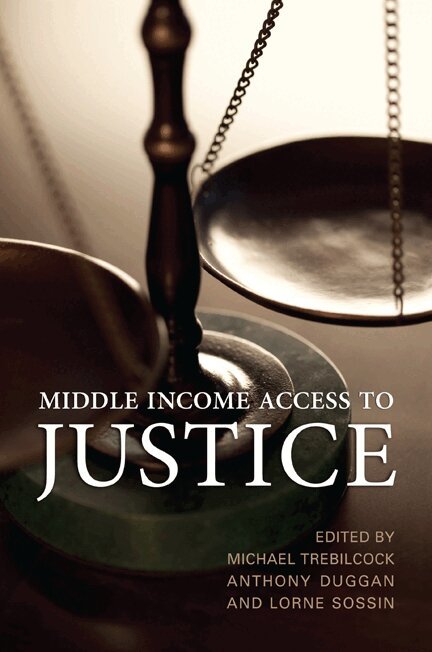
Though most conceptions of the rule of law assume equality before the law – and hence equal access to the justice system – this basic right is not being met for many low and middle income Canadians. This book focuses on the problem of civil access to justice for middle income earners – those whose household income is high enough to disqualify them from legal aid but not high enough to cover the costs of litigation.Featuring contributions by leading Canadian and international scholars, practitioners, and members of the judiciary, this multidisciplinary collection draws on scholarship in the fields of law, social science, and public policy. There is a particular emphasis on family law, consumer law, and employment law, as these are the areas where research has indicated that unmet legal needs are highest.Middle Income Access to Justice presents a variety of innovative solutions, from dispute resolution process reforms to the development of non-lawyer forms of assistance and new methods for funding legal expenses. In doing so, it lays the foundation for the development of a much-needed new delivery model to provide early intervention for legal services.
Inbunden, Engelska, 2012
971 kr
Skickas inom 5-8 vardagar
Though most conceptions of the rule of law assume equality before the law – and hence equal access to the justice system – this basic right is not being met for many low and middle income Canadians. This book focuses on the problem of civil access to justice for middle income earners – those whose household income is high enough to disqualify them from legal aid but not high enough to cover the costs of litigation.Featuring contributions by leading Canadian and international scholars, practitioners, and members of the judiciary, this multidisciplinary collection draws on scholarship in the fields of law, social science, and public policy. There is a particular emphasis on family law, consumer law, and employment law, as these are the areas where research has indicated that unmet legal needs are highest.Middle Income Access to Justice presents a variety of innovative solutions, from dispute resolution process reforms to the development of non-lawyer forms of assistance and new methods for funding legal expenses. In doing so, it lays the foundation for the development of a much-needed new delivery model to provide early intervention for legal services.
E-bok
PDF, Engelska, 2012604 kr
Läs direkt efter köp
Though most conceptions of the rule of law assume equality before the law – and hence equal access to the justice system – this basic right is not being met for many low and middle income Canadians. This book focuses on the problem of civil access to justice for middle income earners – those whose household income is high enough to disqualify them from legal aid but not high enough to cover the costs of litigation.Featuring contributions by leading Canadian and international scholars, practitioners, and members of the judiciary, this multidisciplinary collection draws on scholarship in the fields of law, social science, and public policy. There is a particular emphasis on family law, consumer law, and employment law, as these are the areas where research has indicated that unmet legal needs are highest.Middle Income Access to Justice presents a variety of innovative solutions, from dispute resolution process reforms to the development of non-lawyer forms of assistance and new methods for funding legal expenses. In doing so, it lays the foundation for the development of a much-needed new delivery model to provide early intervention for legal services.
E-bok
Engelska, 2012604 kr
Läs direkt efter köp
Though most conceptions of the rule of law assume equality before the law – and hence equal access to the justice system – this basic right is not being met for many low and middle income Canadians. This book focuses on the problem of civil access to justice for middle income earners – those whose household income is high enough to disqualify them from legal aid but not high enough to cover the costs of litigation.Featuring contributions by leading Canadian and international scholars, practitioners, and members of the judiciary, this multidisciplinary collection draws on scholarship in the fields of law, social science, and public policy. There is a particular emphasis on family law, consumer law, and employment law, as these are the areas where research has indicated that unmet legal needs are highest.Middle Income Access to Justice presents a variety of innovative solutions, from dispute resolution process reforms to the development of non-lawyer forms of assistance and new methods for funding legal expenses. In doing so, it lays the foundation for the development of a much-needed new delivery model to provide early intervention for legal services.
E-bok
PDF, Engelska, 2006692 kr
Läs direkt efter köp
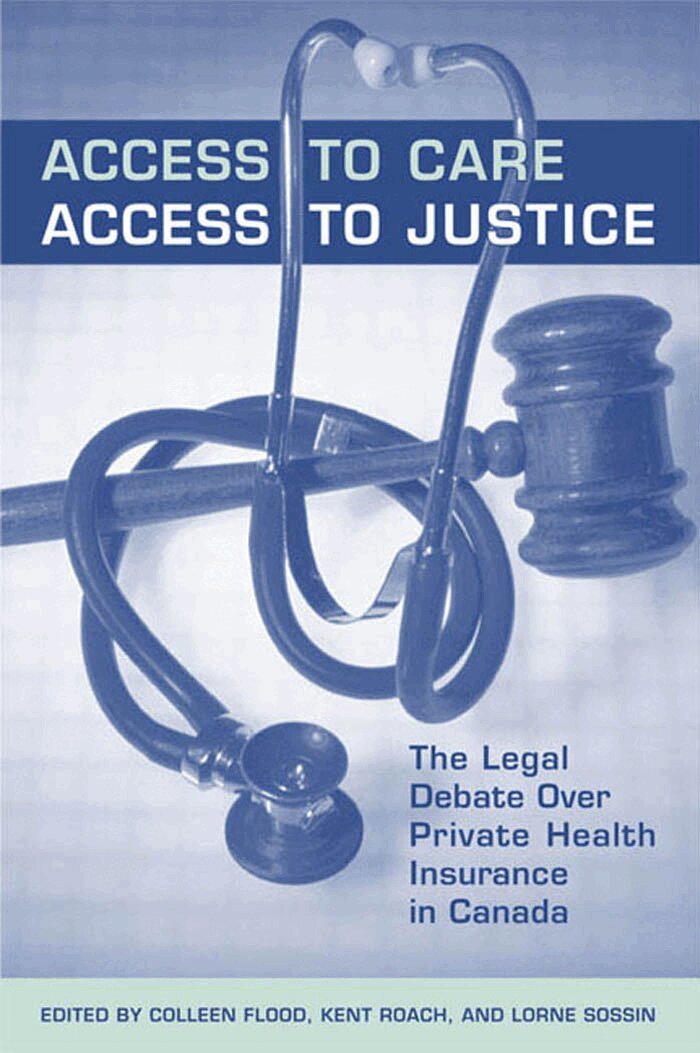
Historically, the Supreme Court of Canada has avoided direct intervention in health care policy-making. This posture changed dramatically with the release of the Chaoulli decision in June 2005. In a narrow four-to-three decision, the Supreme Court struck down Quebec laws prohibiting the sale of private health insurance on the basis that they violate Quebec's Charter of Human Rights and Freedoms. Three of the four judges in the majority also found the provisions violate section seven of the Canadian Charter of Rights and Freedoms. In a blistering dissent however, the three judges in the minority found that the insurance restriction violated neither the Quebec nor the Canadian charters. The result makes further Charter challenges to similar laws in other provinces inevitable, but the question of whether they will or should succeed remains contested.In September 2005, a conference was convened at the University of Toronto to discuss the legal implications of the Chaoulli decision. Some of the top Canadian scholars in the fields of health law and health policy were brought together to exchange ideas and to chart the potential legal course for Canada in the decision's wake. Access to Care, Access to Justice contains all the papers given at this conference.Edited by Colleen Flood, Lorne Sossin, and Kent Roach, the collection explores the role that courts may begin to play in health care and how this new role is of crucial importance to the Canadian public and their governments. As litigators for those who favour more freedom to provide private health care and aggrieved patients marshal their legal resources, provinces across the country are considering their options. Some are seeking guidance on how to better insulate themselves from review; others may welcome such challenges as a way to revisit the provisions of the Canada Health Act. The contributors to Access to Care, Access to Justice examine how the future of Canadian health care is likely to be determined both in the courts and in the legislatures and scrutinize how these changes will affect Canadians.
E-bok
PDF, Engelska, 2006899 kr
Läs direkt efter köp
Since the rise of the Canadian welfare state in the aftermath of the Second World War, the politics of social policy and fiscal federalism have been at the centre of federal-provincial relations. Recent events have given impetus for scholars to re-examine these issues. In 2002, the Quebec Commission on Fiscal Imbalance released its report, which introduced the term 'vertical fiscal imbalance' into the vocabulary of Canadian politics. Essentially, the commission determined that a disjunction between revenue-raising capacity and expenditures involving different orders of government - vertical fiscal imbalance - was an urgent problem that must be addressed. Dilemmas of Solidarity is both a reflection on and response to that finding.Editors Sujit Choudhry, Jean-Francois Graudreault-Desbiens, and Lorne Sossin bring together an array of respected legal and political scholars to reflect on the Quebec Commission's findings. The contributors to this volume illustrate how recent debates surrounding Canada's equalization program suggest alternative ways to approach the issue. The goal of Dilemmas of Solidarity is to stand back from the particulars of different policy debates, to enable scholars to reflect on basic questions regarding redistribution. This fascinating collection will undoubtedly inform a more nuanced and wide-ranging debate both among academics and policy practitioners than has occurred in this past. Contributors:Paul BootheKatherine Boothe Sujit ChoudhryDavid DuffJean-Francois Gaudreault-DesBiensAndree LajoieAlain NoelPeter H. RussellRichard SimeonLorne SossinFrançois VaillancourtDaniel Weinstock.
E-bok
PDF, Engelska, 2016428 kr
Läs direkt efter köp
In November 2008, as the economic decline was being fully realized, Canada's newly elected minority government, led by Conservative Stephen Harper, presented a highly divisive fiscal update in advance of a proposed budget. Unable to support the motion, the Liberal and New Democratic Parties, with the backing of the Bloc Québécois, formed a coalition in order to seek a no-confidence vote and to form a new government. In response, Conservative cabinet ministers launched a media blitz, informing Canadians that the opposition was mounting a 'coup d'état.' Ultimately Governor General Michaëlle Jean allowed Parliament to be prorogued, the coalition fell apart, and a budget was accepted by the House in January 2009. However, widespread public uncertainty and confusion about the principles of government evident during the crisis revealed a grave lack of understanding about the mechanics and legalities of parliamentary democracy on the part of Canadians.With a foreword by former Governor General Adrienne Clarkson, Parliamentary Democracy in Crisis brings together journalists, political scientists, and leading constitutional experts to analyse the crisis and to discuss the nature of Canada's democracy. The contributors bring perspectives from both French and English Canada and cover all aspects of the crisis, including the prorogation of Parliament, the role of the governor general, the proposed Liberal-NDP coalition, the challenges of minority parliaments, and the now-evident rifts in the culture of Canadian democracy.Knowledgeable and comprehensive but still highly accessible, Parliamentary Democracy in Crisis provides a reasoned and timely response to Canada's parliamentary crisis of November 2008.
E-bok
Engelska, 2009428 kr
Läs direkt efter köp
In November 2008, as the economic decline was being fully realized, Canada's newly elected minority government, led by Conservative Stephen Harper, presented a highly divisive fiscal update in advance of a proposed budget. Unable to support the motion, the Liberal and New Democratic Parties, with the backing of the Bloc Québécois, formed a coalition in order to seek a no-confidence vote and to form a new government. In response, Conservative cabinet ministers launched a media blitz, informing Canadians that the opposition was mounting a 'coup d'état.' Ultimately Governor General Michaëlle Jean allowed Parliament to be prorogued, the coalition fell apart, and a budget was accepted by the House in January 2009. However, widespread public uncertainty and confusion about the principles of government evident during the crisis revealed a grave lack of understanding about the mechanics and legalities of parliamentary democracy on the part of Canadians.With a foreword by former Governor General Adrienne Clarkson, Parliamentary Democracy in Crisis brings together journalists, political scientists, and leading constitutional experts to analyse the crisis and to discuss the nature of Canada's democracy. The contributors bring perspectives from both French and English Canada and cover all aspects of the crisis, including the prorogation of Parliament, the role of the governor general, the proposed Liberal-NDP coalition, the challenges of minority parliaments, and the now-evident rifts in the culture of Canadian democracy.Knowledgeable and comprehensive but still highly accessible, Parliamentary Democracy in Crisis provides a reasoned and timely response to Canada's parliamentary crisis of November 2008.
Häftad, Engelska, 2026
706 kr
Skickas inom 5-8 vardagar
This book covers all aspects of civil procedure and provides a pan-Canadian comparison of legislation and rules from various jurisdictions in an extensive yet accessible manner.
Häftad, Engelska, 2010
506 kr
Skickas inom 5-8 vardagar
Häftad, Engelska, 2010
768 kr
Skickas inom 5-8 vardagar