Louise E. Walker - Böcker
Visar alla böcker från författaren Louise E. Walker. Handla med fri frakt och snabb leverans.
6 produkter
6 produkter
1 383 kr
Skickas inom 10-15 vardagar
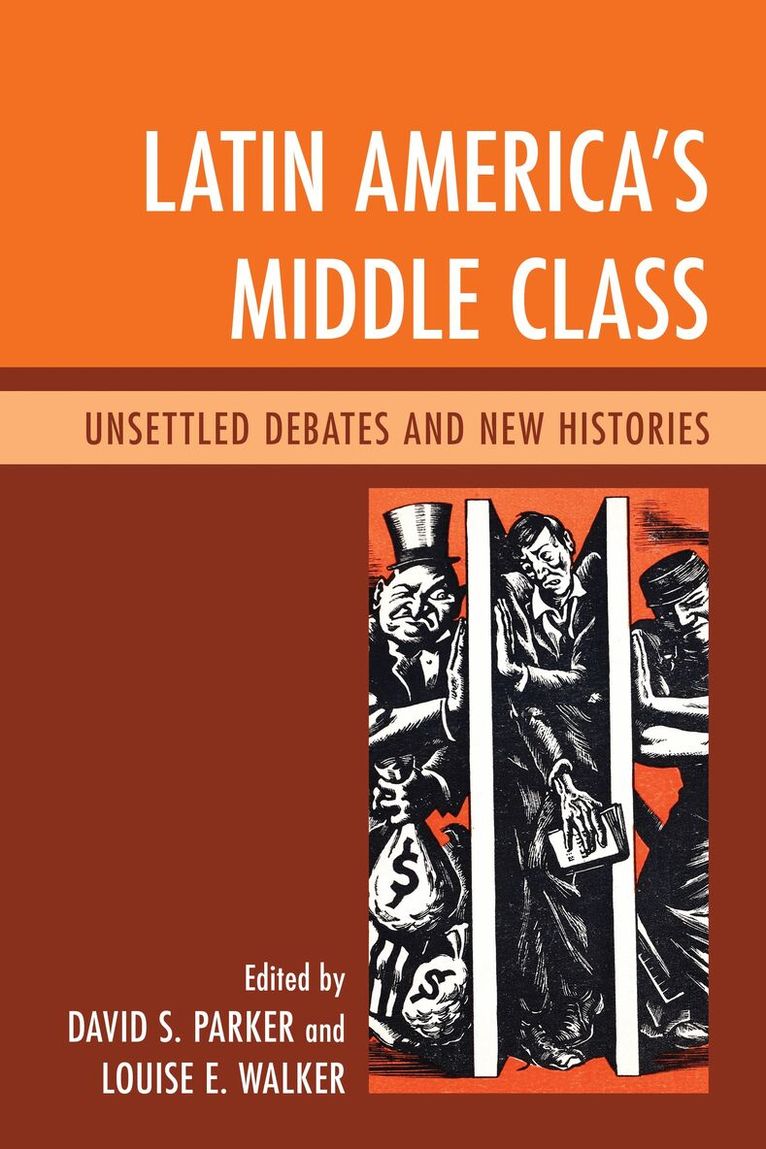
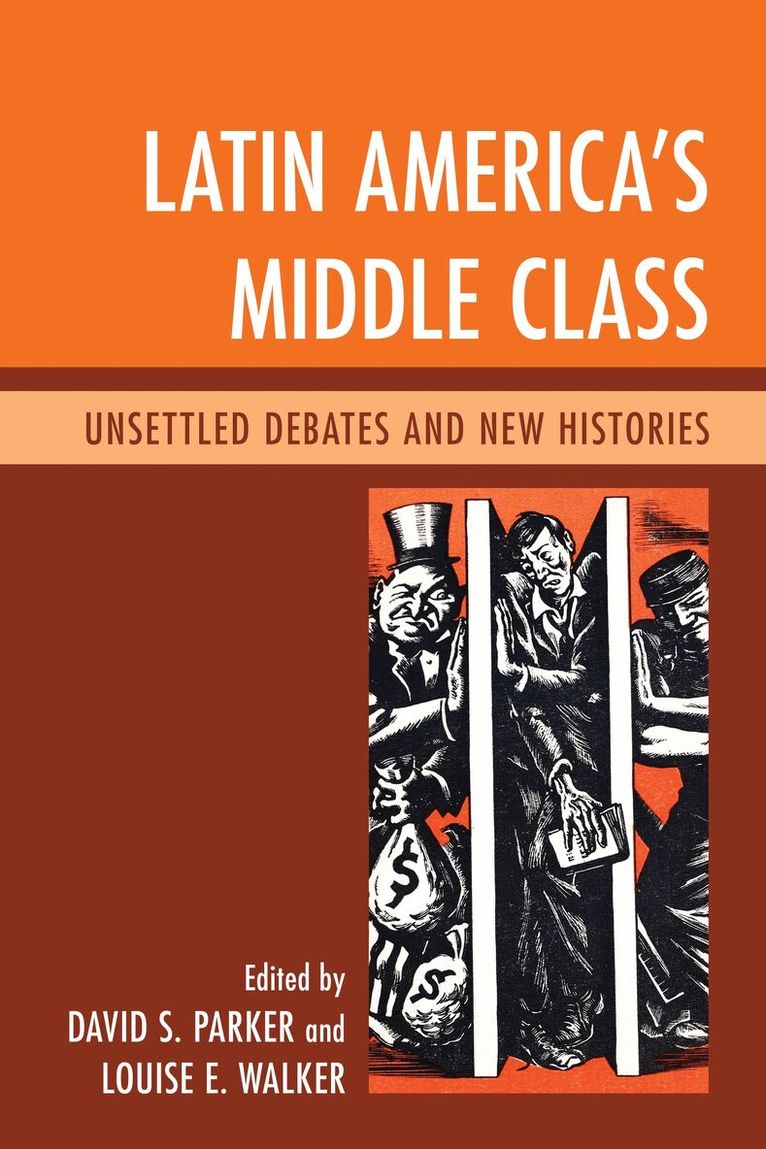
As middle classes in developing countries grow in size and political power, do they foster stable democracies and prosperous, innovative economies? Or do they encourage crass materialism, bureaucratic corruption, unrealistic social demands, and ideological polarization? These questions have taken on a new urgency in recent years but they are not new, having first appeared in the mid twentieth century in debates about Latin America. At a moment when exploding middle classes in the global South increasingly capture the world’s attention, these Latin American classics are ripe for revisiting.Part One of the book introduces key debates from the 1950s and 1960s, when Cold War era scholars questioned whether or not the middle class would be a force for democracy and development, to safeguard Latin America against the perceived challenge of Revolutionary Cuba. While historian John J. Johnson placed tentative faith in the positive transformative power of the “middle sectors,” others were skeptical. The striking disagreements that emerge from these texts lend themselves to discussion about the definition, character, and complexity of the middle classes, and about the assumptions that underpinned twentieth-century modernization theory.Part Two brings together more recent case studies from Mexico, Peru, Brazil, Colombia, Chile, and Argentina, written by scholars influenced by contemporary trends in social and cultural history. These authors highlight issues of language, identity, gender, and the multiple faces and forms of power. Their studies bring flesh-and-blood Latin Americans to the forefront, reconstructing the daily lives of underpaid office workers, harried housewives and striving professionals, in order to revisit questions that the authors in Part One tended to approach abstractly. They also pay attention to changing cultural understandings and political constructions of who “the middle class” is and what it means to bemiddle class. Designed with the classroom and non-specialist reader in mind, the book has a comprehensive critical introduction, and each selection is preceded by a short description setting the context and introducing key themes.
599 kr
Skickas inom 10-15 vardagar
As middle classes in developing countries grow in size and political power, do they foster stable democracies and prosperous, innovative economies? Or do they encourage crass materialism, bureaucratic corruption, unrealistic social demands, and ideological polarization? These questions have taken on a new urgency in recent years but they are not new, having first appeared in the mid twentieth century in debates about Latin America. At a moment when exploding middle classes in the global South increasingly capture the world’s attention, these Latin American classics are ripe for revisiting.Part One of the book introduces key debates from the 1950s and 1960s, when Cold War era scholars questioned whether or not the middle class would be a force for democracy and development, to safeguard Latin America against the perceived challenge of Revolutionary Cuba. While historian John J. Johnson placed tentative faith in the positive transformative power of the “middle sectors,” others were skeptical. The striking disagreements that emerge from these texts lend themselves to discussion about the definition, character, and complexity of the middle classes, and about the assumptions that underpinned twentieth-century modernization theory.Part Two brings together more recent case studies from Mexico, Peru, Brazil, Colombia, Chile, and Argentina, written by scholars influenced by contemporary trends in social and cultural history. These authors highlight issues of language, identity, gender, and the multiple faces and forms of power. Their studies bring flesh-and-blood Latin Americans to the forefront, reconstructing the daily lives of underpaid office workers, harried housewives and striving professionals, in order to revisit questions that the authors in Part One tended to approach abstractly. They also pay attention to changing cultural understandings and political constructions of who “the middle class” is and what it means to bemiddle class. Designed with the classroom and non-specialist reader in mind, the book has a comprehensive critical introduction, and each selection is preceded by a short description setting the context and introducing key themes.
1 886 kr
Skickas inom 3-6 vardagar
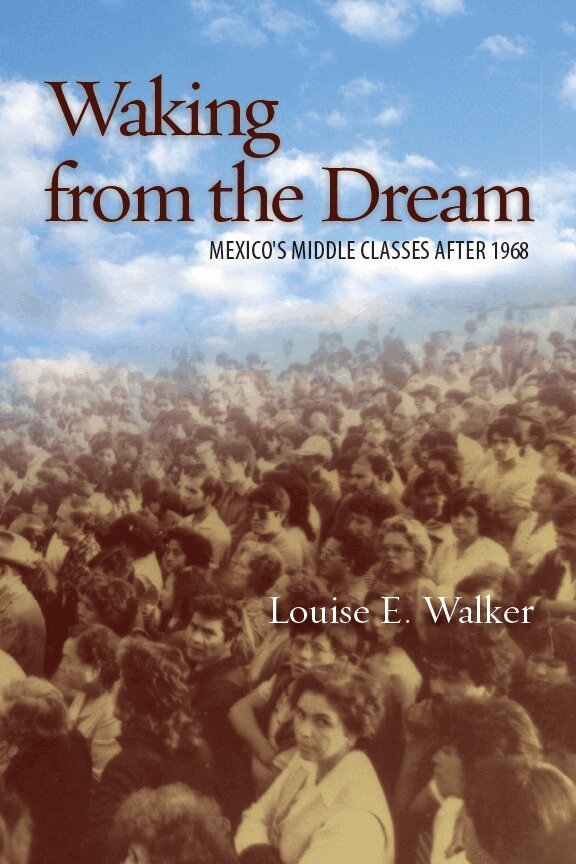
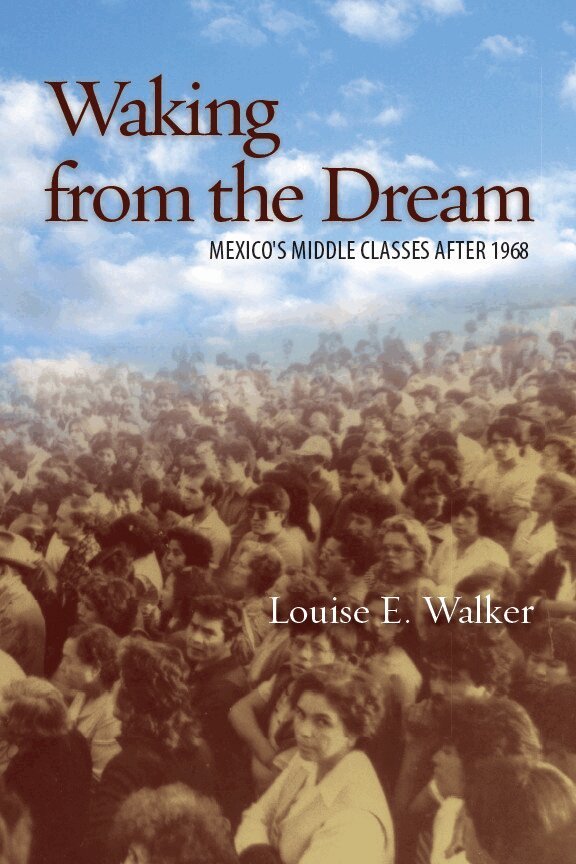
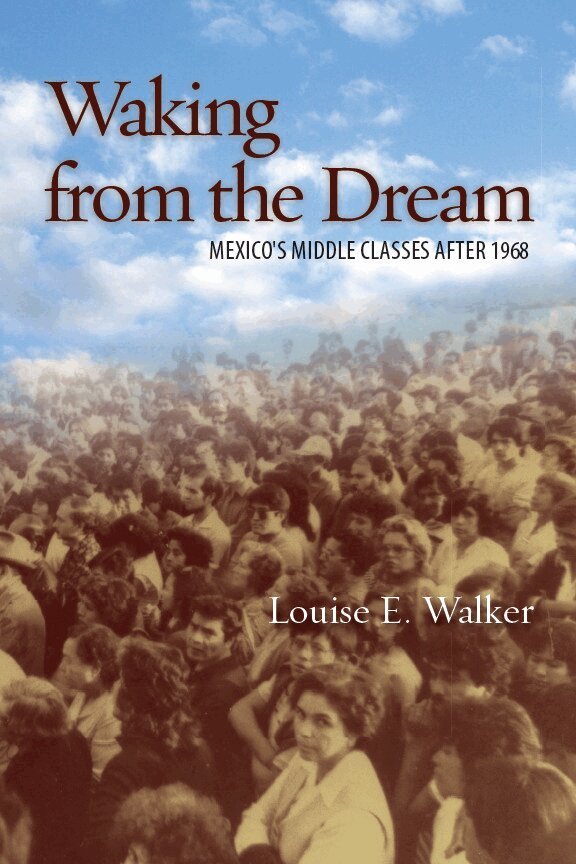
When the postwar boom began to dissipate in the late 1960s, Mexico's middle classes awoke to a new, economically terrifying world. And following massacres of students at peaceful protests in 1968 and 1971, one-party control of Mexican politics dissipated as well. The ruling Institutional Revolutionary Party struggled to recover its legitimacy, but instead saw its support begin to erode. In the following decades, Mexico's middle classes ended up shaping the history of economic and political crisis, facilitating the emergence of neo-liberalism and the transition to democracy.Waking from the Dream tells the story of this profound change from state-led development to neo-liberalism, and from a one-party state to electoral democracy. It describes the fraught history of these tectonic shifts, as politicians and citizens experimented with different strategies to end a series of crises. In the first study to dig deeply into the drama of the middle classes in this period, Walker shows how the most consequential struggles over Mexico's economy and political system occurred between the middle classes and the ruling party.
328 kr
Skickas inom 10-15 vardagar
When the postwar boom began to dissipate in the late 1960s, Mexico's middle classes awoke to a new, economically terrifying world. And following massacres of students at peaceful protests in 1968 and 1971, one-party control of Mexican politics dissipated as well. The ruling Institutional Revolutionary Party struggled to recover its legitimacy, but instead saw its support begin to erode. In the following decades, Mexico's middle classes ended up shaping the history of economic and political crisis, facilitating the emergence of neo-liberalism and the transition to democracy.Waking from the Dream tells the story of this profound change from state-led development to neo-liberalism, and from a one-party state to electoral democracy. It describes the fraught history of these tectonic shifts, as politicians and citizens experimented with different strategies to end a series of crises. In the first study to dig deeply into the drama of the middle classes in this period, Walker shows how the most consequential struggles over Mexico's economy and political system occurred between the middle classes and the ruling party.
370 kr
Skickas inom 7-10 vardagar
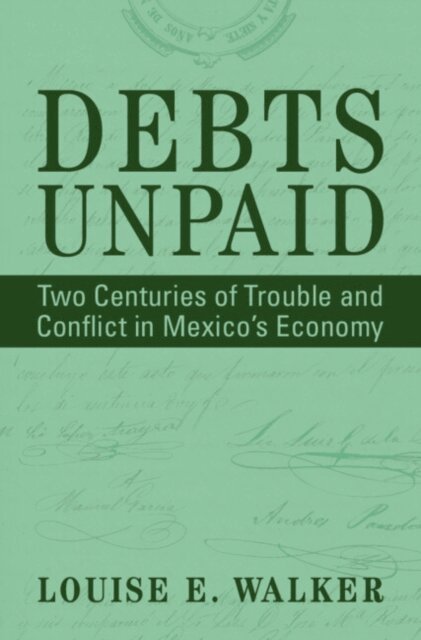
Power struggles between debtors and creditors about unpaid debts have animated the history of economic transformation from the emergence of capitalist relations to the recent global financial crashes. Illuminating how ordinary people fought for economic justice in Mexico from the eve of independence to the early 2000s, this study argues that conflicts over small-scale debts were a stress test for an emerging economic order that took shape against a backdrop of enormous political and social change. Drawing on nearly 1,500 debt conflicts unearthed from Mexican archives, Louise E. Walker explores rapidly changing ideas and practices about property rights, contract law, and economic information. This combination of richly detailed archival research, with big historical and theoretical interpretations, raises provocative new questions about the moral economy of the credit relationship and the shifting line between exploitation and opportunity in the world of everyday exchange.
1 228 kr
Skickas inom 7-10 vardagar
Power struggles between debtors and creditors about unpaid debts have animated the history of economic transformation from the emergence of capitalist relations to the recent global financial crashes. Illuminating how ordinary people fought for economic justice in Mexico from the eve of independence to the early 2000s, this study argues that conflicts over small-scale debts were a stress test for an emerging economic order that took shape against a backdrop of enormous political and social change. Drawing on nearly 1,500 debt conflicts unearthed from Mexican archives, Louise E. Walker explores rapidly changing ideas and practices about property rights, contract law, and economic information. This combination of richly detailed archival research, with big historical and theoretical interpretations, raises provocative new questions about the moral economy of the credit relationship and the shifting line between exploitation and opportunity in the world of everyday exchange.