Louise Ellison – författare
Visar alla böcker från författaren Louise Ellison. Handla med fri frakt och snabb leverans.
8 produkter
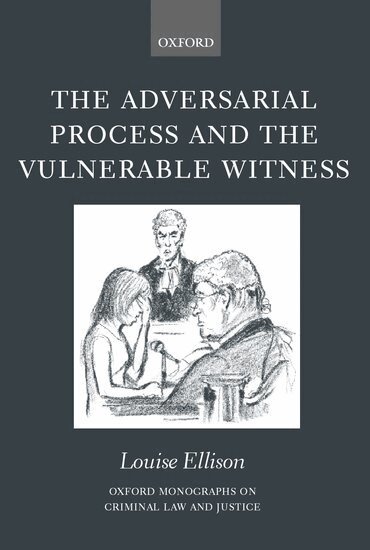
The Adversarial Process and the Vulnerable Witness
Inbunden, 2002
2143 kr
Lägg i varukorg
Until quite recently it was commonplace to describe the witness as the 'forgotten man' in the criminal justice system. The last few years have seen a dramatic shift in thinking with an increasing recognition of the legitimate expectations and rights of witnesses within the criminal process. At the …
Corporate Property Management
Aligning Real Estate With Business Strategy
Av Victoria Edwards, Louise Ellison
Häftad, 2003
799 kr
Lägg i varukorg
Corporate property is routinely identified as the second biggest cost within a business organization after staff. Effective management of such a major asset requires a fundamental understanding of both the operation of the property markets and the operational requirements of the business occupier. …
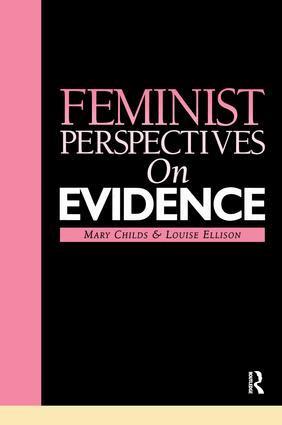
Feminist Perspectives on Evidence
Av Mary Childs, Louise Ellison
E-bok, 2000
982 kr
Lägg i varukorg
Questions of evidence and proof are fundamental to the operation of substantive law and to our understanding of law as a social practice. The study of evidence involves issues of central concern to feminist scholars,including matters of epistemology, psychology, allocation of risk and …
Feminist Perspectives on Evidence
Av Mary Childs, Louise Ellison
E-bok, 2000
982 kr
Lägg i varukorg
Questions of evidence and proof are fundamental to the operation of substantive law and to our understanding of law as a social practice. The study of evidence involves issues of central concern to feminist scholars,including matters of epistemology, psychology, allocation of risk and …
Corporate Property Management
Aligning Real Estate With Business Strategy
Av Louise Ellison, Victoria Edwards
E-bok, 2009
893 kr
Lägg i varukorg
Corporate property is routinely identified as the second biggest cost within a business organization after staff. Effective management of such a major asset requires a fundamental understanding of both the operation of the property markets and the operational requirements of the business occupier. …
Feminist Perspectives on Evidence
Av Mary Childs, Louise Ellison
Häftad, 2000
850 kr
Lägg i varukorg
Questions of evidence and proof are fundamental to the operation of substantive law and to our understanding of law as a social practice. The study of evidence involves issues of central concern to feminist scholars,including matters of epistemology, psychology, allocation of risk and …