Louise Hill-Curth - Böcker
Visar alla böcker från författaren Louise Hill-Curth. Handla med fri frakt och snabb leverans.
4 produkter
4 produkter
354 kr
Skickas inom 5-8 vardagar
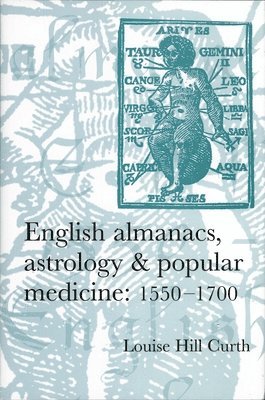
Early modern almanacs have received relatively little academic attention over the years, despite being the first true form of British mass media. While their major purpose was to provide annual information about the movements of the stars and the corresponding effects on Earth, most contained a range of other material, including advice on preventative and remedial medicine for humans and animals. Based on the most extensive research to date into the relationship between the popular press, early modern medical beliefs and practices, this study argues that these cheap, annual booklets played a major role in shaping contemporary medical beliefs and practices in early modern England. Beginning with an overview of printed vernacular medical literature, the book examines in-depth the genre of almanacs, their authors, target and actual audiences. It discusses the various types of medical information and advice in almanacs, preventative and remedial medicine for humans, as well as ‘non-commercial’ and ‘commercial’ medicines promoted in almanacs, and the under-explored topic of animal health care.
2 237 kr
Skickas inom 10-15 vardagar
From Physick to Pharmacology addresses the important, albeit neglected history of the distribution and sale of medicinal drugs in England from the sixteenth to the twenty-first century. The social history of early medicine and the evolution of British retailing are two areas that have attracted considerable attention from academics in recent years. That said, little work has been done either by medical or business historians on the actual retailing of drugs. This book merges the two themes by examining the growth in the retailing of medicinal drugs since late-medieval times. The six academics contributing essays include both medical and business historians who provide an informed and stimulating perspective on the subject. After an introduction setting out the context of drug retailing and surveying the current literature, the volume is arranged in a broadly chronological order, beginning with Patrick Wallis's study of apothecaries and other medical retailers in early modern London. The next chapter, by Louise Hill Curth, looks at the way the distribution network expanded to encompass a range of other retail outlets to sell new, branded, pre-packaged proprietary drugs. Steven King then examines various other ways in which medicines were sold in the eighteenth century, with a focus on itinerant traders. This is followed by pieces from Hilary Marland on the rise of chemists and druggists in the nineteenth century, and Stuart Anderson on twentieth-century community pharmacists. The final essay, by Judy Slinn, examines the marketing and consumption of prescription drugs from the middle of that century until the present day. Taken together, these essays provide a fascinating insight into the changes and continuities of five centuries of drug retailing in England.
787 kr
Skickas inom 10-15 vardagar
From Physick to Pharmacology addresses the important, albeit neglected history of the distribution and sale of medicinal drugs in England from the sixteenth to the twenty-first century. The social history of early medicine and the evolution of British retailing are two areas that have attracted considerable attention from academics in recent years. That said, little work has been done either by medical or business historians on the actual retailing of drugs. This book merges the two themes by examining the growth in the retailing of medicinal drugs since late-medieval times. The six academics contributing essays include both medical and business historians who provide an informed and stimulating perspective on the subject. After an introduction setting out the context of drug retailing and surveying the current literature, the volume is arranged in a broadly chronological order, beginning with Patrick Wallis's study of apothecaries and other medical retailers in early modern London. The next chapter, by Louise Hill Curth, looks at the way the distribution network expanded to encompass a range of other retail outlets to sell new, branded, pre-packaged proprietary drugs. Steven King then examines various other ways in which medicines were sold in the eighteenth century, with a focus on itinerant traders. This is followed by pieces from Hilary Marland on the rise of chemists and druggists in the nineteenth century, and Stuart Anderson on twentieth-century community pharmacists. The final essay, by Judy Slinn, examines the marketing and consumption of prescription drugs from the middle of that century until the present day. Taken together, these essays provide a fascinating insight into the changes and continuities of five centuries of drug retailing in England.
Del 14 - History of Science and Medicine Library
Care of Brute Beasts
A Social and Cultural Study of Veterinary Medicine in Early Modern England
Inbunden, Engelska, 2009
1 891 kr
Skickas inom 5-8 vardagar
This book is about medical beliefs and practices for animals in early modern England. Although there are numerous texts on human health, this is the first to focus exclusively on animals during this period. For most academics, the foundation of the London Veterinary College in 1791 marks the beginning of 'modern' veterinary medicine, with the period before unworthy of serious study. In fact, there is ample evidence of how the importance of animals resulted in a highly complex system of both preventative and remedial care. This book is divided into sections which start by 'setting the scene' with an overview of animals in early modern England and the contemporary principles behind health and illness. It moves onto an examination of the medical marketplace and printed literature on animal health care, followed by an in-depth look at preventative and remedial methods. It ends by addressing the question of what impact, if any, new colleges had on veterinary beliefs and practices.