Luc Tartar – författare
Visar alla böcker från författaren Luc Tartar. Handla med fri frakt och snabb leverans.
8 produkter
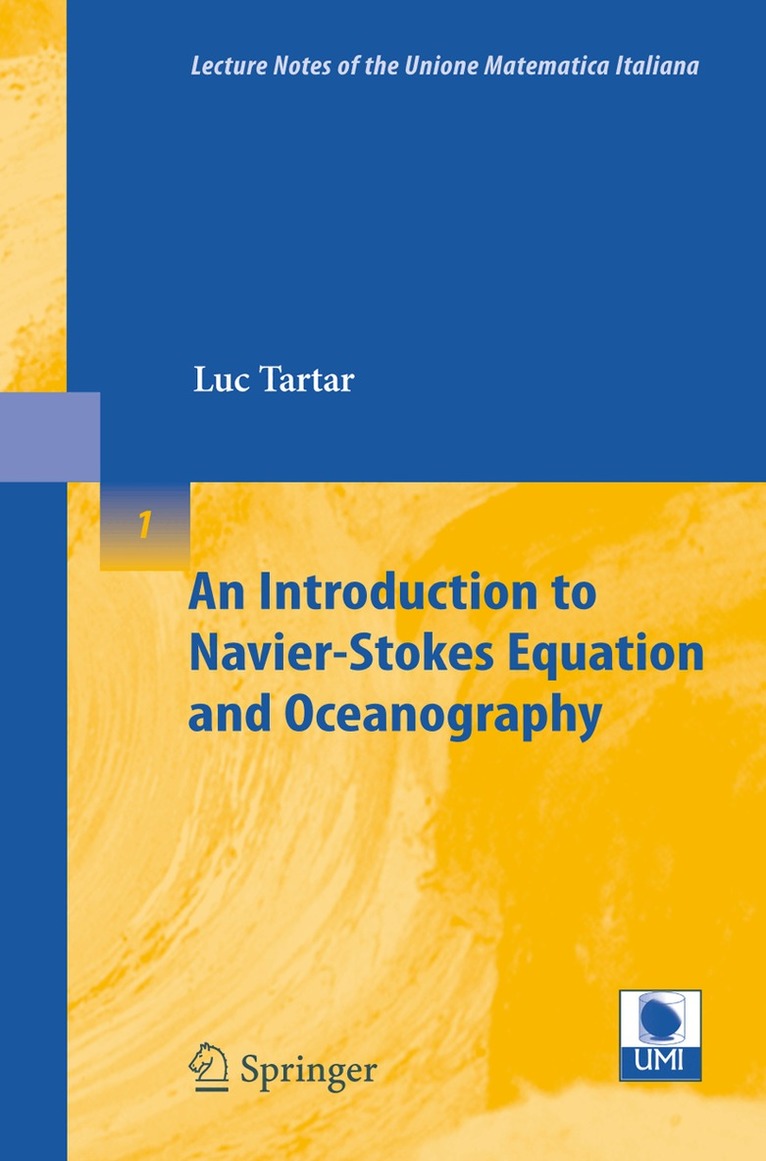
Introduction to Navier-Stokes Equation and Oceanography
Av Luc Tartar
Häftad, 2006
497 kr
Lägg i varukorg
In the spring of 1999, I taught (at CARNEGIEMELLON University) a graduate course entitled Partial Di?erential Equations Models in Oceanography, and I wrote lecture notes which I distributed to the students; these notes were then made available on the Internet, and they were distributed to the …
Introduction to Navier-Stokes Equation and Oceanography
Av Luc Tartar
E-bok, 2006
638 kr
Lägg i varukorg
In the spring of 1999, I taught (at CARNEGIEMELLON University) a graduate course entitled Partial Di?erential Equations Models in Oceanography, and I wrote lecture notes which I distributed to the students; these notes were then made available on the Internet, and they were distributed to the …
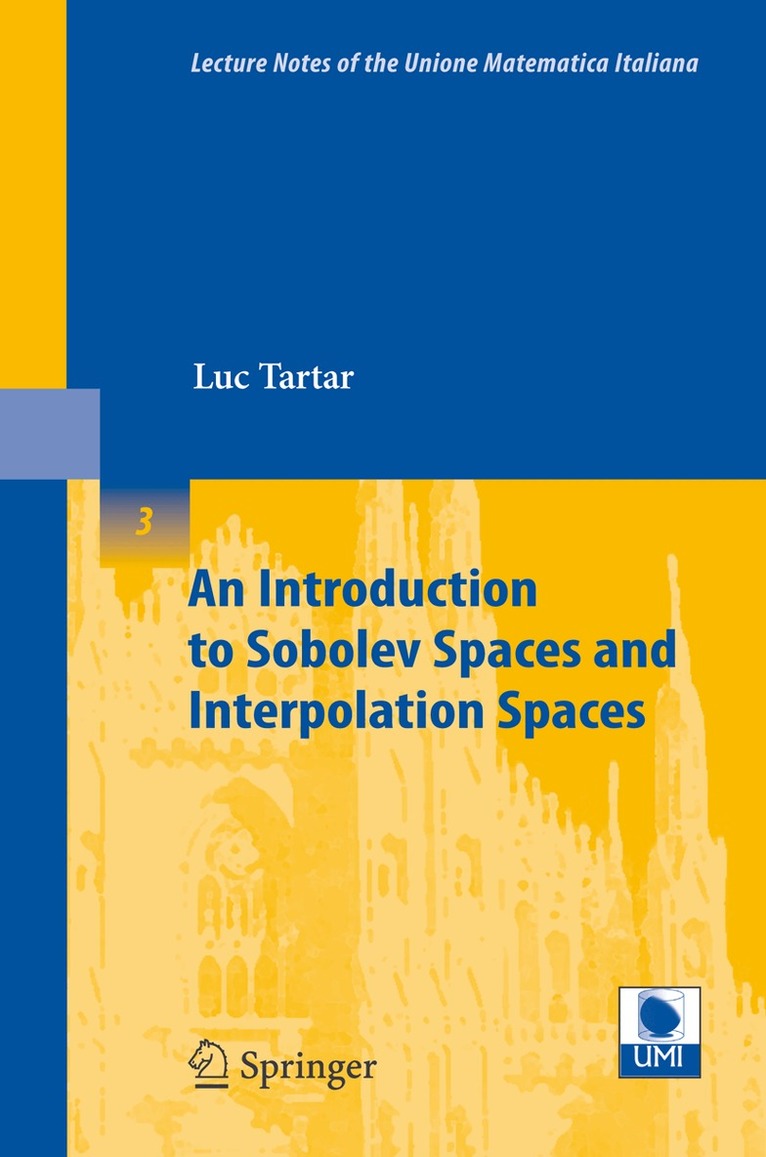
Introduction to Sobolev Spaces and Interpolation Spaces
Av Luc Tartar
Häftad, 2007
989 kr
Lägg i varukorg
After publishing an introduction to the Navier–Stokes equation and oceanography (Vol. 1 of this series), Luc Tartar follows with another set of lecture notes based on a graduate course in two parts, as indicated by the title. A draft has been available on the internet for a few years. The author …
Introduction to Sobolev Spaces and Interpolation Spaces
Av Luc Tartar
E-bok, 2007
1296 kr
Lägg i varukorg
After publishing an introduction to the Navier–Stokes equation and oceanography (Vol. 1 of this series), Luc Tartar follows with another set of lecture notes based on a graduate course in two parts, as indicated by the title. A draft has been available on the internet for a few years. The author …
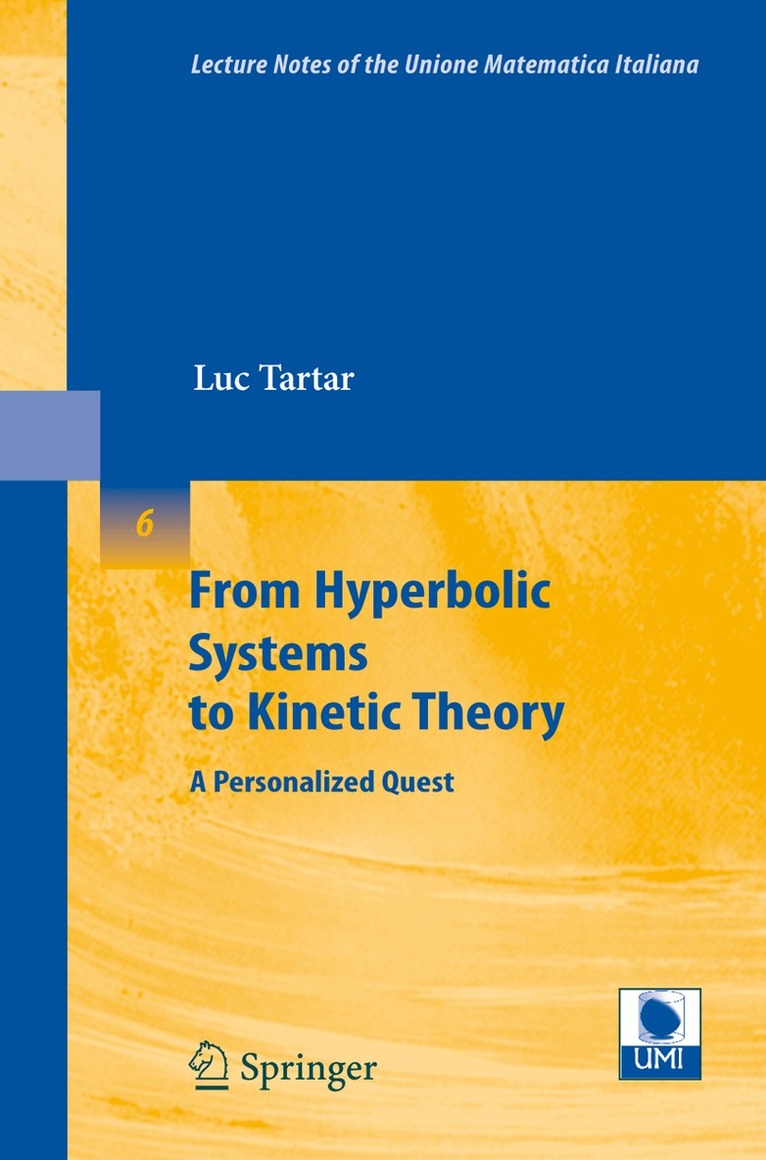
From Hyperbolic Systems to Kinetic Theory
A Personalized Quest
Av Luc Tartar
Häftad, 2008
552 kr
Lägg i varukorg
Equations of state are not always effective in continuum mechanics. Maxwell and Boltzmann created a kinetic theory of gases, using classical mechanics. How could they derive the irreversible Boltzmann equation from a reversible Hamiltonian framework? By using probabilities, which destroy physical …
From Hyperbolic Systems to Kinetic Theory
A Personalized Quest
Av Luc Tartar
E-bok, 2008
734 kr
Lägg i varukorg
Equations of state are not always effective in continuum mechanics. Maxwell and Boltzmann created a kinetic theory of gases, using classical mechanics. How could they derive the irreversible Boltzmann equation from a reversible Hamiltonian framework? By using probabilities, which destroy physical …
General Theory of Homogenization
A Personalized Introduction
Av Luc Tartar
Häftad, 2009
1095 kr
Lägg i varukorg
Homogenization is not about periodicity, or Gamma-convergence, but about understanding which effective equations to use at macroscopic level, knowing which partial differential equations govern mesoscopic levels, without using probabilities (which destroy physical reality); instead, one uses …
General Theory of Homogenization
A Personalized Introduction
Av Luc Tartar
E-bok, 2009
1459 kr
Lägg i varukorg
Homogenization is not about periodicity, or Gamma-convergence, but about understanding which effective equations to use at macroscopic level, knowing which partial differential equations govern mesoscopic levels, without using probabilities (which destroy physical reality); instead, one uses …