Luca Patrizi – författare
Visar alla böcker från författaren Luca Patrizi. Handla med fri frakt och snabb leverans.
2 produkter
2 produkter
Inbunden, Engelska, 2025
1 416 kr
Skickas inom 5-8 vardagar
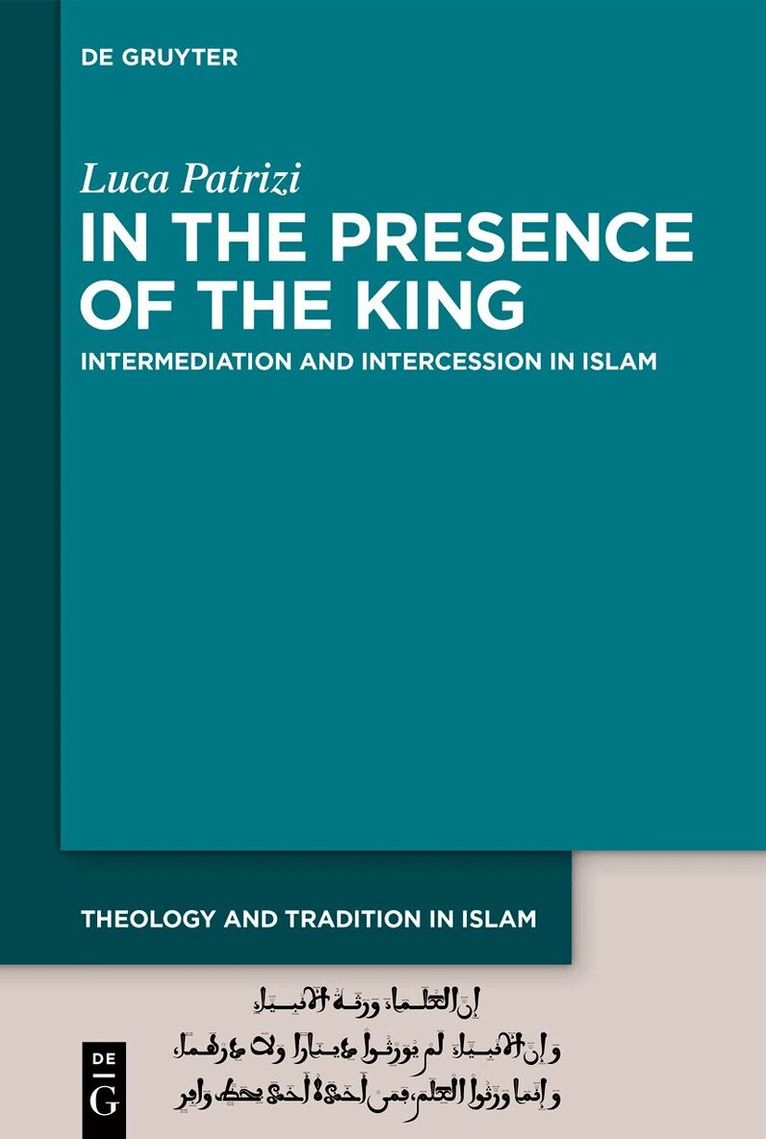
The notions of intermediation and intercession play a central role in the theology of monotheistic religions. In the Islamic context, the specific doctrine connected to the intermediation (wasīla, wāsiṭa) and intercession of the Prophet Muḥammad towards God (shafāʿa, tawassul), particularly on the Day of Judgement, is widely attested in the primary sources of Islam. The eschatological function of the Prophet is represented in these sources through a series of royal metaphors, connected to his rank (jāh) on the Day of Judgement, which will allow him access to a special station called the Station of Praise (al-maqām al-maḥmūd), endowed with specific attributes of royalty. Within Islamic esotericism, these doctrines receive a metaphysical interpretation closely connected to the reality of Muḥammad as the Perfect Man (al-insān al-kāmil). Since contemporary times, with the birth and spread of the Islamic Reform movements, these doctrines have been the target of intense opposition aimed also at related practices, such as, for example, visiting tombs in search of intercession, eventually resulting in the destruction of numerous sacred sites.
E-bok
PDF, Engelska, 20164 021 kr
Läs direkt efter köp
The notion of adab is at the heart of Arab-Islamic culture. Born in the crucible of the Arabic and Persian civilization, nourished by Greek and Indian influences, this polysemic notion could cover a variegated range of meanings: good behavior, knowledge of manners, etiquette, rules and belles-lettres and finally, literature. This collection of articles tries to explore how the formulations and reformulations of adab during the first centuries of Islam engage with the crucial period of the first great spiritual masters, exploring the importance of normativity, but also of transgression, in order to define the rules themselves. Assuming that adab is ethics, the articles analyse the genres of Sufi adab, including manuals and hagiographical accounts, from the formative period of Sufism until the modernity. Contributors are: Alberto F. Ambrosio, Nelly Amri, Francesco Chiabotti, Rachida Chih, Ralf Elger, Eve Feuillebois-Pierunek, Maria Chiara Giorda, Denis Gril, Paul L. Heck, Nathan Hofer, Ahmet T. Karamustafa, Annabel Keeler, Pierre Lory, Catherine Mayeur-Jaouen, Erik S. Ohlander, Samuela Pagani, Luca Patrizi, Michele Petrone, Stefan Reichmuth, Lloyd Ridgeon, Elisha Russ-Fishbane, Florian Sobieroj, Renaud Soler, Jean-Jacques Thibon, Mikko Viitamaki.