Lucian Busoniu – författare
942 kr
Läs direkt efter köp
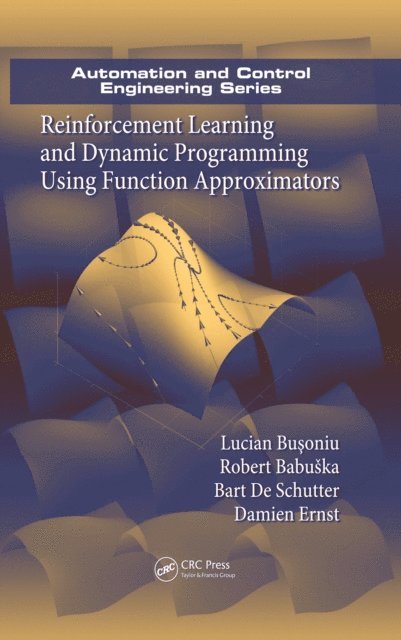
From household appliances to applications in robotics, engineered systems involving complex dynamics can only be as effective as the algorithms that control them. While Dynamic Programming (DP) has provided researchers with a way to optimally solve decision and control problems involving complex dynamic systems, its practical value was limited by algorithms that lacked the capacity to scale up to realistic problems.
However, in recent years, dramatic developments in Reinforcement Learning (RL), the model-free counterpart of DP, changed our understanding of what is possible. Those developments led to the creation of reliable methods that can be applied even when a mathematical model of the system is unavailable, allowing researchers to solve challenging control problems in engineering, as well as in a variety of other disciplines, including economics, medicine, and artificial intelligence.
Reinforcement Learning and Dynamic Programming Using Function Approximators provides a comprehensive and unparalleled exploration of the field of RL and DP. With a focus on continuous-variable problems, this seminal text details essential developments that have substantially altered the field over the past decade. In its pages, pioneering experts provide a concise introduction to classical RL and DP, followed by an extensive presentation of the state-of-the-art and novel methods in RL and DP with approximation. Combining algorithm development with theoretical guarantees, they elaborate on their work with illustrative examples and insightful comparisons. Three individual chapters are dedicated to representative algorithms from each of the major classes of techniques: value iteration, policy iteration, and policy search. The features and performance of these algorithms are highlighted in extensive experimental studies on a range of control applications.
The recent development of applications involving complex systems has led to a surge of interest in RL and DP methods and the subsequent need for a quality resource on the subject. For graduate students and others new to the field, this book offers a thorough introduction to both the basics and emerging methods. And for those researchers and practitioners working in the fields of optimal and adaptive control, machine learning, artificial intelligence, and operations research, this resource offers a combination of practical algorithms, theoretical analysis, and comprehensive examples that they will be able to adapt and apply to their own work.
Access the authors'' website at www.dcsc.tudelft.nl/rlbook/ for additional material, including computer code used in the studies and information concerning new developments.
1 692 kr
Skickas inom 10-15 vardagar
942 kr
Läs direkt efter köp
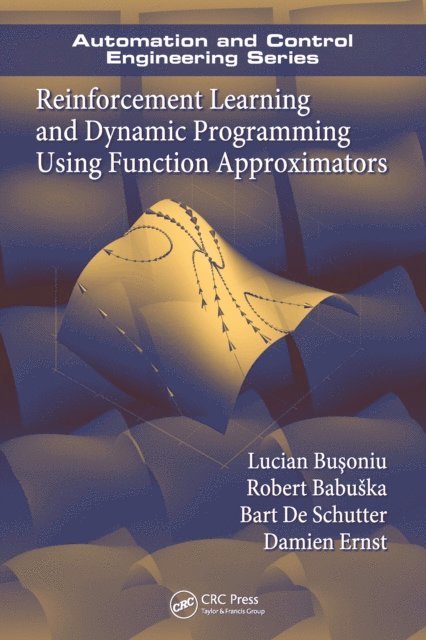
From household appliances to applications in robotics, engineered systems involving complex dynamics can only be as effective as the algorithms that control them. While Dynamic Programming (DP) has provided researchers with a way to optimally solve decision and control problems involving complex dynamic systems, its practical value was limited by algorithms that lacked the capacity to scale up to realistic problems.
However, in recent years, dramatic developments in Reinforcement Learning (RL), the model-free counterpart of DP, changed our understanding of what is possible. Those developments led to the creation of reliable methods that can be applied even when a mathematical model of the system is unavailable, allowing researchers to solve challenging control problems in engineering, as well as in a variety of other disciplines, including economics, medicine, and artificial intelligence.
Reinforcement Learning and Dynamic Programming Using Function Approximators provides a comprehensive and unparalleled exploration of the field of RL and DP. With a focus on continuous-variable problems, this seminal text details essential developments that have substantially altered the field over the past decade. In its pages, pioneering experts provide a concise introduction to classical RL and DP, followed by an extensive presentation of the state-of-the-art and novel methods in RL and DP with approximation. Combining algorithm development with theoretical guarantees, they elaborate on their work with illustrative examples and insightful comparisons. Three individual chapters are dedicated to representative algorithms from each of the major classes of techniques: value iteration, policy iteration, and policy search. The features and performance of these algorithms are highlighted in extensive experimental studies on a range of control applications.
The recent development of applications involving complex systems has led to a surge of interest in RL and DP methods and the subsequent need for a quality resource on the subject. For graduate students and others new to the field, this book offers a thorough introduction to both the basics and emerging methods. And for those researchers and practitioners working in the fields of optimal and adaptive control, machine learning, artificial intelligence, and operations research, this resource offers a combination of practical algorithms, theoretical analysis, and comprehensive examples that they will be able to adapt and apply to their own work.
Access the authors'' website at www.dcsc.tudelft.nl/rlbook/ for additional material, including computer code used in the studies and information concerning new developments.
1 091 kr
Skickas inom 10-15 vardagar
1 367 kr
Läs direkt efter köp
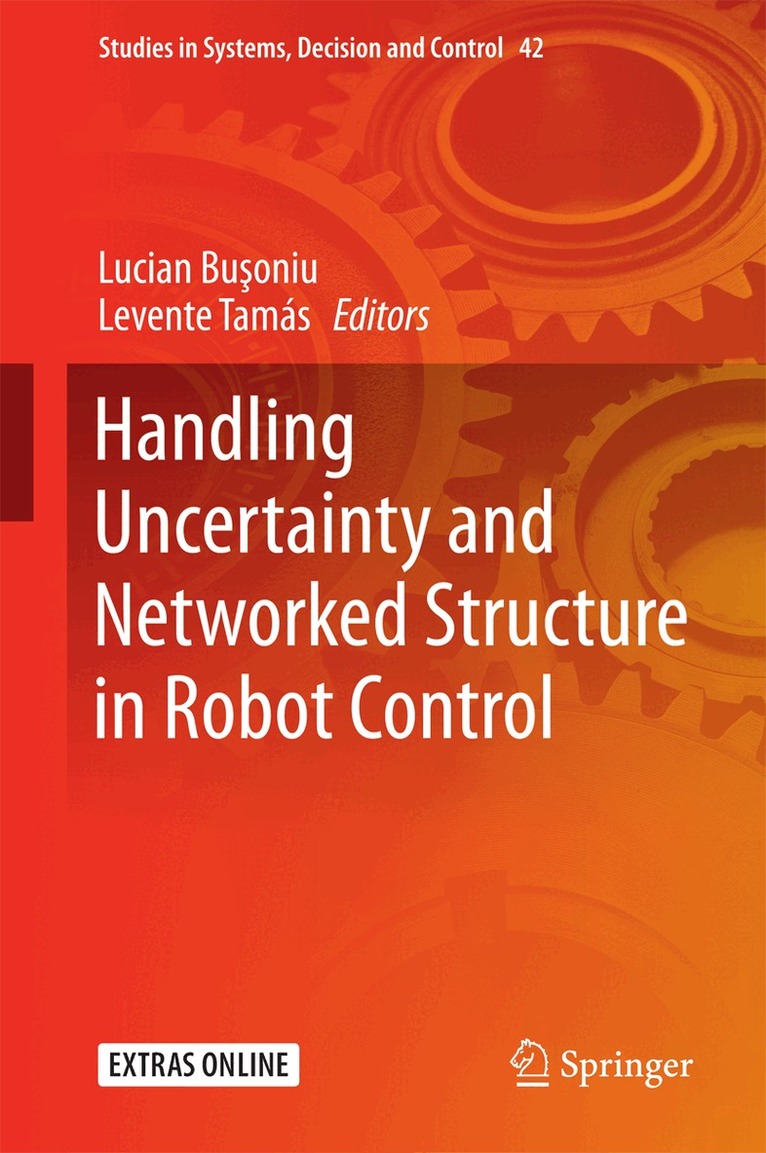
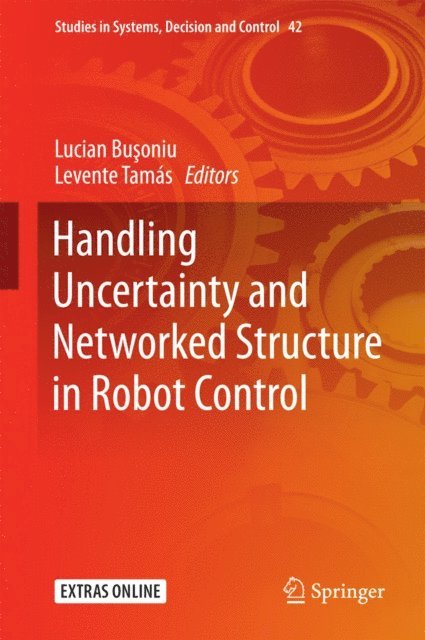
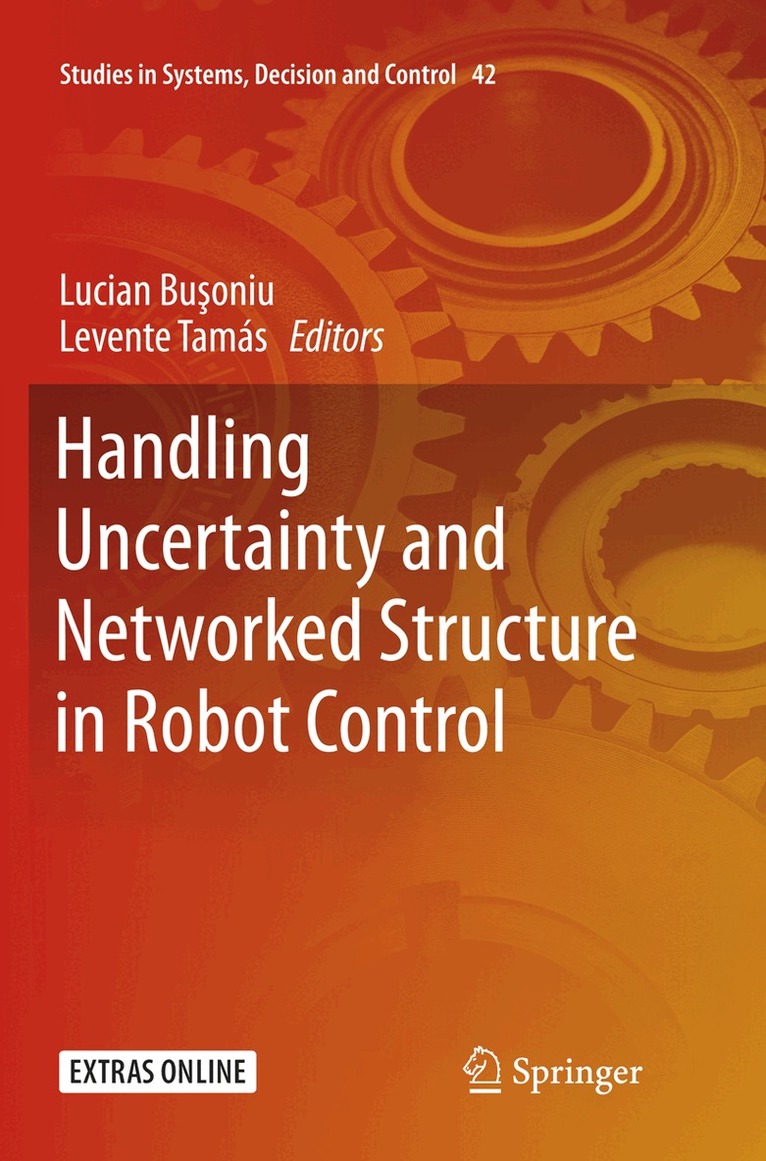
Thisbook focuses on two challenges posed in robot control by the increasingadoption of robots in the everyday human environment: uncertainty and networkedcommunication. PartI of the book describes learning control to address environmental uncertainty.Part II discusses state estimation, active sensing, and complex scenarioperception to tackle sensing uncertainty. Part IIIcompletes the book with control of networked robots and multi-robot teams.
Each chapter features in-depth technical coverage and case studieshighlighting the applicability of the techniques, with real robots or insimulation. Platforms include mobile ground, aerial, and underwater robots, aswell as humanoid robots and robot arms. Source code and experimental data areavailable at http://extras.springer.com.
The text gathers contributions from academic and industry experts,and offers a valuable resource for researchers or graduate students in robotcontrol and perception. It also benefits researchers in related areas, such ascomputer vision, nonlinear and learning control, and multi-agent systems.
Handling Uncertainty and Networked Structure in Robot Control
1 091 kr
Skickas inom 10-15 vardagar