Lucy Gasser – författare
Visar alla böcker från författaren Lucy Gasser. Handla med fri frakt och snabb leverans.
6 produkter
6 produkter
Inbunden, Engelska, 2021
2 524 kr
Skickas inom 10-15 vardagar
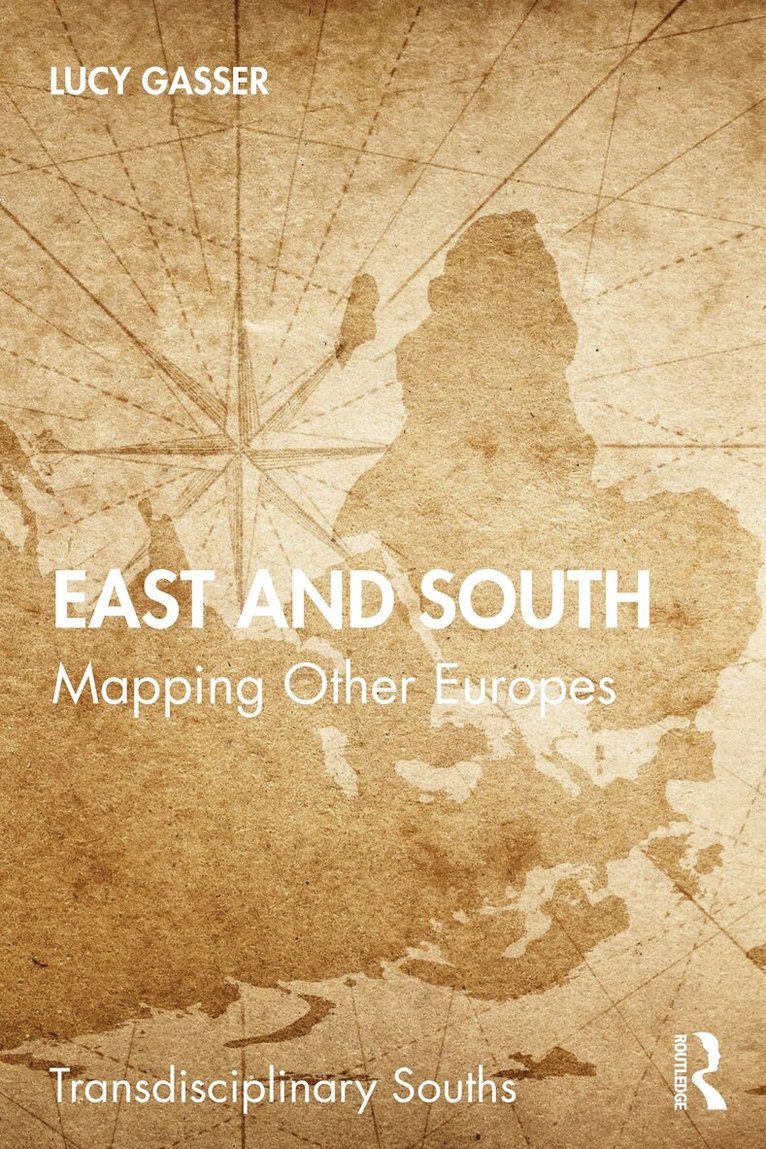
What is "Europe" in academic discourse?While Europe tends to be used as shorthand, often interchangeable with the "West", neither the "West" nor "Europe" are homogeneous spaces. Though postcolonial studies have long been debunking Eurocentrism in its multiple guises, there is still work to do in fully comprehending how its imaginations and discursive legacies conceive the figure of Europe, as not all who live on European soil are understood as equally "European".This volume explores this immediate need to rethink the axis of postcolonial cultural productions, to disarticulate Eurocentrism, to recognise Europe as a more diverse, plural and fluid space, to draw forward cultural exchanges and dialogues within the Global South. Through analyses of literary texts from East-Central Europe and beyond, this volume sheds light on alternative literary cartographies — the multiplicity of Europes and being European which exist both as they are viewed from the different geographies of the global South, and within the continent itself.Covering a wide spatial and temporal terrain in postcolonial and European cultural productions, this volume will be of great interest to scholars and researchers of literature and literary criticism, cultural studies, post-colonial studies, global South studies and European studies.
Häftad, Engelska, 2021
673 kr
Skickas inom 10-15 vardagar
What is "Europe" in academic discourse?While Europe tends to be used as shorthand, often interchangeable with the "West", neither the "West" nor "Europe" are homogeneous spaces. Though postcolonial studies have long been debunking Eurocentrism in its multiple guises, there is still work to do in fully comprehending how its imaginations and discursive legacies conceive the figure of Europe, as not all who live on European soil are understood as equally "European".This volume explores this immediate need to rethink the axis of postcolonial cultural productions, to disarticulate Eurocentrism, to recognise Europe as a more diverse, plural and fluid space, to draw forward cultural exchanges and dialogues within the Global South. Through analyses of literary texts from East-Central Europe and beyond, this volume sheds light on alternative literary cartographies — the multiplicity of Europes and being European which exist both as they are viewed from the different geographies of the global South, and within the continent itself.Covering a wide spatial and temporal terrain in postcolonial and European cultural productions, this volume will be of great interest to scholars and researchers of literature and literary criticism, cultural studies, post-colonial studies, global South studies and European studies.
E-bok
PDF, Engelska, 2021765 kr
Läs direkt efter köp
What is "Europe" in academic discourse?While Europe tends to be used as shorthand, often interchangeable with the "West", neither the "West" nor "Europe" are homogeneous spaces. Though postcolonial studies have long been debunking Eurocentrism in its multiple guises, there is still work to do in fully comprehending how its imaginations and discursive legacies conceive the figure of Europe, as not all who live on European soil are understood as equally "European".This volume explores this immediate need to rethink the axis of postcolonial cultural productions, to disarticulate Eurocentrism, to recognise Europe as a more diverse, plural and fluid space, to draw forward cultural exchanges and dialogues within the Global South. Through analyses of literary texts from East-Central Europe and beyond, this volume sheds light on alternative literary cartographies — the multiplicity of Europes and being European which exist both as they are viewed from the different geographies of the global South, and within the continent itself.Covering a wide spatial and temporal terrain in postcolonial and European cultural productions, this volume will be of great interest to scholars and researchers of literature and literary criticism, cultural studies, post-colonial studies, global South studies and European studies.
E-bok
Engelska, 2021765 kr
Läs direkt efter köp
What is "Europe" in academic discourse?While Europe tends to be used as shorthand, often interchangeable with the "West", neither the "West" nor "Europe" are homogeneous spaces. Though postcolonial studies have long been debunking Eurocentrism in its multiple guises, there is still work to do in fully comprehending how its imaginations and discursive legacies conceive the figure of Europe, as not all who live on European soil are understood as equally "European".This volume explores this immediate need to rethink the axis of postcolonial cultural productions, to disarticulate Eurocentrism, to recognise Europe as a more diverse, plural and fluid space, to draw forward cultural exchanges and dialogues within the Global South. Through analyses of literary texts from East-Central Europe and beyond, this volume sheds light on alternative literary cartographies — the multiplicity of Europes and being European which exist both as they are viewed from the different geographies of the global South, and within the continent itself.Covering a wide spatial and temporal terrain in postcolonial and European cultural productions, this volume will be of great interest to scholars and researchers of literature and literary criticism, cultural studies, post-colonial studies, global South studies and European studies.
Inbunden, Tyska, 2024
242 kr
Skickas inom 3-6 vardagar
E-bok
Tyska, 2025211 kr
Läs direkt efter köp
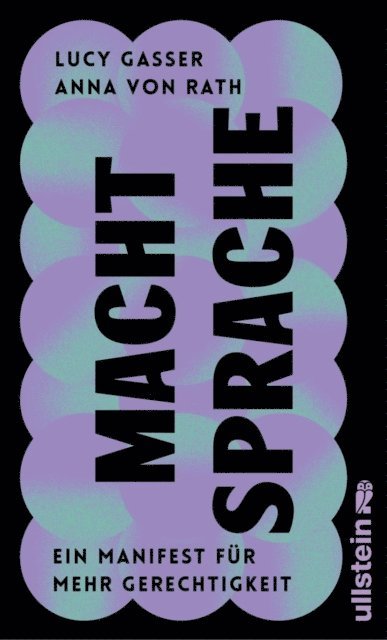
Wie ein sensibler Umgang mit Sprache eine gerechtere Gesellschaft schaffen kannDass es einen sprachlichen Wandel für eine gerechtere Gesellschaft braucht, darüber sind sich viele mittlerweile einig. Aber wie genau kann dieser aussehen? Und wie kann es uns gelingen, uns so sensibel und diskriminierungsarm wie möglich auszudrücken? Anna von Rath und Lucy Gasser schaffen in ihrem Manifest Macht Sprache ein Bewusstsein für die vielen Stolpersteine im Sprechen, sowohl im Privaten als auch in öffentlichen Debatten, und hinterfragen die Privilegien von Menschen, die den Sprachwandel als unnötig abtun. Anhand eingängiger Beispiele regen sie zur Neuaushandlung des sprachlichen Miteinanders an – wobei auch Pragmatismus erlaubt ist. Ein Buch, das uns alle betrifft und das den Blick weitet für die Quellen von Unrecht und Diskriminierung. Die Autorinnen bieten konstruktive Reflexionsanstöße und Vorschläge, damit wir weiter miteinander sprechen können – ohne Angst davor, uns falsch auszudrücken und unser Gegenüber vor den Kopf zu stoßen.