Ludo Van der Heyden – författare
Visar alla böcker från författaren Ludo Van der Heyden. Handla med fri frakt och snabb leverans.
6 produkter
6 produkter
Inbunden, Engelska, 2023
725 kr
Skickas inom 5-8 vardagar
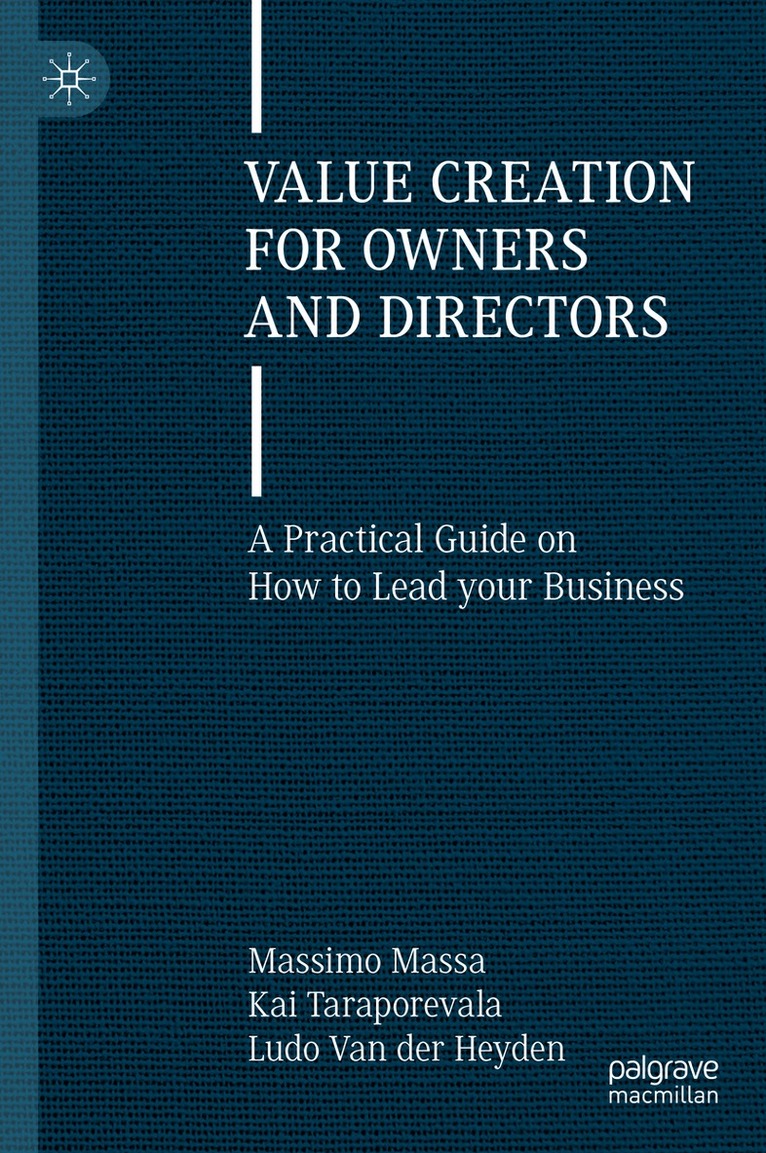
This book deals with a much understudied and poorly understood aspect of business: the role of owners and boards in value creation. While there is abundant guidance on value creation for publicly listed firms and their managers, the role played by owners, and their corporate directors, in value creation and governance has been overlooked. This book aims to fill that gap. • The first part deals with the mission, and the values and rules pertaining to the governance of the business. These structural elements are fundamental for owners to get right as they pave the way to value creation, or its opposite. They refer to “WHAT” owners have to do. Another element is the formation of the three boards that govern owner-led firms: the owners board, the board of directors, and the management board. • The second part addresses the relational elements that owners must master to effectively manage the social and emotionaldynamics in their enterprise. It deals with the “HOW” of ownership, namely the leadership process that lies at the heart of board work. This process ensures alignment across the three boards and also with stakeholders that is vital to realizing owners’ value creating aims. • Thirdly, the book explores the histories, defining experiences, and talents that define owners and shape their enterprise. It concerns the “WHOM,” namely the identities of owners. It explores the diversity of ownership styles and identifies the critical personal transitions owners must make in their leadership quest. This book offers a practical guide for business aiming for value creation. It also should be of interest to directors and executives of all firms with identifiable ownership, such as entrepreneurial, family, state-owned and private equity firms.
E-bok
Engelska, 2023896 kr
Läs direkt efter köp
This book deals with a much understudied and poorly understood aspect of business: the role of owners and boards in value creation. While there is abundant guidance on value creation for publicly listed firms and their managers, the role played by owners, and their corporate directors, in value creation and governance has been overlooked. This book aims to fill that gap.
• The first part deals with the mission, and the values and rules pertaining to the governance of the business. These structural elements are fundamental for owners to get right as they pave the way to value creation, or its opposite. They refer to “WHAT” owners have to do. Another element is the formation of the three boards that govern owner-led firms: the owners board, the board of directors, and the management board. • The second part addresses the relational elements that owners must master to effectively manage the social and emotionaldynamics in their enterprise. It deals with the “HOW” of ownership, namely the leadership process that lies at the heart of board work. This process ensures alignment across the three boards and also with stakeholders that is vital to realizing owners’ value creating aims. • Thirdly, the book explores the histories, defining experiences, and talents that define owners and shape their enterprise. It concerns the “WHOM,” namely the identities of owners. It explores the diversity of ownership styles and identifies the critical personal transitions owners must make in their leadership quest. This book offers a practical guide for business aiming for value creation. It also should be of interest to directors and executives of all firms with identifiable ownership, such as entrepreneurial, family, state-owned and private equity firms.Häftad, Engelska, 2024
670 kr
Skickas inom 10-15 vardagar
This book deals with a much understudied and poorly understood aspect of business: the role of owners and boards in value creation. While there is abundant guidance on value creation for publicly listed firms and their managers, the role played by owners, and their corporate directors, in value creation and governance has been overlooked. This book aims to fill that gap. • The first part deals with the mission, and the values and rules pertaining to the governance of the business. These structural elements are fundamental for owners to get right as they pave the way to value creation, or its opposite. They refer to “WHAT” owners have to do. Another element is the formation of the three boards that govern owner-led firms: the owners board, the board of directors, and the management board. • The second part addresses the relational elements that owners must master to effectively manage the social and emotionaldynamics in their enterprise. It deals with the “HOW” of ownership, namely the leadership process that lies at the heart of board work. This process ensures alignment across the three boards and also with stakeholders that is vital to realizing owners’ value creating aims. • Thirdly, the book explores the histories, defining experiences, and talents that define owners and shape their enterprise. It concerns the “WHOM,” namely the identities of owners. It explores the diversity of ownership styles and identifies the critical personal transitions owners must make in their leadership quest. This book offers a practical guide for business aiming for value creation. It also should be of interest to directors and executives of all firms with identifiable ownership, such as entrepreneurial, family, state-owned and private equity firms.
Inbunden, Engelska, 2003
559 kr
Skickas inom 10-15 vardagar
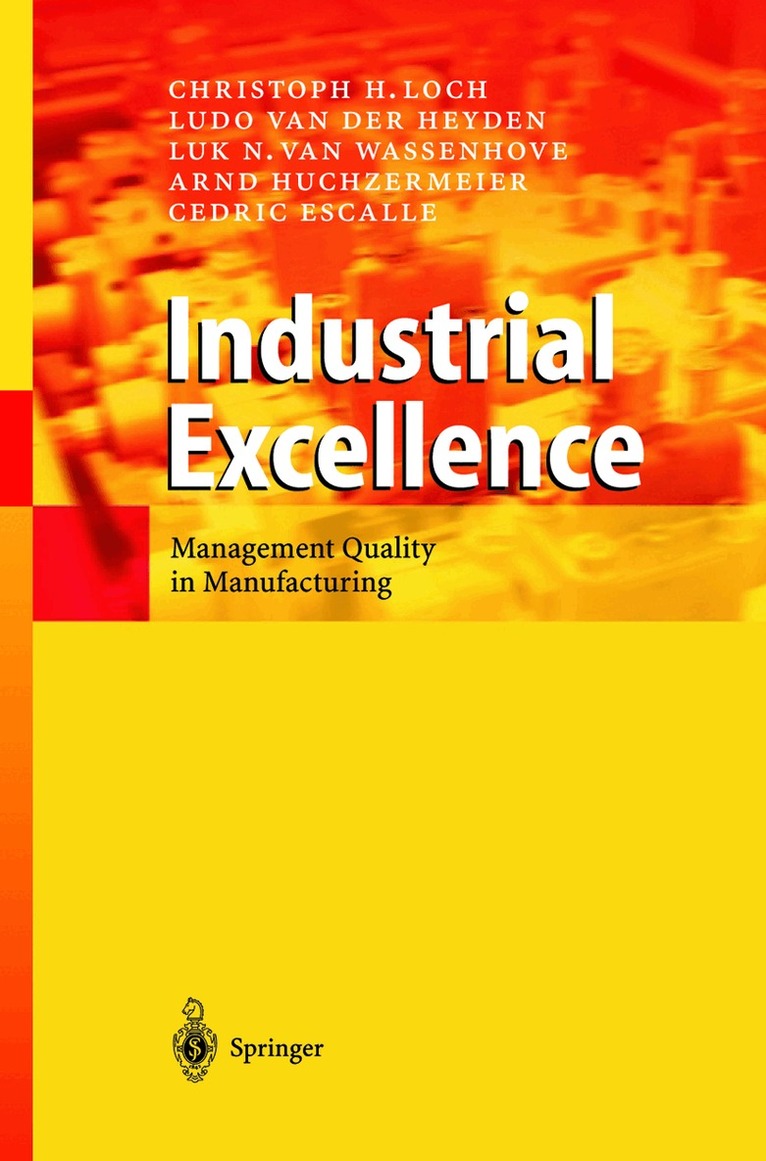
In 1994, the idea for this project (we were not then thinking about a book) arose in a context of growing publicity surrounding prizes like the D- ing Award, the Malcolm Baldrige Award, and the European Quality Award, prompting us to ask: “Could we de?ne what world-class manufacturing is? It’s got to be more than managing processes. Are the US and Japan really in the lead, as so many examples suggest?” Xavier de Groote, our colleague in the Operations Management group at INSEAD, made a major contribution to the formulation of the ?rst version of our framework, the ?rst questi- naire, and the ?rst edition of the Industrial Excellence Award (IEA) in 1995. He witnessed the crowning of the ?rst winner, STMP Laval (which became Solvay Automotive soon afterwards and later Ingeny following its merger with Plastic Omnium). The answer to our initial questions can be found in this book. While the journey took seven years and was far from easy, we believe we have made some progress. We have awarded the IEA annually since 1995 in France, and in Germany since 1997. In the course of this effort, we have analyzed questionnaires from hundreds of plants, visited 100 of them, and given prizes to 30. We did not know what we might discover when we ?rst approached this undertaking but we came away deeply impressed.
E-bok
PDF, Engelska, 2013712 kr
Läs direkt efter köp
In 1994, the idea for this project (we were not then thinking about a book) arose in a context of growing publicity surrounding prizes like the D- ing Award, the Malcolm Baldrige Award, and the European Quality Award, prompting us to ask: “Could we de?ne what world-class manufacturing is? It’s got to be more than managing processes. Are the US and Japan really in the lead, as so many examples suggest?” Xavier de Groote, our colleague in the Operations Management group at INSEAD, made a major contribution to the formulation of the ?rst version of our framework, the ?rst questi- naire, and the ?rst edition of the Industrial Excellence Award (IEA) in 1995. He witnessed the crowning of the ?rst winner, STMP Laval (which became Solvay Automotive soon afterwards and later Ingeny following its merger with Plastic Omnium). The answer to our initial questions can be found in this book. While the journey took seven years and was far from easy, we believe we have made some progress. We have awarded the IEA annually since 1995 in France, and in Germany since 1997. In the course of this effort, we have analyzed questionnaires from hundreds of plants, visited 100 of them, and given prizes to 30. We did not know what we might discover when we ?rst approached this undertaking but we came away deeply impressed.
Häftad, Engelska, 2010
543 kr
Skickas inom 10-15 vardagar
In 1994, the idea for this project (we were not then thinking about a book) arose in a context of growing publicity surrounding prizes like the D- ing Award, the Malcolm Baldrige Award, and the European Quality Award, prompting us to ask: “Could we de?ne what world-class manufacturing is? It’s got to be more than managing processes. Are the US and Japan really in the lead, as so many examples suggest?” Xavier de Groote, our colleague in the Operations Management group at INSEAD, made a major contribution to the formulation of the ?rst version of our framework, the ?rst questi- naire, and the ?rst edition of the Industrial Excellence Award (IEA) in 1995. He witnessed the crowning of the ?rst winner, STMP Laval (which became Solvay Automotive soon afterwards and later Ingeny following its merger with Plastic Omnium). The answer to our initial questions can be found in this book. While the journey took seven years and was far from easy, we believe we have made some progress. We have awarded the IEA annually since 1995 in France, and in Germany since 1997. In the course of this effort, we have analyzed questionnaires from hundreds of plants, visited 100 of them, and given prizes to 30. We did not know what we might discover when we ?rst approached this undertaking but we came away deeply impressed.