Ludovic Lado – författare
Visar alla böcker från författaren Ludovic Lado. Handla med fri frakt och snabb leverans.
5 produkter
5 produkter
Inbunden, Engelska, 2023
1 096 kr
Skickas inom 10-15 vardagar
This anthropological study offers a crucial contribution to scholarly debates about the making of African modernity by considering the implementation and reception of gender reform in the West African context.Historically, attempts at implementing gender reform in West Africa have been met with suspicion. Beyond the perception that such reforms subvert traditional structures of authority and community, many worry that these efforts are inextricably connected to Western imperialism and colonialism. Ludovic Lado's The Politics of Gender Reform in West Africa examines the politics of a legislative process entirely driven by the state and meant to narrow the gender gap in Ivorian society.Lado discusses the legislative processes by which states have sought to reduce the gender gap between men and women, probes the potential impact of this reform on the condition of women by exploring the practice of civil marriage in Abidjan, and assesses the reception of the reform among Catholics and Muslims in Côte d'Ivoire. Throughout this readable and engaging study, Lado examines how the relationship between secular powers and religious authorities has determined the direction gender reforms have taken. Although the predominant focus in this text remains on gender reforms in Côte d'Ivoire, Lado also discusses their correlates in Niger, Senegal, and Mali. He shows that the success or failure of gender reforms in West Africa has relied on the interaction of various power relationships that structure the international, national, local, religious, and domestic arenas within which West Africans go about their lives. The book concludes with an informed reflection on the relationship among religions, the state, and gender reforms that highlights some of the issues at stake in the domestication of hegemonic modernity in Africa.
Häftad, Engelska, 2023
374 kr
Skickas inom 10-15 vardagar
This anthropological study offers a crucial contribution to scholarly debates about the making of African modernity by considering the implementation and reception of gender reform in the West African context.Historically, attempts at implementing gender reform in West Africa have been met with suspicion. Beyond the perception that such reforms subvert traditional structures of authority and community, many worry that these efforts are inextricably connected to Western imperialism and colonialism. Ludovic Lado's The Politics of Gender Reform in West Africa examines the politics of a legislative process entirely driven by the state and meant to narrow the gender gap in Ivorian society.Lado discusses the legislative processes by which states have sought to reduce the gender gap between men and women, probes the potential impact of this reform on the condition of women by exploring the practice of civil marriage in Abidjan, and assesses the reception of the reform among Catholics and Muslims in Côte d'Ivoire. Throughout this readable and engaging study, Lado examines how the relationship between secular powers and religious authorities has determined the direction gender reforms have taken. Although the predominant focus in this text remains on gender reforms in Côte d'Ivoire, Lado also discusses their correlates in Niger, Senegal, and Mali. He shows that the success or failure of gender reforms in West Africa has relied on the interaction of various power relationships that structure the international, national, local, religious, and domestic arenas within which West Africans go about their lives. The book concludes with an informed reflection on the relationship among religions, the state, and gender reforms that highlights some of the issues at stake in the domestication of hegemonic modernity in Africa.
Del 37 - Studies of Religion in Africa
Catholic Pentecostalism and the Paradoxes of Africanization
Processes of Localization in a Catholic Charismatic Movement in Cameroon
Inbunden, Engelska, 2009
2 457 kr
Skickas inom 5-8 vardagar
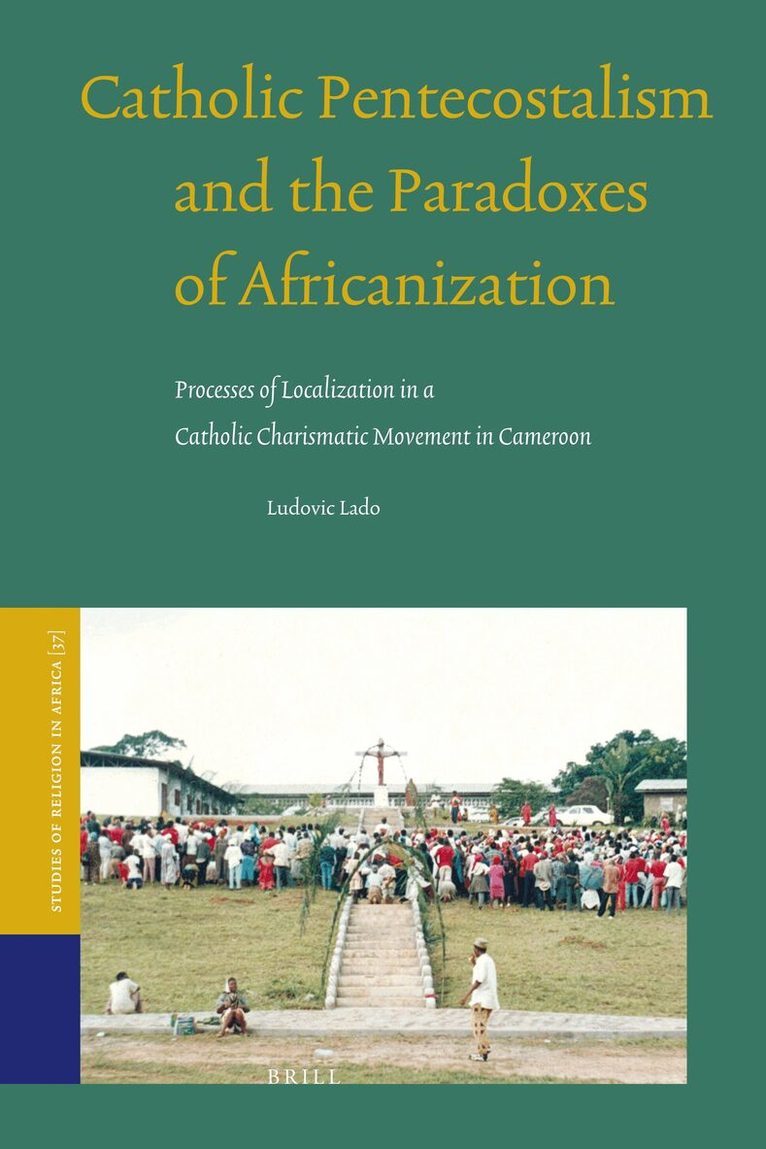
The anthropological literature on religious innovation and resistance in African Christianity tended to focus almost exclusively on what have come to be known as African Independent Churches. Very few anthropological studies have looked at similar processes within mission churches. Through an ethnographic study of localizing processes in a Charismatic movement in Cameroon and Paris, the book critically explores the dialectics between ‘Pentecostalization’ and ‘Africanization’ within contemporary African Catholicism. It appears that both processes pursue, although for different purposes, the missionary policy of dismantling local cultures and religions: practices and discourses of Africanization dissect them in search of ‘authentic’ African values; Charismatic ritual on the other hand features the dramatization of the defeat of local deities and spirits by Christianity.
Häftad, Franska, 2019
598 kr
Skickas inom 5-8 vardagar
E-bok
PDF, Franska, 2019687 kr
Läs direkt efter köp
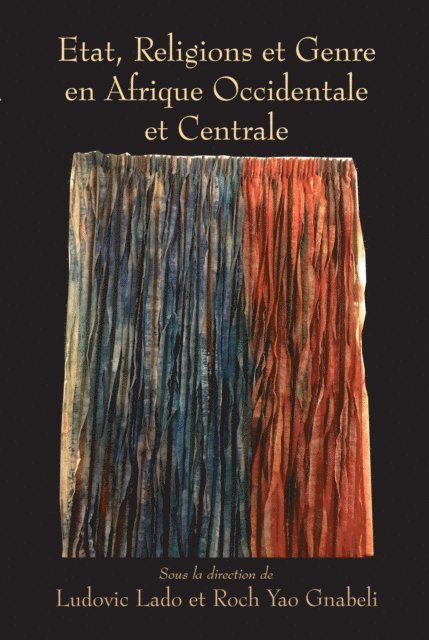
Issues of gender, marriage and family are at the heart of the main cultural wars of our time and have led to a number of legal and societal reforms in many African countries. These reforms, generally initiated by the state and dictated by the neoliberal model of human rights, often have to come to terms with local resistance, mainly from religious circles. What is the modus operandi of these reforms? What are the power relationships that structure them? How are they perceived and received by African societies? What are the terms of religious resistance? These questions are at the heart of this volume which examines the margins of docility and indocility of African societies to legal reforms aimed at promoting the neoliberal model of sexuality, marriage and the family. Emphasis is placed on the centrality of the state and the power struggle with other stakeholders in the deconstruction and reconstruction of gender relations. Few empirical studies have illustrated the issue of power struggles surrounding the social production of gender norms. This book is the outcome of an international conference organized at the Institute of Dignity and Human Rights of the Center for Research and Action for Peace (CERAP) in Abidjan, in June 2017, on the following theme: ''State, Religions and Gender in West and Central Africa''. The main objective of the conference was not only to highlight the results of a research project on the reception of the recent modification of the family code in Côte d’Ivoire but also to broaden the discussion to similar case studies in other countries of West and Central Africa such as Senegal, Niger, Benin, Cameroon and Mali.