Luis Moreno-Caballud – författare
Visar alla böcker från författaren Luis Moreno-Caballud. Handla med fri frakt och snabb leverans.
3 produkter
3 produkter
Del 11 - Contemporary Hispanic and Lusophone Cultures
Cultures of Anyone
Studies on Cultural Democratization in the Spanish Neoliberal Crisis
Inbunden, Engelska, 2015
672 kr
Skickas inom 5-8 vardagar
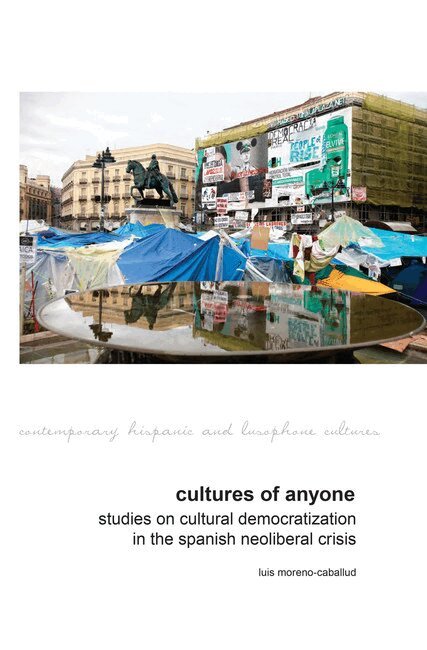
An Open Access edition of this book is available on the Liverpool University Press website and through Knowledge Unlatched.Cultures of Anyone studies the emergence of collaborative and non-hierarchical cultures in the context of the Spanish economic crisis of 2008. It explains how peer-to-peer social networks that have arisen online and through social movements such as the Indignados have challenged a longstanding cultural tradition of intellectual elitism and capitalist technocracy in Spain. From the establishment of a technocratic and consumerist culture during the second part of the Franco dictatorship to the transition to neoliberalism that accompanied the ‘transition to democracy’, intellectuals and ‘experts’ have legitimized contemporary Spanish history as a series of unavoidable steps in a process of ‘modernization’. But when unemployment skyrocketed and a growing number of people began to feel that the consequences of this Spanish ‘modernization’ had increasingly led to precariousness, this paradigm collapsed. In the wake of Spain’s financial meltdown of 2008, new ‘cultures of anyone’ have emerged around the idea that the people affected by or involved in a situation should be the ones to participate in changing it. Growing through grassroots social movements, digital networks, and spaces traditionally reserved for ‘high culture’ and institutional politics, these cultures promote processes of empowerment and collaborative learning that allow the development of the abilities and knowledge base of ‘anyone’, regardless of their economic status or institutional affiliations.
Del 11 - Contemporary Hispanic and Lusophone Cultures
Cultures of Anyone
Studies on Cultural Democratization in the Spanish Neoliberal Crisis
Häftad, Engelska, 2018
414 kr
Skickas inom 5-8 vardagar
An Open Access edition of this book is available on the Liverpool University Press website and through Knowledge Unlatched.Cultures of Anyone studies the emergence of collaborative and non-hierarchical cultures in the context of the Spanish economic crisis of 2008. It explains how peer-to-peer social networks that have arisen online and through social movements such as the Indignados have challenged a longstanding cultural tradition of intellectual elitism and capitalist technocracy in Spain. From the establishment of a technocratic and consumerist culture during the second part of the Franco dictatorship to the transition to neoliberalism that accompanied the ‘transition to democracy’, intellectuals and ‘experts’ have legitimized contemporary Spanish history as a series of unavoidable steps in a process of ‘modernization’. But when unemployment skyrocketed and a growing number of people began to feel that the consequences of this Spanish ‘modernization’ had increasingly led to precariousness, this paradigm collapsed. In the wake of Spain’s financial meltdown of 2008, new ‘cultures of anyone’ have emerged around the idea that the people affected by or involved in a situation should be the ones to participate in changing it. Growing through grassroots social movements, digital networks, and spaces traditionally reserved for ‘high culture’ and institutional politics, these cultures promote processes of empowerment and collaborative learning that allow the development of the abilities and knowledge base of ‘anyone’, regardless of their economic status or institutional affiliations.
E-bok
Spanska, 2018136 kr
Läs direkt efter köp
"Culturas de cualquiera" es un libro de historia del presente. Un relato y una investigación sobre la emergencia de culturas cooperativas e igualitarias en el contexto de la crisis económica española que empezó en 2008.Explica cómo los recientes movimientos en las redes y en las plazas desafiaron los dos pilares mayores en los que se asienta el poder en España desde hace décadas: la autoridad cultural que otorga el derecho a la palabra solo a los expertos, a "los que saben"; y el neoliberalismo que hace del dinero la medida de toda riqueza y valor social.Desde el establecimiento en la segunda mitad del franquismo de una cultura tecnocrática y consumista hasta la implantación progresiva del neoliberalismo, los intelectuales y los "expertos" han legitimado la historia española como una serie de etapas inevitables y positivas hacia la "modernización". Pero cuando estalla la crisis y millones de personas perciben que los efectos de esta "modernización" conducen a la precariedad general de la vida, este paradigma colapsa.Esto impulsa a muchas personas a confiar en sus capacidades para construir colaborativamente saberes y respuestas eficaces a los problemas que les afectan. Son las "culturas de cualquiera".Estas culturas evitan crear divisiones entre personas "que saben" y personas "que no saben", y afirman que todas saben algo y nadie lo sabe todo, y que nuestras capacidades se desarrollan mejor cuando aprendemos juntos que cuando nos relacionamos jerárquicamente. Son "culturas de cualquiera" porque en ellas se entiende que la cultura, esa constante discusión colectiva en la que se decide en qué consiste una vida digna, es algo en lo que cualquiera debe poder participar.Luis Moreno-Caballud es profesor de literatura y cultura españolas en la Universidad de Pennsylvania. Participó activa y directamente en los movimientos 15M y Occupy Wall Street.