Luis Ortiz Blanco – författare
Visar alla böcker från författaren Luis Ortiz Blanco. Handla med fri frakt och snabb leverans.
10 produkter
10 produkter
E-bok
PDF, Engelska, 20172 544 kr
Läs direkt efter köp
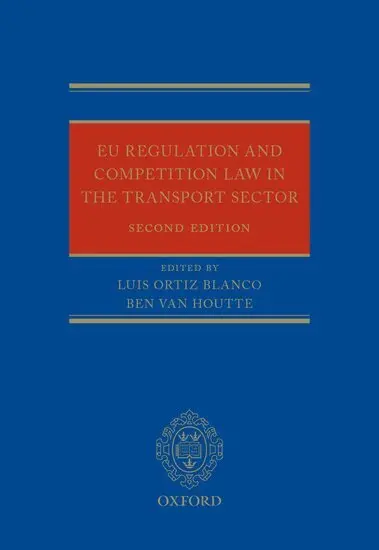
EU Regulation and Competition Law in the Transport Sector provides an in-depth analysis of the EU regulation of the various transport modes, and of the EU competition rules in the transport sectior. The text gives details of different substantive rules regarding, on the one hand, liberalization and regulation of transport markets and operations; and, on the other, restrictive agreements, dominant positions, and mergers, which apply to shipping, to aviation, and to inland transport. In addition to illustrating the procedures which govern enforcement of EU competition rules,and indicating how these differ from the usual procedures applied by the European Commission, this new edition addresses the recent emergence of a regulatory framework for different transport modes. The editors and authors have all been closely involved in the development of the Commission''s practice in this area and have provided a detailed contemporary discussion of all relevant issues.
E-bok
Engelska, 20172 544 kr
Läs direkt efter köp
EU Regulation and Competition Law in the Transport Sector provides an in-depth analysis of the EU regulation of the various transport modes, and of the EU competition rules in the transport sectior. The text gives details of different substantive rules regarding, on the one hand, liberalization and regulation of transport markets and operations; and, on the other, restrictive agreements, dominant positions, and mergers, which apply to shipping, to aviation, and to inland transport. In addition to illustrating the procedures which govern enforcement of EU competition rules,and indicating how these differ from the usual procedures applied by the European Commission, this new edition addresses the recent emergence of a regulatory framework for different transport modes. The editors and authors have all been closely involved in the development of the Commission''s practice in this area and have provided a detailed contemporary discussion of all relevant issues.
E-bok
PDF, Engelska, 20223 934 kr
Läs direkt efter köp
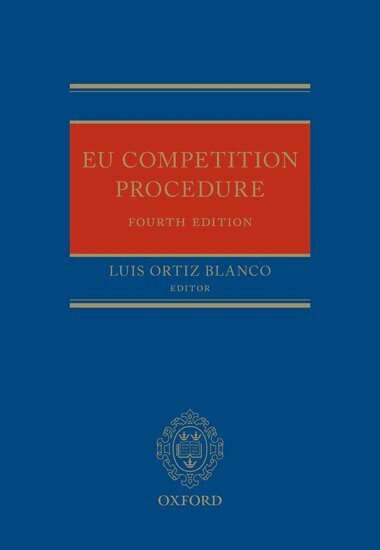
Written by a distinguished team with extensive experience in the area, this key analytical commentary on the competition procedures of the EU provides in-depth coverage of the relevant rules. The work discusses in detail the Commission''s package of regulations and guidelines and their interaction in practice.This fourth edition fully updates the work to reflect recent legislative developments and a wealth of recent case law. Coverage also includes discussion of the fining practice of the European Commission and the judicial review of this practice by the Community Courts. As a practical guide to procedure, focusing on the implementation of the regulatory framework by the Commission and the relevant case law of the European Courts, this is an indispensable resource for all practitioners involved in competition proceedings before the European Commission and national competition authorities.
E-bok
Engelska, 20223 934 kr
Läs direkt efter köp
Written by a distinguished team with extensive experience in the area, this key analytical commentary on the competition procedures of the EU provides in-depth coverage of the relevant rules. The work discusses in detail the Commission''s package of regulations and guidelines and their interaction in practice.This fourth edition fully updates the work to reflect recent legislative developments and a wealth of recent case law. Coverage also includes discussion of the fining practice of the European Commission and the judicial review of this practice by the Community Courts. As a practical guide to procedure, focusing on the implementation of the regulatory framework by the Commission and the relevant case law of the European Courts, this is an indispensable resource for all practitioners involved in competition proceedings before the European Commission and national competition authorities.
Inbunden, Engelska, 2022
5 238 kr
Skickas inom 5-8 vardagar
Written by a distinguished team with extensive experience in the area, this key analytical commentary on the competition procedures of the EU provides in-depth coverage of the relevant rules. The work discusses in detail the Commission's package of regulations and guidelines and their interaction in practice.This fourth edition fully updates the work to reflect recent legislative developments and a wealth of recent case law. Coverage also includes discussion of the fining practice of the European Commission and the judicial review of this practice by the Community Courts. As a practical guide to procedure, focusing on the implementation of the regulatory framework by the Commission and the relevant case law of the European Courts, this is an indispensable resource for all practitioners involved in competition proceedings before the European Commission and national competition authorities.
Inbunden, Engelska, 2017
3 448 kr
Skickas inom 7-10 vardagar
EU Regulation and Competition Law in the Transport Sector provides an in-depth analysis of the EU regulation of the various transport modes, and of the EU competition rules in the transport sectior. The text gives details of different substantive rules regarding, on the one hand, liberalization and regulation of transport markets and operations; and, on the other, restrictive agreements, dominant positions, and mergers, which apply to shipping, to aviation, and to inland transport.In addition to illustrating the procedures which govern enforcement of EU competition rules,and indicating how these differ from the usual procedures applied by the European Commission, this new edition addresses the recent emergence of a regulatory framework for different transport modes.The editors and authors have all been closely involved in the development of the Commission's practice in this area and have provided a detailed contemporary discussion of all relevant issues.
Inbunden, Engelska, 2011
2 289 kr
Skickas inom 10-15 vardagar
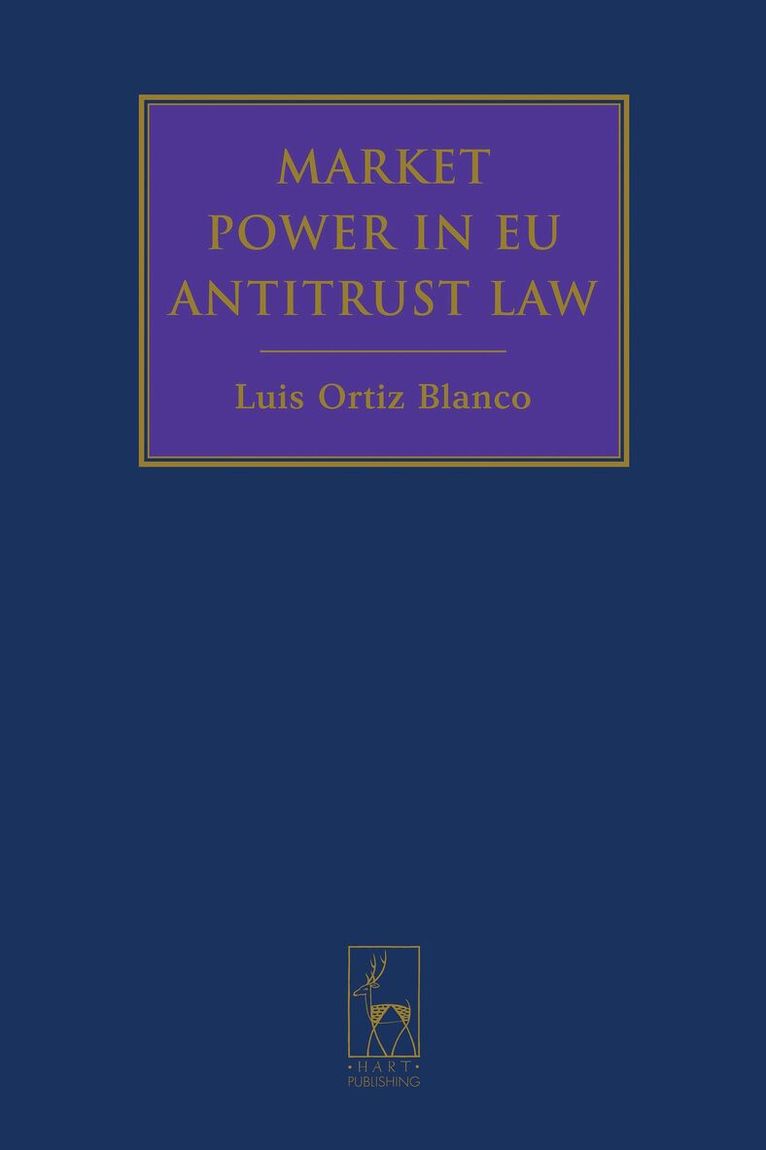
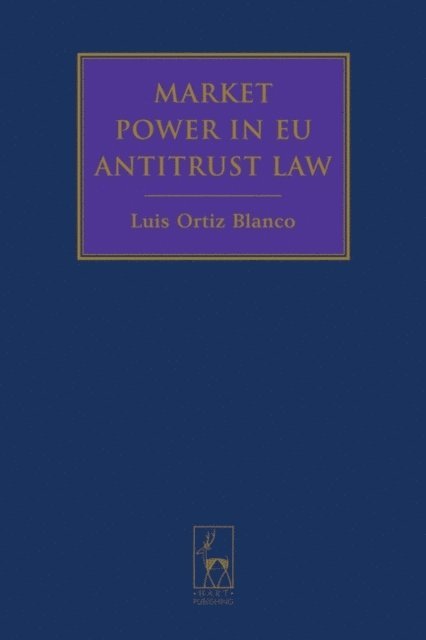
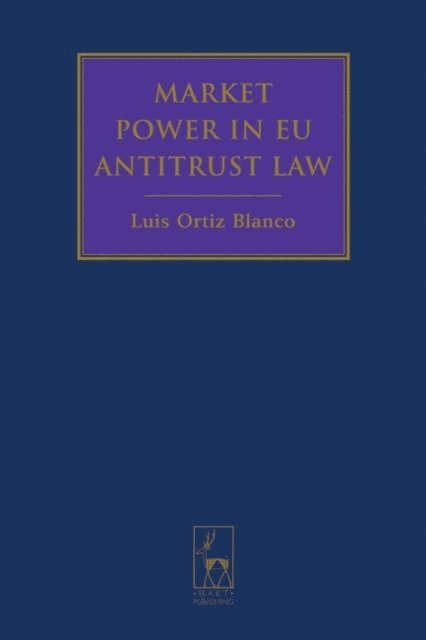
The notion of market power is central to antitrust law. Under EU law, antitrust rules refer to appreciable restrictions of competition (Article 101(1) Treaty on the Functioning of the European Union (TFEU), ex Article 81(1) EC Treaty), the elimination of competition for a substantial part of the market (Article 101 (3) TFEU, ex Article (81(3) EC), dominant positions (Article 10 (2) TFEU, ex Article 82 EC), and substantial impediment to effective competition, in particular by creating or reinforcing a dominant position (Article 2 of the EU Merger Regulation). At first sight, only the concept of dominant position relates to market power, but it is the aim of this book to demonstrate that the other concepts are directly linked to the notion of market power. This is done by reference to the case law of the EU Courts and the precedents of the European Commission. The author goes on to argue that for very good reasons (clarity and enforceability, among others) the rules should be interpreted in this way.Beginning with market definition, the book reviews the different rules and the different degrees of market power they incorporate. Thus it analyses the notion of 'appreciable restriction of competition' to find a moderate market power obtained by agreement among competitors to be the benchmark for the application of Article 101 TFEU, ex Article 81 EC. It moves on to the concept of dominance under Article 102 TFEU (ex Article 82 EC), which is equivalent to substantial (or sgnificant) market power, and then focuses on the old and new tests for EU merger control. Finally, it addresses the idea of elimination of competition in respect of a substantial part of the market (Article 101 (3) TFEU, ex Article 81 (3) (b) EC), in which the last two types of market power (Article 102 TFEU, ex Article 82 EC and EU Merger Regulation) converge. To exemplify this, an in-depth study of the notion of collective dominance is conducted.The book concludes that a paradigm of market power exists under the EU antitrust rules that both fits with past practice and provides for a useful framework of analysis for the general application of the rules by administrative and even more importantly judicial authorities in the Member States, under conditions of legal certainty.
E-bok
PDF, Engelska, 20073 694 kr
Läs direkt efter köp
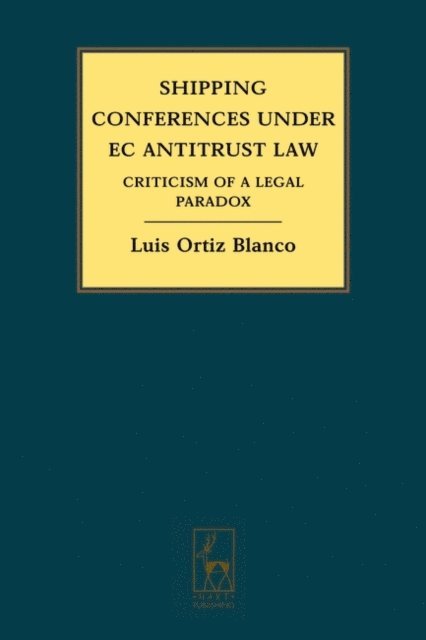
Liner conferences are among the oldest surviving cartels in the world. Created in the 1870s they have existed since on all the world''s shipping routes. With the approval or tacit acquiescence of governments everywhere, they fix freight rates, control capacity and share markets. The United Nations Code of Conduct for Liner Conferences (1974) granted them global recognition and prompted the European Community to recommend Member States to join the Convention on the Liner Code (1979) and to grant them the most generous and extraordinary block exemption from EC antitrust rules ever (1986). The European Commission''s administration of the block exemption has clarified some of its aspects and, to a certain extent, limited its scope; but until very recently, it has not questioned the appropriateness of the exceptionally lenient treatment of liner shipping cartels in the European Union. After a report by the OECD Secretariat (2002) recommending abolition of antitrust immunity for shipping cartels in member countries, the European Commission launched a review of the block exemption (2003) which has led to its repeal (2006).This book studies first the origins, the early history and the regulation of liner conferences in the world and in the European Community, focusing in particular on the Regulation which granted a block exemption to liner conferences. Then, it examines one by one the four conditions for a block exemption to be granted under EC law, and concludes that none of them is fulfilled by shipping cartels. Finally, it proposes some alternative scenarios and solutions for the adequate enforcement of antitrust law in the maritime sector once the block exemption has been repealed.
E-bok
PDF, Engelska, 20112 418 kr
Läs direkt efter köp
The notion of market power is central to antitrust law. Under EU law, antitrust rules refer to appreciable restrictions of competition (Article 101(1) Treaty on the Functioning of the European Union (TFEU), ex Article 81(1) EC Treaty), the elimination of competition for a substantial part of the market (Article 101 (3) TFEU, ex Article (81(3) EC), dominant positions (Article 10 (2) TFEU, ex Article 82 EC), and substantial impediment to effective competition, in particular by creating or reinforcing a dominant position (Article 2 of the EU Merger Regulation). At first sight, only the concept of dominant position relates to market power, but it is the aim of this book to demonstrate that the other concepts are directly linked to the notion of market power. This is done by reference to the case law of the EU Courts and the precedents of the European Commission. The author goes on to argue that for very good reasons (clarity and enforceability, among others) the rules should be interpreted in this way.Beginning with market definition, the book reviews the different rules and the different degrees of market power they incorporate. Thus it analyses the notion of ''appreciable restriction of competition'' to find a moderate market power obtained by agreement among competitors to be the benchmark for the application of Article 101 TFEU, ex Article 81 EC. It moves on to the concept of dominance under Article 102 TFEU (ex Article 82 EC), which is equivalent to substantial (or sgnificant) market power, and then focuses on the old and new tests for EU merger control. Finally, it addresses the idea of elimination of competition in respect of a substantial part of the market (Article 101 (3) TFEU, ex Article 81 (3) (b) EC), in which the last two types of market power (Article 102 TFEU, ex Article 82 EC and EU Merger Regulation) converge. To exemplify this, an in-depth study of the notion of collective dominance is conducted.The book concludes that a paradigm of market power exists under the EU antitrust rules that both fits with past practice and provides for a useful framework of analysis for the general application of the rules by administrative and even more importantly judicial authorities in the Member States, under conditions of legal certainty.
E-bok
Engelska, 20112 418 kr
Läs direkt efter köp
The notion of market power is central to antitrust law. Under EU law, antitrust rules refer to appreciable restrictions of competition (Article 101(1) Treaty on the Functioning of the European Union (TFEU), ex Article 81(1) EC Treaty), the elimination of competition for a substantial part of the market (Article 101 (3) TFEU, ex Article (81(3) EC), dominant positions (Article 10 (2) TFEU, ex Article 82 EC), and substantial impediment to effective competition, in particular by creating or reinforcing a dominant position (Article 2 of the EU Merger Regulation). At first sight, only the concept of dominant position relates to market power, but it is the aim of this book to demonstrate that the other concepts are directly linked to the notion of market power. This is done by reference to the case law of the EU Courts and the precedents of the European Commission. The author goes on to argue that for very good reasons (clarity and enforceability, among others) the rules should be interpreted in this way.Beginning with market definition, the book reviews the different rules and the different degrees of market power they incorporate. Thus it analyses the notion of ''appreciable restriction of competition'' to find a moderate market power obtained by agreement among competitors to be the benchmark for the application of Article 101 TFEU, ex Article 81 EC. It moves on to the concept of dominance under Article 102 TFEU (ex Article 82 EC), which is equivalent to substantial (or sgnificant) market power, and then focuses on the old and new tests for EU merger control. Finally, it addresses the idea of elimination of competition in respect of a substantial part of the market (Article 101 (3) TFEU, ex Article 81 (3) (b) EC), in which the last two types of market power (Article 102 TFEU, ex Article 82 EC and EU Merger Regulation) converge. To exemplify this, an in-depth study of the notion of collective dominance is conducted.The book concludes that a paradigm of market power exists under the EU antitrust rules that both fits with past practice and provides for a useful framework of analysis for the general application of the rules by administrative and even more importantly judicial authorities in the Member States, under conditions of legal certainty.