Luke DeMaitre – författare
Visar alla böcker från författaren Luke DeMaitre. Handla med fri frakt och snabb leverans.
4 produkter
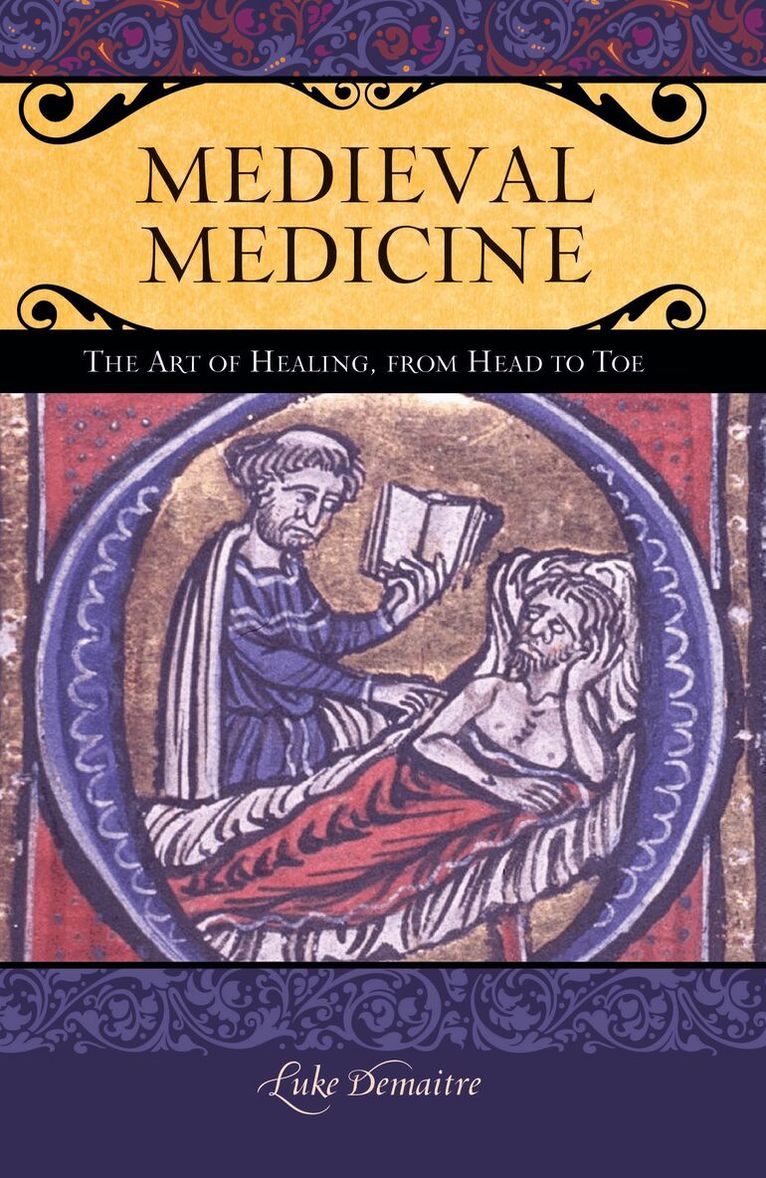
Medieval Medicine
The Art of Healing, from Head to Toe
Inbunden, 2013
854 kr
Lägg i varukorg
This unique examination of medieval medicine as detailed in physician's manuals of the period reveals a more sophisticated approach to the medical arts than expected for the time.Far from the primitive and barbaric practices the Middle Ages may conjure up in our minds, doctors during that time …
Medieval Medicine
The Art of Healing, from Head to Toe
E-bok, 2013
963 kr
Lägg i varukorg
This unique examination of medieval medicine as detailed in physician's manuals of the period reveals a more sophisticated approach to the medical arts than expected for the time. Far from the primitive and barbaric practices the Middle Ages may conjure up in our minds, doctors during that time …
Medieval Medicine
The Art of Healing, from Head to Toe
E-bok, 2013
963 kr
Lägg i varukorg
This unique examination of medieval medicine as detailed in physician's manuals of the period reveals a more sophisticated approach to the medical arts than expected for the time. Far from the primitive and barbaric practices the Middle Ages may conjure up in our minds, doctors during that time …
Leprosy in Premodern Medicine
A Malady of the Whole Body
Inbunden, 2007
517 kr
Tillfälligt slut
While premodern poets and preachers viewed leprosy as a "disease of the soul," physicians in the period understood it to be a "cancer of the whole body." In this innovative study, medical historian Luke Demaitre explores medical and social perspectives on leprosy at a time when judicious diagnosis …