L.Y Nordenfelt – författare
Visar alla böcker från författaren L.Y Nordenfelt. Handla med fri frakt och snabb leverans.
12 produkter
12 produkter
Inbunden, Engelska, 1994
2 152 kr
Skickas inom 10-15 vardagar
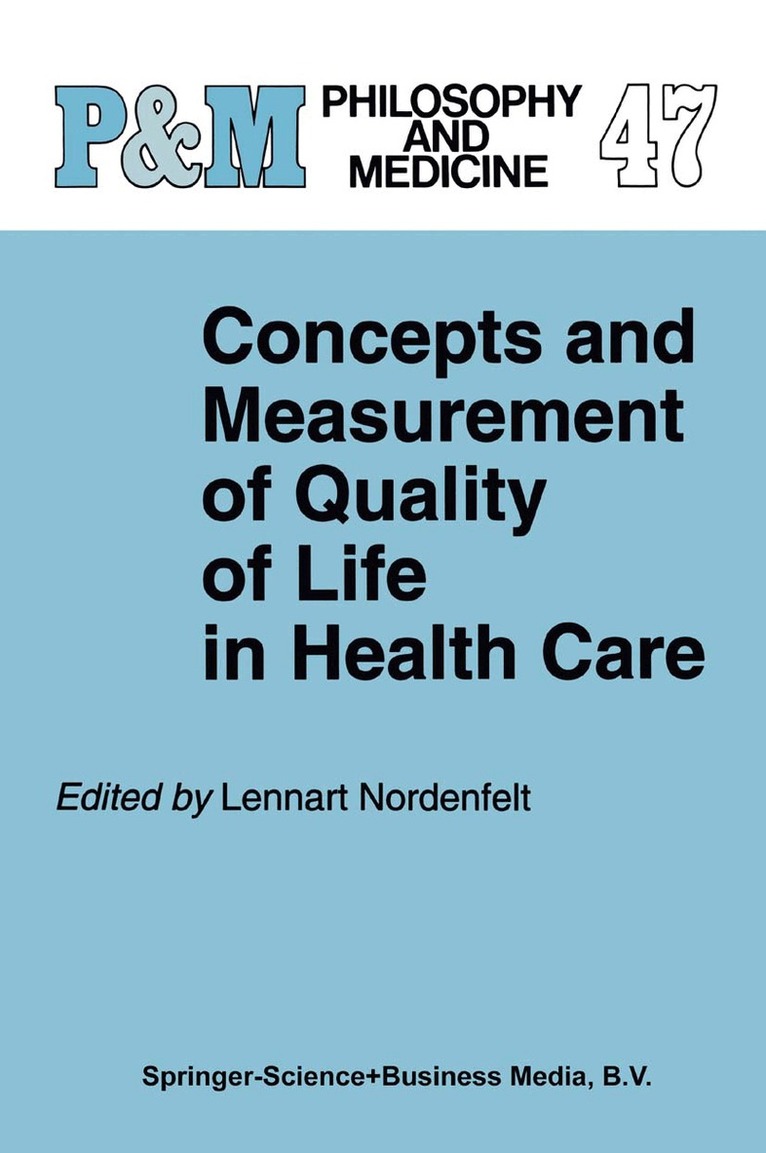
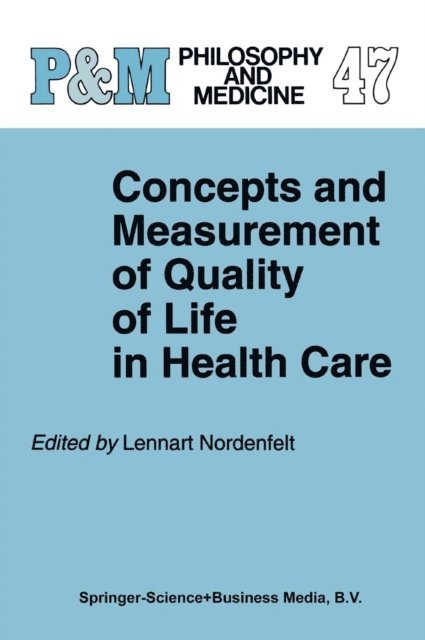
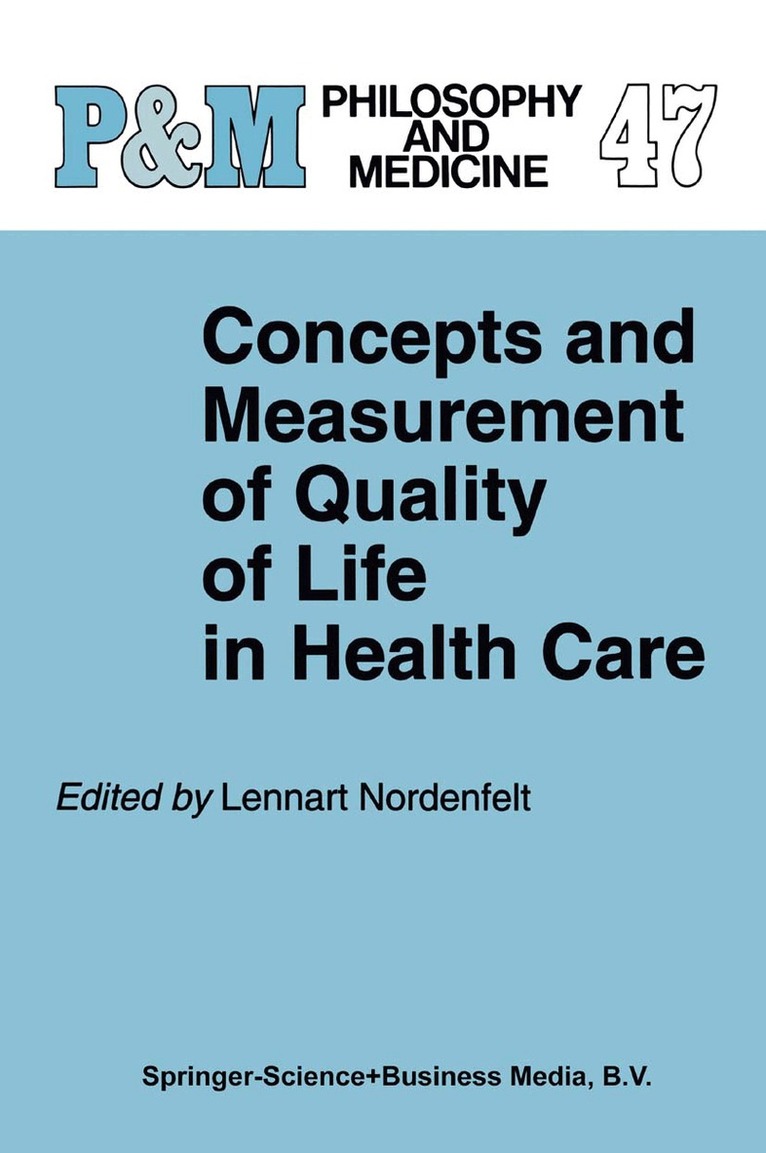
Questions concerning the notion of quality of life, its definition, and its ap plications for purposes of assessment and measurement in social and medical contexts, have been widely discussed in Scandinavia during the last ten years. To a great extent this discussion mirrors the international develop ment in the area. Several methods for the assessment and measurement of quality of life have been borrowed from the UK and the US and then further developed in northern Europe. But there has also been an internal develop ment. This holds in particular for the social arena, where Scandinavia has had a special tradition both in theory and practice. In this volume an attempt is made to illustrate some aspects of the philo sophical, and in general theoretical, discussion concerning quality of life in Scandinavia. In addition, some prominent scholars from other parts of Europe, i. e. , France, the Netherlands, the UK and Italy, have been invited to contribute. The volume is divided into three sections. The first contains philosophical analyses of the general notion of quality of life and proposes a number of different explications. The second section considers various ap plications of the notion of quality of life in health care. The papers serve to disentangle some intellectual and ethical problems that stem from these ap plications. The third section is more practical and focuses on methods of measuring quality of life in medicine and health care.
Del 26 - Philosophy and Medicine
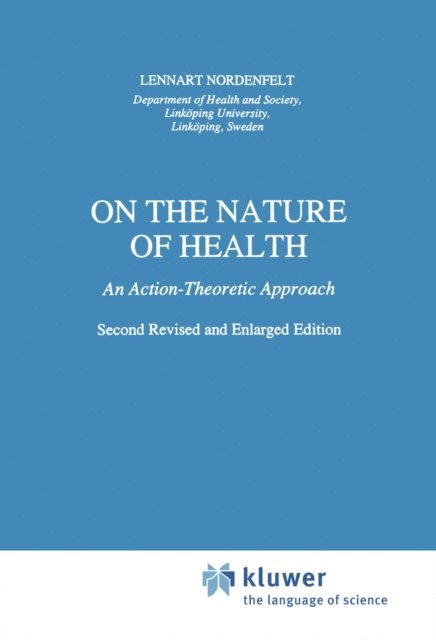
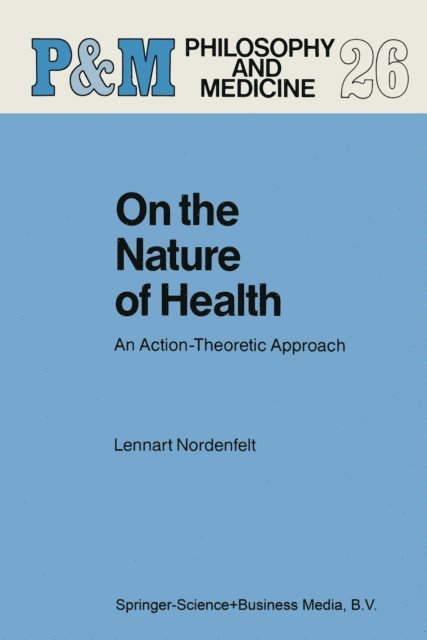
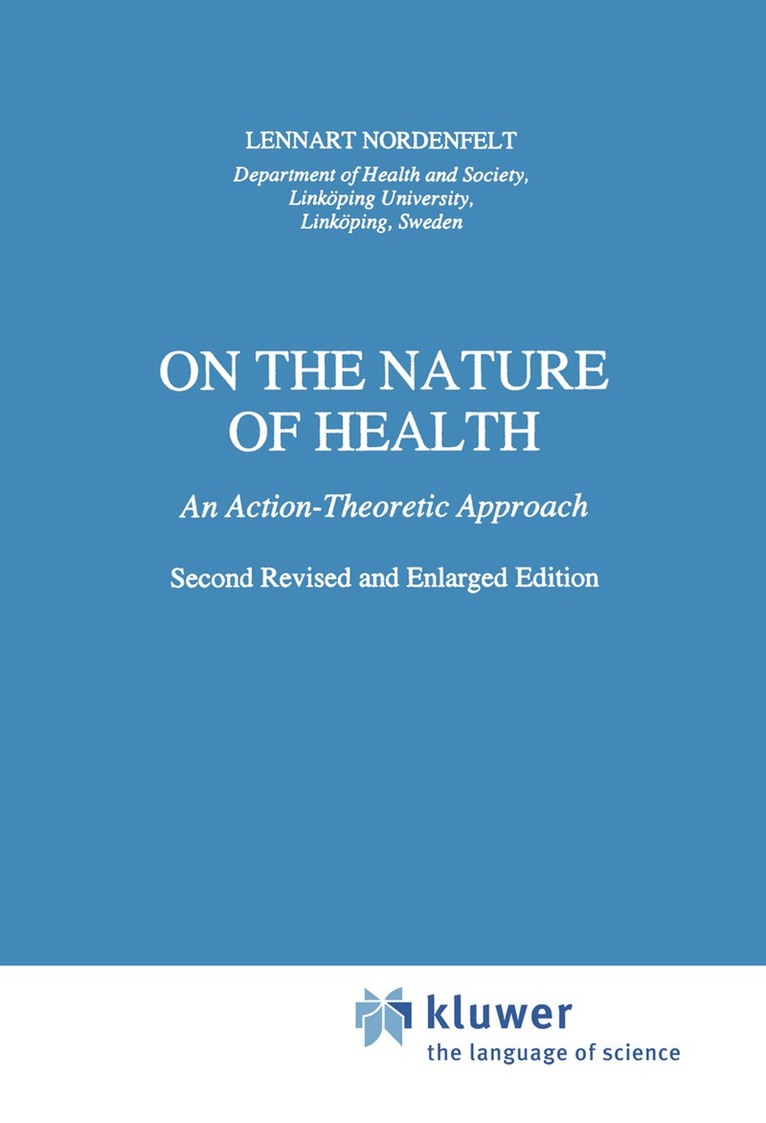
On the Nature of Health
An Action-Theoretic Approach
Inbunden, Engelska, 1995
1 616 kr
Skickas inom 10-15 vardagar
GENERAL INTRODUCTION This study of the concept of health is an attempt to combine central ideas in modern philosophy of medicine with certain results from analytical action theory. What emerges from the study is a concept 'of health based on an action-theoretic foundation. A person's health is characterized as his ability to achieve his vital goals. The general conception is not new. This study has been inspired by a number of scholars, both ancient and modern. The most important influences from the latter have been those of Georges Canguilhem, H. Tristram Engelhardt Jr. , Caroline Whitbeck and Ingmar Porn. The novel aspect of this book consists of elaborations made to the general conception. First, the action-theoretic platform is analysed in some detail. The nature of the ability involved, as well as the conditions for having that ability, are specified. Second, the vital goals of man are given considerable attention. Some previous attempts to define such vital goals are analysed and criticized. A new characterization is proposed, in which the vital goals are conceptually linked to the notion of happiness. A person's vital goals are such states of affairs as are necessary and together sufficient for his minimal happiness. Third, a number of consequences of this con ception are observed and analysed. One issue which is particularly empha sized is that of whether the concept of health is a theoretical or a normative concept.
Del 26 - Philosophy and Medicine
On the Nature of Health
An Action-Theoretic Approach
Häftad, Engelska, 1995
1 616 kr
Skickas inom 10-15 vardagar
GENERAL INTRODUCTION This study of the concept of health is an attempt to combine central ideas in modern philosophy of medicine with certain results from analytical action theory. What emerges from the study is a concept 'of health based on an action-theoretic foundation. A person's health is characterized as his ability to achieve his vital goals. The general conception is not new. This study has been inspired by a number of scholars, both ancient and modern. The most important influences from the latter have been those of Georges Canguilhem, H. Tristram Engelhardt Jr. , Caroline Whitbeck and Ingmar Porn. The novel aspect of this book consists of elaborations made to the general conception. First, the action-theoretic platform is analysed in some detail. The nature of the ability involved, as well as the conditions for having that ability, are specified. Second, the vital goals of man are given considerable attention. Some previous attempts to define such vital goals are analysed and criticized. A new characterization is proposed, in which the vital goals are conceptually linked to the notion of happiness. A person's vital goals are such states of affairs as are necessary and together sufficient for his minimal happiness. Third, a number of consequences of this con ception are observed and analysed. One issue which is particularly empha sized is that of whether the concept of health is a theoretical or a normative concept.
Inbunden, Engelska, 1984
1 079 kr
Skickas inom 10-15 vardagar
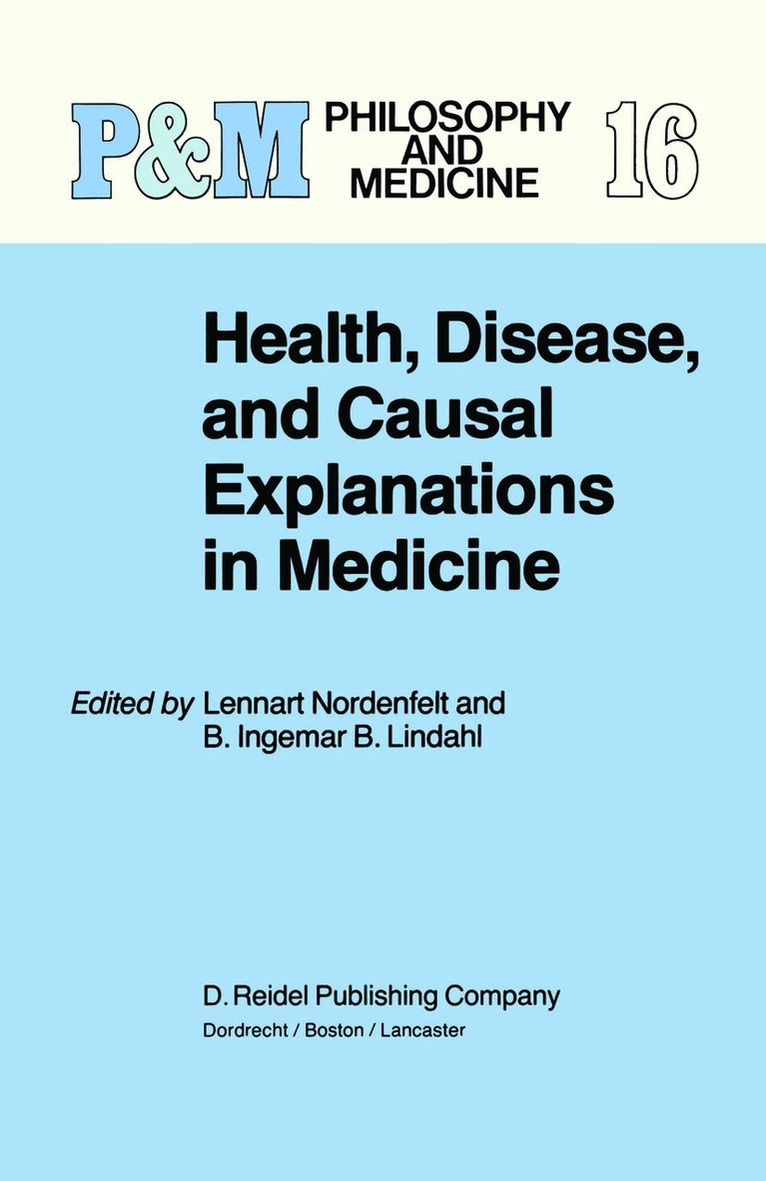
On May 13-15, 1982, some 50 scientists and scholars - physicians, philos ophers and social scientists - convened at Hasselby Castle in Stockholm for the first Nordic Symposium on the Philosophy of Medicine. The topics for the symposium included (1) the concepts of health and disease, (2) classification in medicine, and (3) causality and causal explanations in medicine. The majority of the participants were Scandinavian but the symposium was also able to welcome four distinguished guests from other parts of the world, Professors Stuart F. Spicker and H. Tristram Engelhardt, Jr., U.S.A., Dr Anne M. Fagot, France, and Dr Werner Morbach, West Germany. The latter represented Professor Kazem Sadegh-zadeh, who unfortunately was prevented from attending. One of the main purposes of this symposium was to bring together people in Scandinavia who at present work within the field of Philosophy of Medi cine. This group is still relatively small but is growing rapidly, and the scholarly activity has recently been notable. This fact is clearly demonstrated by the presentation of 'Philosophy of Medicine in Scandinavia' in the Appendix of this volume.
Del 47 - Philosophy and Medicine
Concepts and Measurement of Quality of Life in Health Care
Häftad, Engelska, 2010
2 152 kr
Skickas inom 10-15 vardagar
Questions concerning the notion of quality of life, its definition, and its ap plications for purposes of assessment and measurement in social and medical contexts, have been widely discussed in Scandinavia during the last ten years. To a great extent this discussion mirrors the international develop ment in the area. Several methods for the assessment and measurement of quality of life have been borrowed from the UK and the US and then further developed in northern Europe. But there has also been an internal develop ment. This holds in particular for the social arena, where Scandinavia has had a special tradition both in theory and practice. In this volume an attempt is made to illustrate some aspects of the philo sophical, and in general theoretical, discussion concerning quality of life in Scandinavia. In addition, some prominent scholars from other parts of Europe, i. e. , France, the Netherlands, the UK and Italy, have been invited to contribute. The volume is divided into three sections. The first contains philosophical analyses of the general notion of quality of life and proposes a number of different explications. The second section considers various ap plications of the notion of quality of life in health care. The papers serve to disentangle some intellectual and ethical problems that stem from these ap plications. The third section is more practical and focuses on methods of measuring quality of life in medicine and health care.
Häftad, Engelska, 2010
1 079 kr
Skickas inom 10-15 vardagar
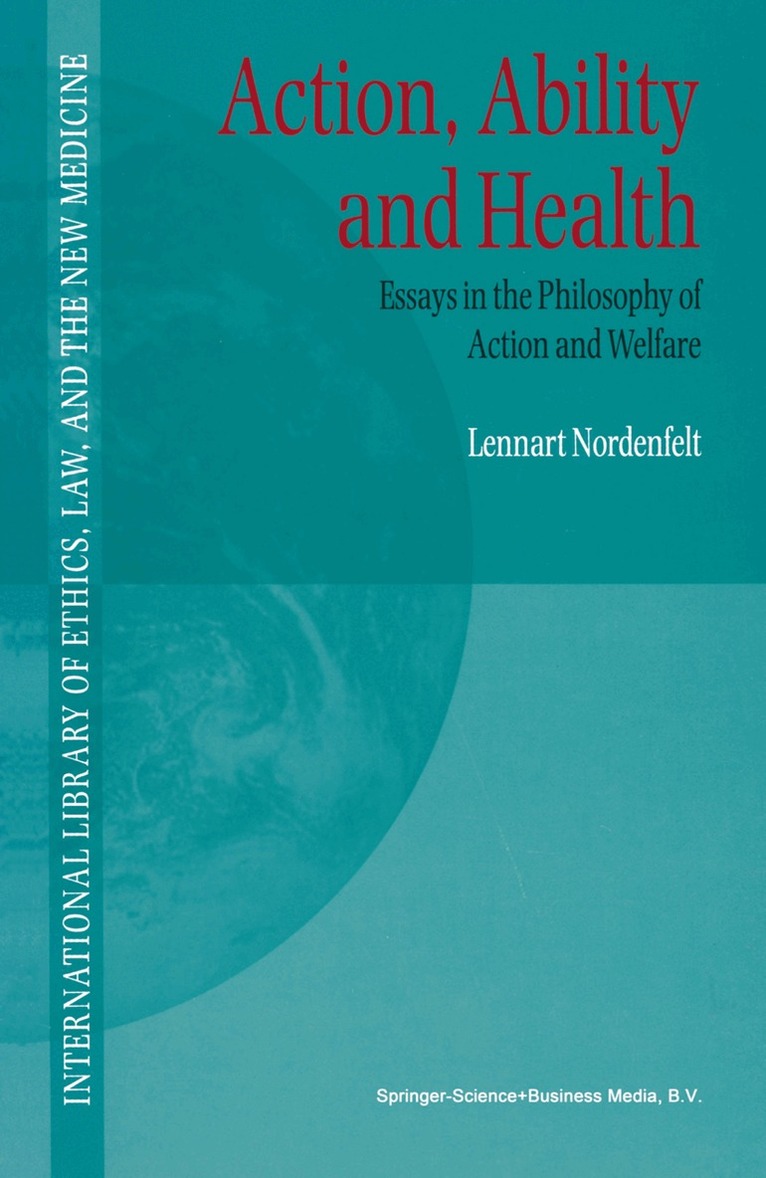
This book is a part of the ongoing enterprise to understand the nature of human health and illness. This enterprise has expanded dramatically during the last decades. A great number of articles, as weIl as a fair number of monographs, on this topic have been published by renowned international publishers. In this discussion most participants share the idea that health is a partially normative concept, Le. that health is not a phe nomenon which can be wholly characterised in biological (or otherwise descriptive) terms. To ascribe health to a person is eo ipso, according to this line of thought, to as cribe a positively evaluated property to this person. Moreover, most debators share the idea that health is a holistic property, belonging to the person as a whole, whereas dis eases, injuries and defects are entities (or properties of entities) which can be very lim ited and and normally affect only a part of the individual. My own monograph belongs to this tradition. A feature of my position, which is not universally acknowledged in riyal theories, however, is my emphasis on the notion of ability as a fundament in the theory of health. In my formal characterisation of health I view it as astate of a person which is such that the person has the ability to fulfi1 his or her vital goals.
E-bok
PDF, Engelska, 20121 416 kr
Läs direkt efter köp
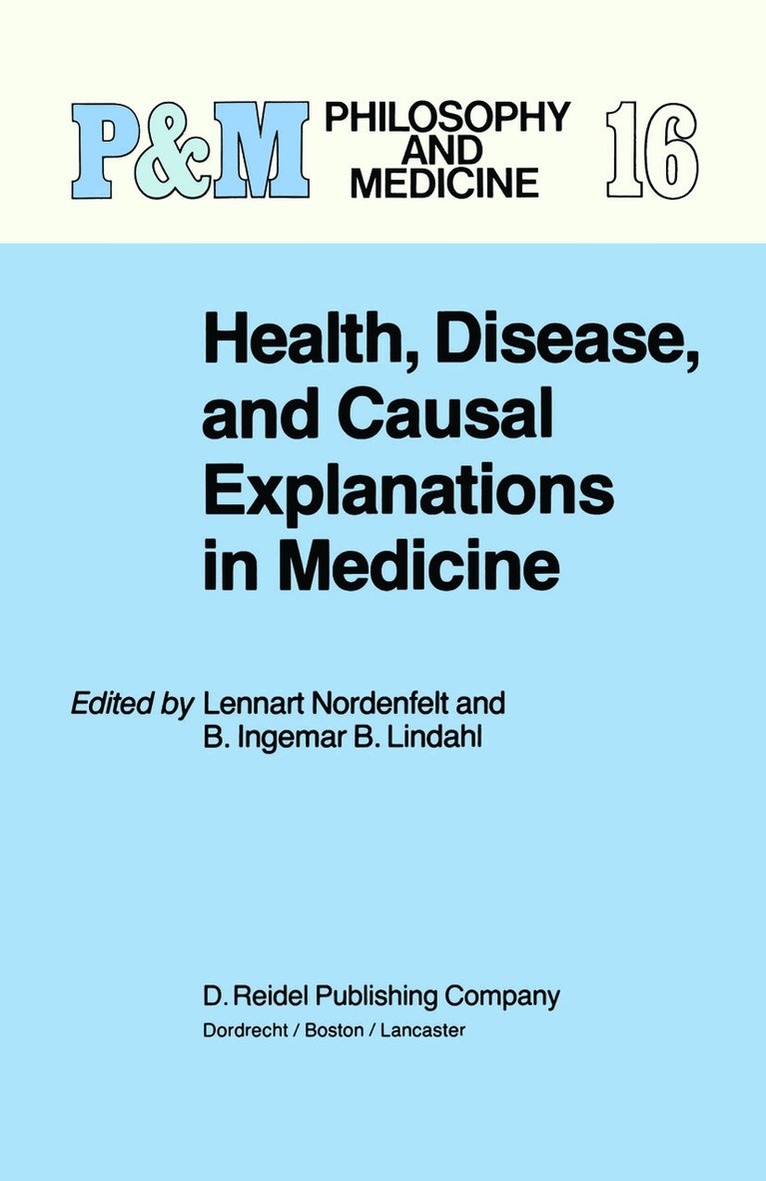
On May 13-15, 1982, some 50 scientists and scholars - physicians, philos ophers and social scientists - convened at Hasselby Castle in Stockholm for the first Nordic Symposium on the Philosophy of Medicine. The topics for the symposium included (1) the concepts of health and disease, (2) classification in medicine, and (3) causality and causal explanations in medicine. The majority of the participants were Scandinavian but the symposium was also able to welcome four distinguished guests from other parts of the world, Professors Stuart F. Spicker and H. Tristram Engelhardt, Jr., U.S.A., Dr Anne M. Fagot, France, and Dr Werner Morbach, West Germany. The latter represented Professor Kazem Sadegh-zadeh, who unfortunately was prevented from attending. One of the main purposes of this symposium was to bring together people in Scandinavia who at present work within the field of Philosophy of Medi cine. This group is still relatively small but is growing rapidly, and the scholarly activity has recently been notable. This fact is clearly demonstrated by the presentation of ''Philosophy of Medicine in Scandinavia'' in the Appendix of this volume.
Del 16 - Philosophy and Medicine
Health, Disease, and Causal Explanations in Medicine
Häftad, Engelska, 2011
1 079 kr
Skickas inom 10-15 vardagar
On May 13-15, 1982, some 50 scientists and scholars - physicians, philos ophers and social scientists - convened at Hasselby Castle in Stockholm for the first Nordic Symposium on the Philosophy of Medicine. The topics for the symposium included (1) the concepts of health and disease, (2) classification in medicine, and (3) causality and causal explanations in medicine. The majority of the participants were Scandinavian but the symposium was also able to welcome four distinguished guests from other parts of the world, Professors Stuart F. Spicker and H. Tristram Engelhardt, Jr., U.S.A., Dr Anne M. Fagot, France, and Dr Werner Morbach, West Germany. The latter represented Professor Kazem Sadegh-zadeh, who unfortunately was prevented from attending. One of the main purposes of this symposium was to bring together people in Scandinavia who at present work within the field of Philosophy of Medi cine. This group is still relatively small but is growing rapidly, and the scholarly activity has recently been notable. This fact is clearly demonstrated by the presentation of 'Philosophy of Medicine in Scandinavia' in the Appendix of this volume.
E-bok
PDF, Engelska, 20122 049 kr
Läs direkt efter köp
GENERAL INTRODUCTION This study of the concept of health is an attempt to combine central ideas in modern philosophy of medicine with certain results from analytical action theory. What emerges from the study is a concept ''of health based on an action-theoretic foundation. A person''s health is characterized as his ability to achieve his vital goals. The general conception is not new. This study has been inspired by a number of scholars, both ancient and modern. The most important influences from the latter have been those of Georges Canguilhem, H. Tristram Engelhardt Jr. , Caroline Whitbeck and Ingmar Porn. The novel aspect of this book consists of elaborations made to the general conception. First, the action-theoretic platform is analysed in some detail. The nature of the ability involved, as well as the conditions for having that ability, are specified. Second, the vital goals of man are given considerable attention. Some previous attempts to define such vital goals are analysed and criticized. A new characterization is proposed, in which the vital goals are conceptually linked to the notion of happiness. A person''s vital goals are such states of affairs as are necessary and together sufficient for his minimal happiness. Third, a number of consequences of this con ception are observed and analysed. One issue which is particularly empha sized is that of whether the concept of health is a theoretical or a normative concept.
E-bok
PDF, Engelska, 20131 069 kr
Läs direkt efter köp
GENERAL INTRODUCTION This study of the concept of health is an attempt to combine central ideas in modern philosophy of medicine with certain results from analytical action theory. What emerges from the study is a concept of health based on an action-theoretic foundation. A person''s health is characterized as his ability to achieve his vital goals. The general conception is not new. This study has been inspired by a number of scholars, both ancient and modern. The most important influences from the latter have been those of Georges Canguilhem, H. Tristram Engelhardt Jr. , Caroline Whitbeck and Ingmar Pörn. The novel aspect of this book consists of elaborations made to the general conception. First, the action-theoretic platform is analysed in some detail. The nature of the ability involved, as well as the conditions for having that ability, are specified. Second, the vital goals of man are given considerable attention. Some previous attempts to define such vital goals are analysed and criticized. A new characterization is proposed, in which the vital goals are conceptually linked to the notion of happiness. A person''s vital goals are such states of affairs as are necessary and together sufficient for his minimal happiness. Third, a number of consequences of this con ception are observed and analysed. One issue which is particularly empha sized is that ofwhether the concept ofhealth is a theoretical or a normative concept.
E-bok
PDF, Engelska, 20132 822 kr
Läs direkt efter köp
Questions concerning the notion of quality of life, its definition, and its ap plications for purposes of assessment and measurement in social and medical contexts, have been widely discussed in Scandinavia during the last ten years. To a great extent this discussion mirrors the international develop ment in the area. Several methods for the assessment and measurement of quality of life have been borrowed from the UK and the US and then further developed in northern Europe. But there has also been an internal develop ment. This holds in particular for the social arena, where Scandinavia has had a special tradition both in theory and practice. In this volume an attempt is made to illustrate some aspects of the philo sophical, and in general theoretical, discussion concerning quality of life in Scandinavia. In addition, some prominent scholars from other parts of Europe, i. e. , France, the Netherlands, the UK and Italy, have been invited to contribute. The volume is divided into three sections. The first contains philosophical analyses of the general notion of quality of life and proposes a number of different explications. The second section considers various ap plications of the notion of quality of life in health care. The papers serve to disentangle some intellectual and ethical problems that stem from these ap plications. The third section is more practical and focuses on methods of measuring quality of life in medicine and health care.
E-bok
PDF, Engelska, 20131 416 kr
Läs direkt efter köp
This book is a part of the ongoing enterprise to understand the nature of human health and illness. This enterprise has expanded dramatically during the last decades. A great number of articles, as weIl as a fair number of monographs, on this topic have been published by renowned international publishers. In this discussion most participants share the idea that health is a partially normative concept, Le. that health is not a phe nomenon which can be wholly characterised in biological (or otherwise descriptive) terms. To ascribe health to a person is eo ipso, according to this line of thought, to as cribe a positively evaluated property to this person. Moreover, most debators share the idea that health is a holistic property, belonging to the person as a whole, whereas dis eases, injuries and defects are entities (or properties of entities) which can be very lim ited and and normally affect only a part of the individual. My own monograph belongs to this tradition. A feature of my position, which is not universally acknowledged in riyal theories, however, is my emphasis on the notion of ability as a fundament in the theory of health. In my formal characterisation of health I view it as astate of a person which is such that the person has the ability to fulfi1 his or her vital goals.