Lynn Gamwell - Böcker
Visar alla böcker från författaren Lynn Gamwell. Handla med fri frakt och snabb leverans.
3 produkter
3 produkter
428 kr
Skickas
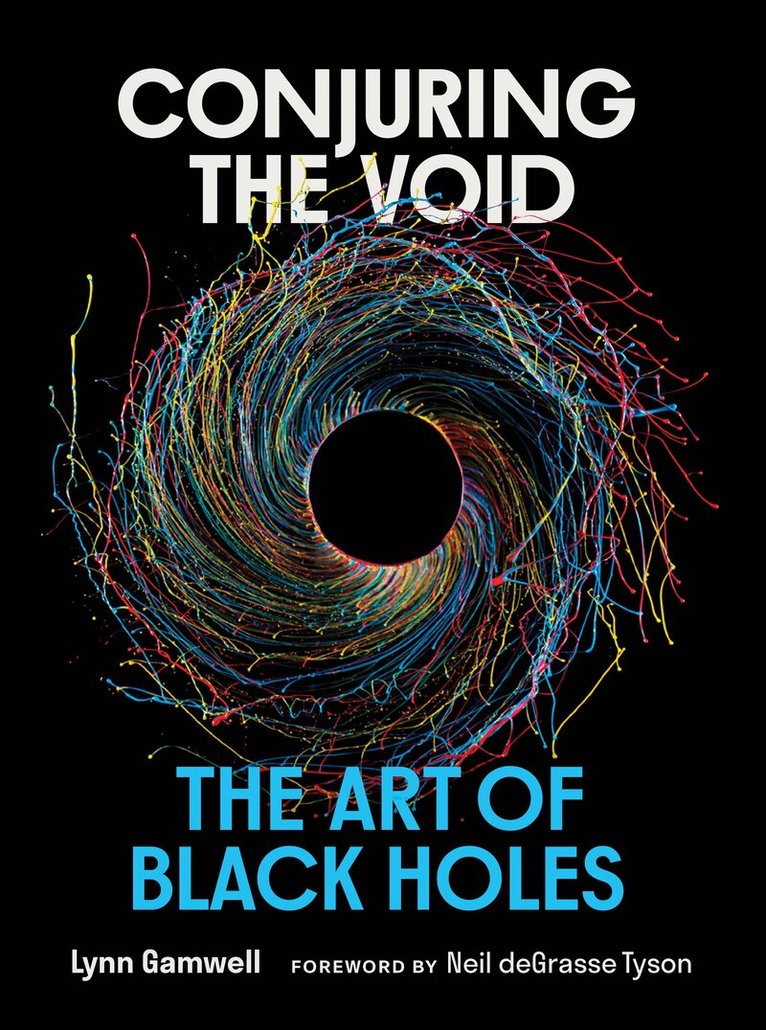
An evocative and richly illustrated exploration of modern art about black holes. Inescapable and mysterious, black holes have long captured the imagination of visual artists, even before their existence was first confirmed in 1971. In Conjuring the Void, Lynn Gamwell explores this fascinating intersection of art and science. Starting with a chronological description of key developments in the science of black holes, Gamwell builds a foundation for the reader through visualizations of black holes created by scientists, depicting how a black hole s extreme gravity affects visible objects in its vicinity. From there, the book explores how artists have addressed the challenge of visualizing black holes by developing new methods of working with diverse materials, including a black paint that absorbs 99.96% of visible light. Gamwell looks at how certain themes within the science of black holes nothingness, emptiness, darkness, void, silence are prominent in traditional Eastern thought traditions as well as in modern abstract art. She also considers the work of contemporary artists such as Anish Kapoor, Olafur Eliasson, Takashi Murakami, and Danh V?, and discusses how they have explored these themes and more in their artworks. The book concludes with a look forward, describing dramatic developments in the imagery of black holes and their changing influence on visual culture.
583 kr
Skickas inom 7-10 vardagar
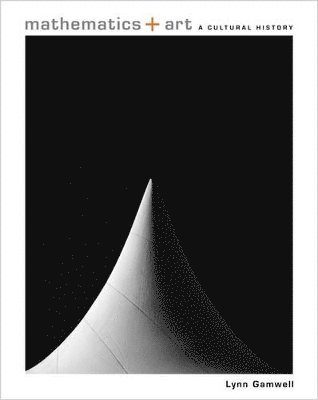
This is a cultural history of mathematics and art, from antiquity to the present. Mathematicians and artists have long been on a quest to understand the physical world they see before them and the abstract objects they know by thought alone. Taking readers on a tour of the practice of mathematics and the philosophical ideas that drive the discipline, Lynn Gamwell points out the important ways mathematical concepts have been expressed by artists. Sumptuous illustrations of artworks and cogent math diagrams are featured in Gamwell's comprehensive exploration. Gamwell begins by describing mathematics from antiquity to the Enlightenment, including Greek, Islamic, and Asian mathematics. Then focusing on modern culture, Gamwell traces mathematicians' search for the foundations of their science, such as David Hilbert's conception of mathematics as an arrangement of meaning-free signs, as well as artists' search for the essence of their craft, such as Aleksandr Rodchenko's monochrome paintings.She shows that self-reflection is inherent to the practice of both modern mathematics and art, and that this introspection points to a deep resonance between the two fields: Kurt Godel posed questions about the nature of mathematics in the language of mathematics and Jasper Johns asked "What is art?" in the vocabulary of art. Throughout, Gamwell describes the personalities and cultural environments of a multitude of mathematicians and artists, from Gottlob Frege and Benoit Mandelbrot to Max Bill and Xu Bing. Mathematics and Art demonstrates how mathematical ideas are embodied in the visual arts and will enlighten all who are interested in the complex intellectual pursuits, personalities, and cultural settings that connect these vast disciplines.
Exploring the Invisible
Art, Science, and the Spiritual – Revised and Expanded Edition
Inbunden, Engelska, 2020
583 kr
Skickas inom 7-10 vardagar
How science changed the way artists understand realityExploring the Invisible shows how modern art expresses the first secular, scientific worldview in human history. Now fully revised and expanded, this richly illustrated book describes two hundred years of scientific discoveries that inspired French Impressionist painters and Art Nouveau architects, as well as Surrealists in Europe, Latin America, and Japan.Lynn Gamwell describes how the microscope and telescope expanded the artist's vision into realms unseen by the naked eye. In the nineteenth century, a strange and exciting world came into focus, one of microorganisms in a drop of water and spiral nebulas in the night sky. The world is also filled with forces that are truly unobservable, known only indirectly by their effects—radio waves, X-rays, and sound-waves. Gamwell shows how artists developed the pivotal style of modernism—abstract, non-objective art—to symbolize these unseen worlds. Starting in Germany with Romanticism and ending with international contemporary art, she traces the development of the visual arts as an expression of the scientific worldview in which humankind is part of a natural web of dynamic forces without predetermined purpose or meaning. Gamwell reveals how artists give nature meaning by portraying it as mysterious, dangerous, or beautiful.With a foreword by Neil deGrasse Tyson and a wealth of stunning images, this expanded edition of Exploring the Invisible draws on the latest scholarship to provide a global perspective on the scientists and artists who explore life on Earth, human consciousness, and the space-time universe.