M. Fitting – författare
Visar alla böcker från författaren M. Fitting. Handla med fri frakt och snabb leverans.
9 produkter
9 produkter
E-bok
PDF, Engelska, 20111 978 kr
Läs direkt efter köp
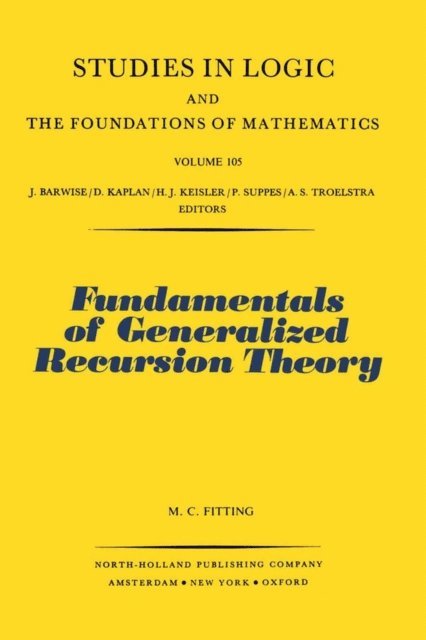
Fundamentals of Generalized Recursion Theory
Inbunden, Engelska, 2002
1 192 kr
Skickas inom 10-15 vardagar
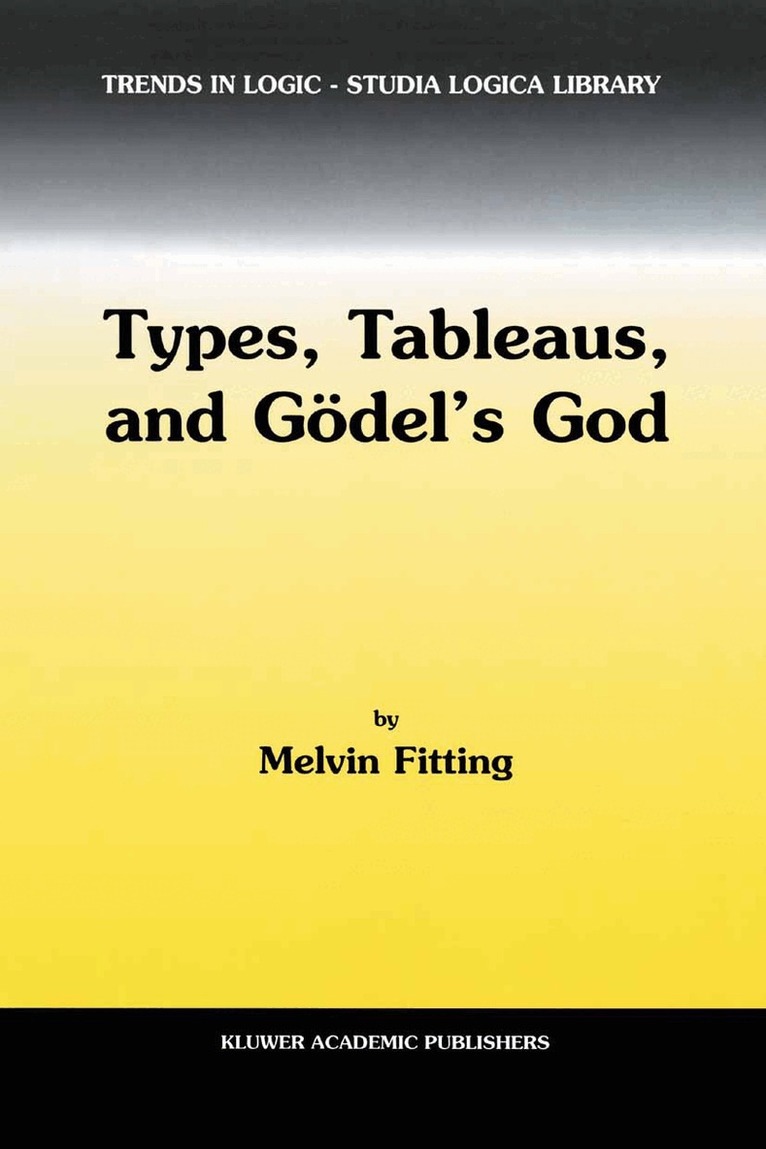
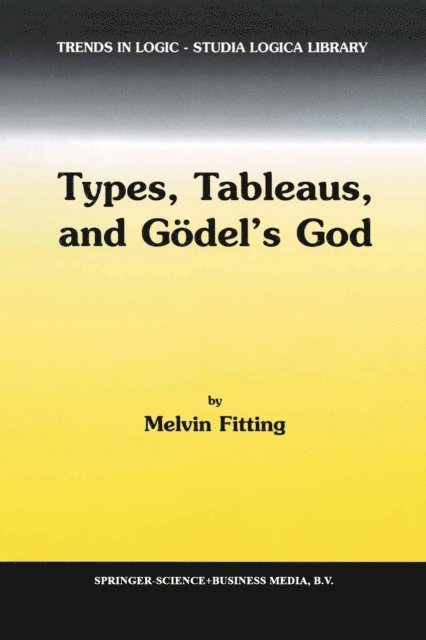
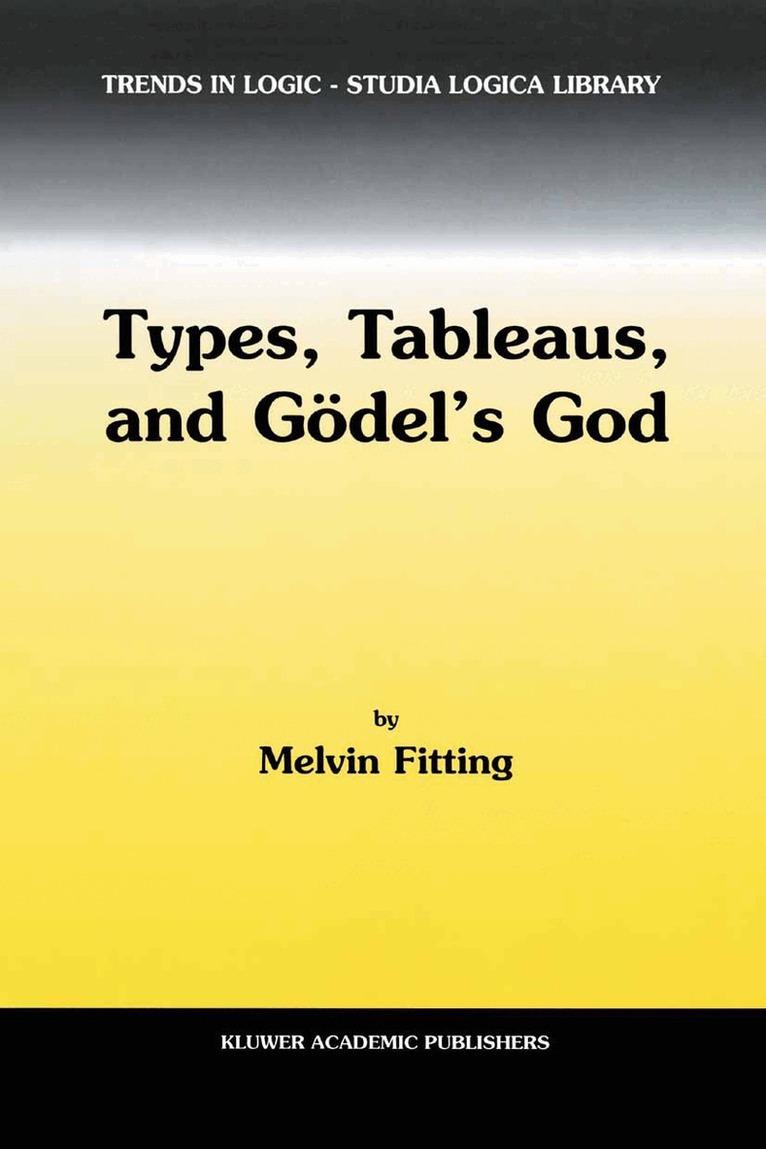
Gödel's modal ontological argument is the centrepiece of an extensive examination of intensional logic. First, classical type theory is presented semantically, tableau rules for it are introduced, and the Prawitz/Takahashi completeness proof is given. Then modal machinery is added, semantically and through tableau rules, to produce a modified version of Montague/Gallin intensional logic. Extensionality, rigidity, equality, identity, and definite descriptions are investigated. Finally, various ontological proofs for the existence of God are discussed informally, and the Gödel argument is fully formalized. Objections to the Gödel argument are examined, including one due to Howard Sobel showing Gödel's assumptions are so strong that the modal logic collapses. It is shown that this argument depends critically on whether properties are understood intensionally or extensionally.Parts of the book are mathematical, parts philosophical. A reader interested in (modal) type theory can safelyskip ontological issues, just as one interested in Gödel's argument can omit the more mathematical portions, such as the completeness proof for tableaus. There should be something for everybody (and perhaps everything for somebody).
Häftad, Engelska, 2007
271 kr
Skickas inom 5-8 vardagar
Inbunden, Engelska, 1983
2 161 kr
Skickas inom 10-15 vardagar
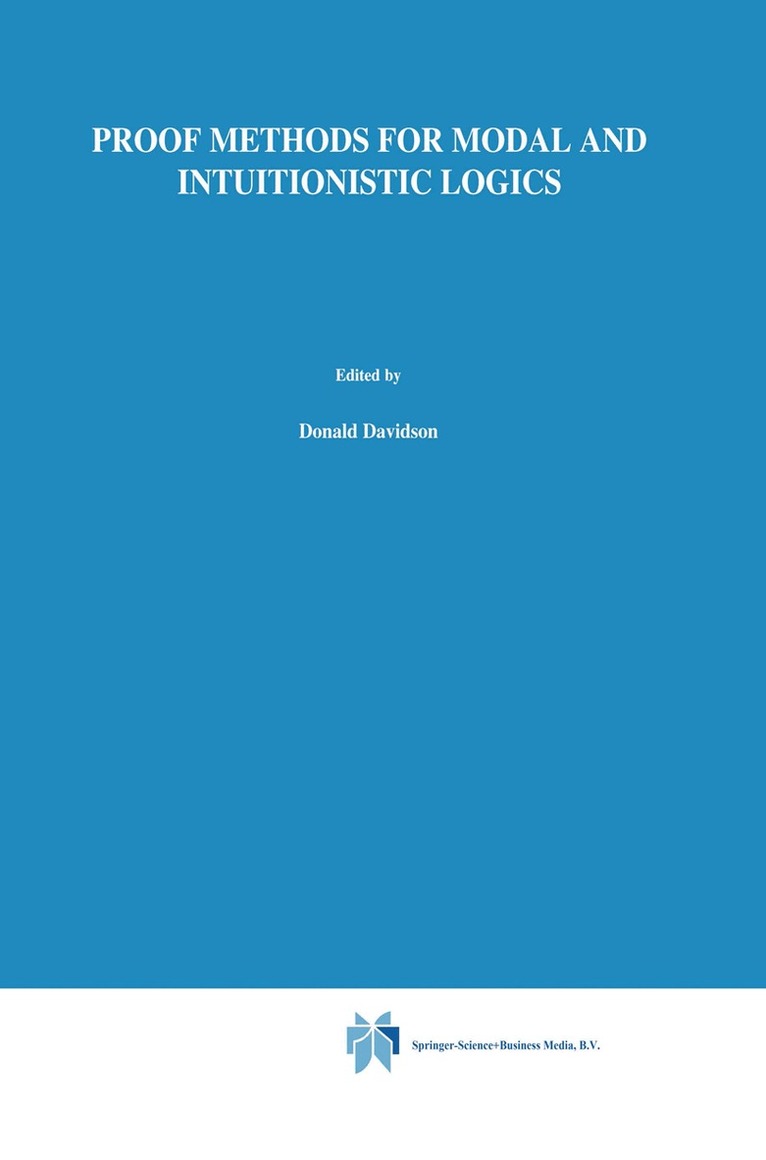
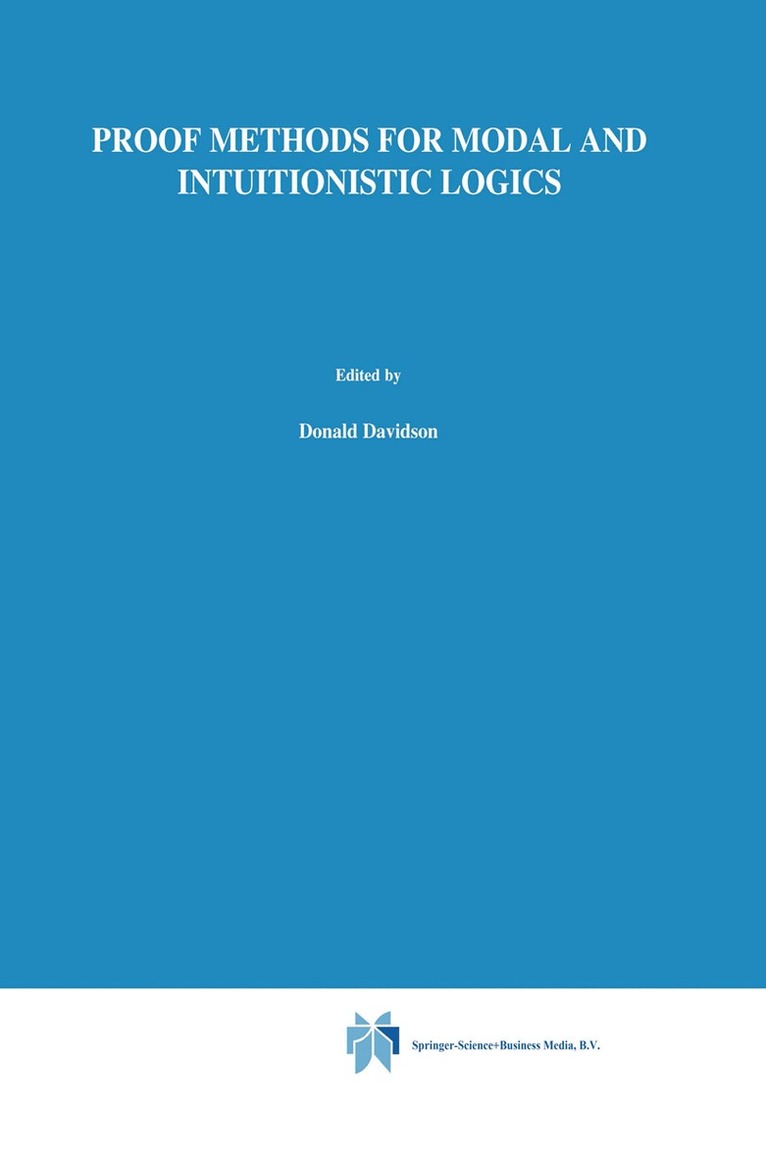
"Necessity is the mother of invention. " Part I: What is in this book - details. There are several different types of formal proof procedures that logicians have invented. The ones we consider are: 1) tableau systems, 2) Gentzen sequent calculi, 3) natural deduction systems, and 4) axiom systems. We present proof procedures of each of these types for the most common normal modal logics: S5, S4, B, T, D, K, K4, D4, KB, DB, and also G, the logic that has become important in applications of modal logic to the proof theory of Peano arithmetic. Further, we present a similar variety of proof procedures for an even larger number of regular, non-normal modal logics (many introduced by Lemmon). We also consider some quasi-regular logics, including S2 and S3. Virtually all of these proof procedures are studied in both propositional and first-order versions (generally with and without the Barcan formula). Finally, we present the full variety of proof methods for Intuitionistic logic (and of course Classical logic too). We actually give two quite different kinds of tableau systems for the logics we consider, two kinds of Gentzen sequent calculi, and two kinds of natural deduction systems. Each of the two tableau systems has its own uses; each provides us with different information about the logics involved. They complement each other more than they overlap. Of the two Gentzen systems, one is of the conventional sort, common in the literature.
Häftad, Engelska, 2010
2 161 kr
Skickas inom 10-15 vardagar
"Necessity is the mother of invention. " Part I: What is in this book - details. There are several different types of formal proof procedures that logicians have invented. The ones we consider are: 1) tableau systems, 2) Gentzen sequent calculi, 3) natural deduction systems, and 4) axiom systems. We present proof procedures of each of these types for the most common normal modal logics: S5, S4, B, T, D, K, K4, D4, KB, DB, and also G, the logic that has become important in applications of modal logic to the proof theory of Peano arithmetic. Further, we present a similar variety of proof procedures for an even larger number of regular, non-normal modal logics (many introduced by Lemmon). We also consider some quasi-regular logics, including S2 and S3. Virtually all of these proof procedures are studied in both propositional and first-order versions (generally with and without the Barcan formula). Finally, we present the full variety of proof methods for Intuitionistic logic (and of course Classical logic too). We actually give two quite different kinds of tableau systems for the logics we consider, two kinds of Gentzen sequent calculi, and two kinds of natural deduction systems. Each of the two tableau systems has its own uses; each provides us with different information about the logics involved. They complement each other more than they overlap. Of the two Gentzen systems, one is of the conventional sort, common in the literature.
E-bok
PDF, Engelska, 20121 527 kr
Läs direkt efter köp
Gödel''s modal ontological argument is the centrepiece of an extensive examination of intensional logic. First, classical type theory is presented semantically, tableau rules for it are introduced, and the Prawitz/Takahashi completeness proof is given. Then modal machinery is added, semantically and through tableau rules, to produce a modified version of Montague/Gallin intensional logic. Extensionality, rigidity, equality, identity, and definite descriptions are investigated. Finally, various ontological proofs for the existence of God are discussed informally, and the Gödel argument is fully formalized. Objections to the Gödel argument are examined, including one due to Howard Sobel showing Gödel''s assumptions are so strong that the modal logic collapses. It is shown that this argument depends critically on whether properties are understood intensionally or extensionally.Parts of the book are mathematical, parts philosophical. A reader interested in (modal) type theory can safelyskip ontological issues, just as one interested in Gödel''s argument can omit the more mathematical portions, such as the completeness proof for tableaus. There should be something for everybody (and perhaps everything for somebody).
Häftad, Engelska, 2012
1 192 kr
Skickas inom 10-15 vardagar
Gödel's modal ontological argument is the centrepiece of an extensive examination of intensional logic. First, classical type theory is presented semantically, tableau rules for it are introduced, and the Prawitz/Takahashi completeness proof is given. Then modal machinery is added, semantically and through tableau rules, to produce a modified version of Montague/Gallin intensional logic. Extensionality, rigidity, equality, identity, and definite descriptions are investigated. Finally, various ontological proofs for the existence of God are discussed informally, and the Gödel argument is fully formalized. Objections to the Gödel argument are examined, including one due to Howard Sobel showing Gödel's assumptions are so strong that the modal logic collapses. It is shown that this argument depends critically on whether properties are understood intensionally or extensionally.Parts of the book are mathematical, parts philosophical. A reader interested in (modal) type theory can safelyskip ontological issues, just as one interested in Gödel's argument can omit the more mathematical portions, such as the completeness proof for tableaus. There should be something for everybody (and perhaps everything for somebody).
E-bok
PDF, Engelska, 20123 157 kr
Läs direkt efter köp
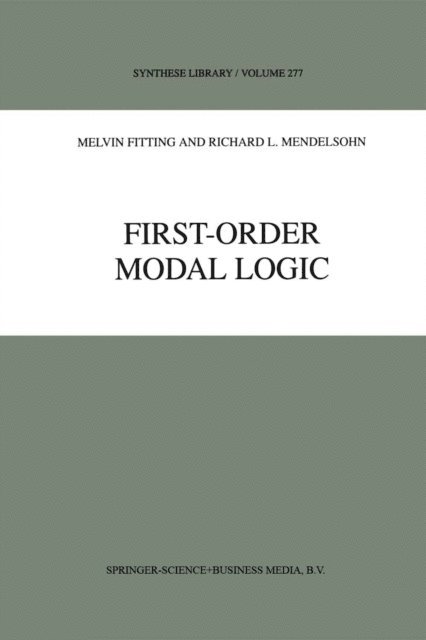
Fitting and Mendelsohn present a thorough treatment of first-order modal logic, together with some propositional background. They adopt throughout a threefold approach. Semantically, they use possible world models; the formal proof machinery is tableaus; and full philosophical discussions are provided of the way that technical developments bear on well-known philosophical problems. The book covers quantification itself, including the difference between actualist and possibilist quantifiers; equality, leading to a treatment of Frege''s morning star/evening star puzzle; the notion of existence and the logical problems surrounding it; non-rigid constants and function symbols; predicate abstraction, which abstracts a predicate from a formula, in effect providing a scoping function for constants and function symbols, leading to a clarification of ambiguous readings at the heart of several philosophical problems; the distinction between nonexistence and nondesignation; and definite descriptions, borrowing from both Fregean and Russellian paradigms.
E-bok
PDF, Engelska, 20132 840 kr
Läs direkt efter köp
"Necessity is the mother of invention. " Part I: What is in this book - details. There are several different types of formal proof procedures that logicians have invented. The ones we consider are: 1) tableau systems, 2) Gentzen sequent calculi, 3) natural deduction systems, and 4) axiom systems. We present proof procedures of each of these types for the most common normal modal logics: S5, S4, B, T, D, K, K4, D4, KB, DB, and also G, the logic that has become important in applications of modal logic to the proof theory of Peano arithmetic. Further, we present a similar variety of proof procedures for an even larger number of regular, non-normal modal logics (many introduced by Lemmon). We also consider some quasi-regular logics, including S2 and S3. Virtually all of these proof procedures are studied in both propositional and first-order versions (generally with and without the Barcan formula). Finally, we present the full variety of proof methods for Intuitionistic logic (and of course Classical logic too). We actually give two quite different kinds of tableau systems for the logics we consider, two kinds of Gentzen sequent calculi, and two kinds of natural deduction systems. Each of the two tableau systems has its own uses; each provides us with different information about the logics involved. They complement each other more than they overlap. Of the two Gentzen systems, one is of the conventional sort, common in the literature.