M. Luckner – författare
Visar alla böcker från författaren M. Luckner. Handla med fri frakt och snabb leverans.
5 produkter
5 produkter
E-bok
PDF, Engelska, 2014783 kr
Läs direkt efter köp
Regulation of Secondary Product and Plant Hormone Metabolism contains the proceedings of the 12th Meeting of the Federation of European Biochemical Societies held in Dresden, Germany in 1978. The meeting provided a forum for discussing progress in understanding the regulation of the metabolism of secondary products and plant hormones. It shows that the processes regulating secondary metabolism are similar in lower and higher plants, and that the molecular basis of cell differentiation and specialization is uniform in all groups of living organisms. Comprised of 22 chapters, this volume begins with an overview of the interrelationships between secondary products and hormones in plants, followed by a detailed account of the effects of phenolic compounds on auxin biosynthesis and vice versa. The reader is then introduced to non-ribosomal biosynthesis of biologically active peptides; channelling of intermediates during the biosynthesis of cyanogenic glycosides; and intracellular distribution of flavonoids in glandular cells. Subsequent chapters explore the regulation of gene expression in secondary biosynthesis; inhibition of phenylalanine ammonia-lyase by cinnamic acid derivatives; novel inhibitors of phenylpropanoid metabolism in higher plants; and stage-specific phenylpropanoid metabolism during pollen development. This book will be of interest to biochemists and geneticists.
Häftad, Engelska, 2011
1 084 kr
Skickas inom 10-15 vardagar
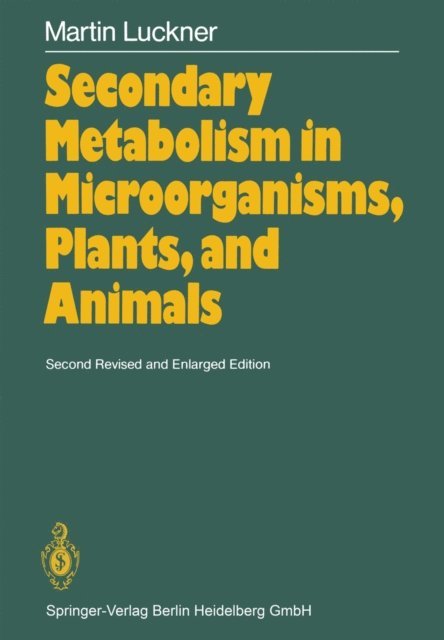
Three years have elapsed since the publication of the first edition of this book (in German). The continued interest of our readers and the rapid progress of our knowl edge in many fields necessitates a thoroughly revised and somewhat enlarged new edition. Cell differentiation is a prerequisite of life. It is defined as the prooess leading to the qualitatively and quantitatively selective realization of distinct parts of a given genetic material. Cell differentiation comprises five main aspects: (1) signal reception and transformation, (2) selective rearrangements of the genetic material, (3) differen tial gene expression, (4) organization of gene expression programs and (5) intercellular coordination of cell differentiation within the developmental programs of multicellular organisms. Despite the bewildering multiplicity of its results, i.e., the differentiated phenotypes of cells, there are apparently fundamental similarities with respect to the molecular mechanisms of the process itself. These mechanisms constitute the central subject of this book.
E-bok
PDF, Engelska, 20131 459 kr
Läs direkt efter köp
1. Secondary Metabolism and Differentiation In addition to the primary metabolic reactions, which are similar in all living beings (formation and breakdown of nucleic acids and proteins as well as of their precursors, of most carbohy drates, of some carboxylic acids, etc. ), a vast number of metab olic pathways lead to the formation of compounds peculiar to a few species or even to a single chemical race only. These reac tions, in accord with CZAPEK (1921) and PAECH (1950), are summed up under the term "secondary metabolism", and their products are called "secondary metabolites. " The wide variety of secondary products formed in nature includes such well-known groups as alkaloids, antibiotics, cardiac glyco sides, tannins, saponins, volatile oils, and others. A consider able number of them are of economic importance in therapeutics or technology. Although secondary products are produced by micro organisms, higher plants, and animals (cf. LUCKNER, 1972), most of the substances are found in the plant kingdom. The lack of mechanisms for true excretion in higher plants may result in this unequal distribution, the "waste products" of metabolism in plants instead being accumulated in the vacuoles, the cell walls, or in special excretory cells or spaces of the organism ("metabolic excretion," cf. FREY-WYSSLING, 1935, 1970; MOTHES, 1966a, b, 1972; LUCKNER et al. , 1976. Many secondary substances have, however, a direct biologic func tion. They can be regulatory effectors, e. g.
Häftad, Engelska, 2011
1 116 kr
Skickas inom 10-15 vardagar
1. Secondary Metabolism and Differentiation In addition to the primary metabolic reactions, which are similar in all living beings (formation and breakdown of nucleic acids and proteins as well as of their precursors, of most carbohy drates, of some carboxylic acids, etc. ), a vast number of metab olic pathways lead to the formation of compounds peculiar to a few species or even to a single chemical race only. These reac tions, in accord with CZAPEK (1921) and PAECH (1950), are summed up under the term "secondary metabolism", and their products are called "secondary metabolites. " The wide variety of secondary products formed in nature includes such well-known groups as alkaloids, antibiotics, cardiac glyco sides, tannins, saponins, volatile oils, and others. A consider able number of them are of economic importance in therapeutics or technology. Although secondary products are produced by micro organisms, higher plants, and animals (cf. LUCKNER, 1972), most of the substances are found in the plant kingdom. The lack of mechanisms for true excretion in higher plants may result in this unequal distribution, the "waste products" of metabolism in plants instead being accumulated in the vacuoles, the cell walls, or in special excretory cells or spaces of the organism ("metabolic excretion," cf. FREY-WYSSLING, 1935, 1970; MOTHES, 1966a, b, 1972; LUCKNER et al. , 1976. Many secondary substances have, however, a direct biologic func tion. They can be regulatory effectors, e. g.
E-bok
PDF, Engelska, 20131 174 kr
Läs direkt efter köp
Many of the reactions and compounds involved in metabolism are almost identical in the different groups of living organisms. They are known as primary metabolic reactions and primary metabolic products. In addition, however, a wide variety of biochemical pathways are characteristic of only a few species of organisms, of single "chemical races" or even of a certain stage of differentiation of special ized cells. Such pathways are collectively referred to as "secondary metabolism", and the compounds formed are called "secondary products". Secondary products are frequently revealed by their color, smell, or taste. They are responsible for the flavor of most foodstuffs and beverages and for the color and fragrance of flowers and fruits. Many of them are part of the materia medica, e. g. , alkaloids, cardiac glycosides, antibiotics, or compounds acting as hormones. Others are used by industry, e. g. , rubber, tannins, and cellulose. This book treats the organization and significance of biosynthesis, storage, transformation, and degradation of the most important groups of secondary products in microorganisms, plants, and animals. It shows that the formation of secondary products is a common characteristic of specialized cells brought about by the action of special enzymes encoded by specific genetic material. It demon strates that the. biosynthesis of secondary products is typically without signifi cance for the individual producer cell, but may play a decisive role in the develop· ment and function of the producer organism as a whole.