M. Popescu – författare
Visar alla böcker från författaren M. Popescu. Handla med fri frakt och snabb leverans.
4 produkter
4 produkter
Inbunden, Engelska, 2010
632 kr
Skickas inom 10-15 vardagar
Contemporary South African literature reflects a fascination with Russian and Eastern European stories of revolution and transformation as well as resistance to state oppression. In this groundbreaking book, Monica Popescu studies the formative role played by an imaginary and real Eastern Europe in literature written during and after apartheid. Reading the end of apartheid against the fall of the communist regimes in Eastern Europe, she rethinks the genealogy and aims of postcolonial studies in the context both of the Cold War and of the various forms of colonial domination and resistance in South Africa.
Inbunden, Engelska, 2002
1 091 kr
Skickas inom 10-15 vardagar
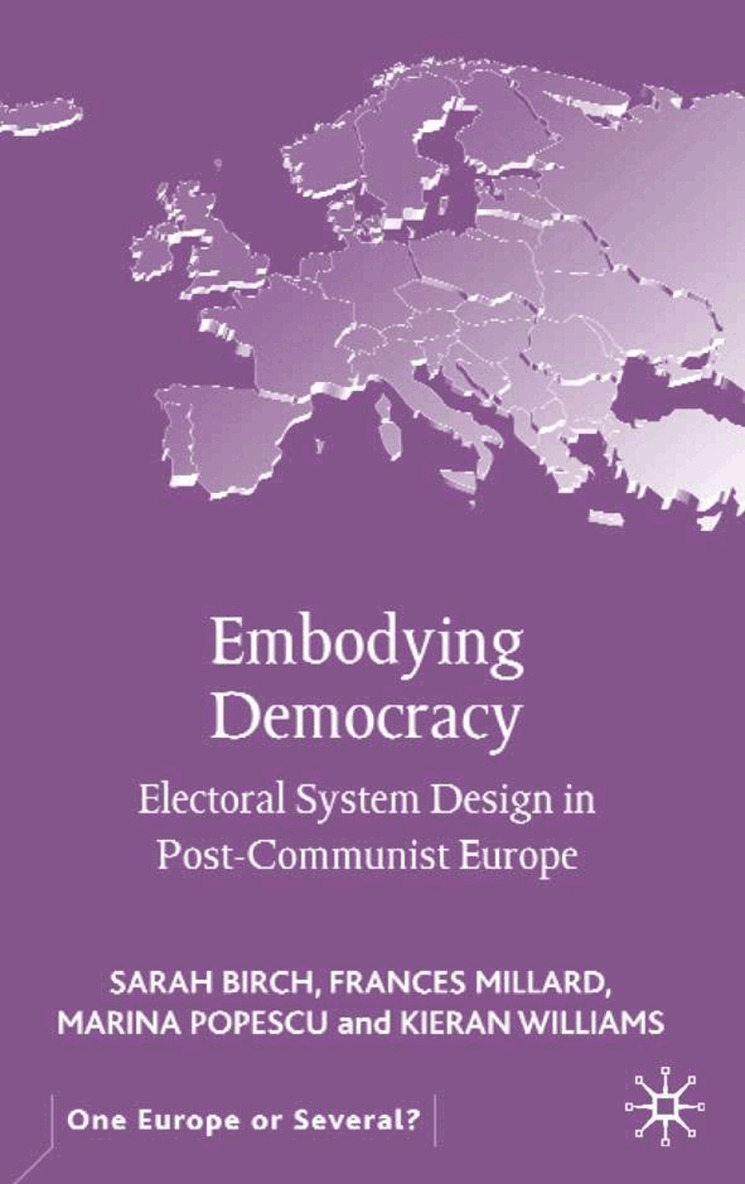
This work analyses the politics of electoral reform in eight post communist states including Poland, Hungary, the Czech Republic, Slovakia, Romania, Bulgaria, Russia and Ukraine. By exploring the multiple factors that shaped the design of electoral institutions during the first ten years of post communist transition, it accounts for an important element of the post communist reform process and illuminates general features of institutional design in post transition states.
Häftad, Engelska, 2002
1 091 kr
Skickas inom 10-15 vardagar
Embodying Democracy analyzes the politics of electoral reform in eight post-communist states including Poland, Hungary, the Czech Republic, Slovakia, Romania, Bulgaria, Russia and Ukraine. By exploring the multiple factors that shaped the design of electoral institutions during the first ten years of post-communist transition, it accounts for an important element of the post-communist reform process and illuminates general features of institutional design in post-transition states.
E-bok
PDF, Engelska, 20021 367 kr
Läs direkt efter köp
Embodying Democracy analyzes the politics of electoral reform in eight post-communist states including Poland, Hungary, the Czech Republic, Slovakia, Romania, Bulgaria, Russia and Ukraine. By exploring the multiple factors that shaped the design of electoral institutions during the first ten years of post-communist transition, it accounts for an important element of the post-communist reform process and illuminates general features of institutional design in post-transition states.