
MaA‚gorzata Iwanicz-Drozdowska – författare
727 kr
Läs direkt efter köp
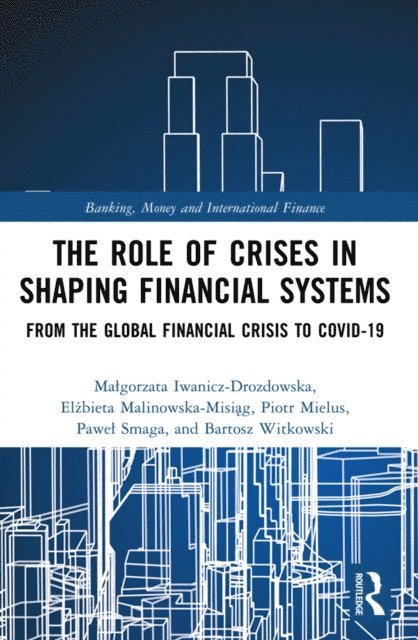
The Role of Crises in Shaping Financial Systems: From the Global Financial Crisis to COVID-19 underscores the role of crises as turning points for the financial sector and its interactions with the real economy. It sheds new light on the financial industry through the lens of three recent crises – the global financial crisis, the sovereign debt crisis, and the COVID-19 pandemic. The book provides in-depth insight into the financial systems in European Economic Area countries, accentuating the role of crises in shaping the condition and development of the financial arena. The authors pay special attention to the differences between “old” and “new” Europe, i.e. countries that joined the EU in 2004 or later. It explores the implications of recent turbulences for financial institutions, financial markets, and public finance, and their relationship with the economy. The book examines low or negative interest rates, non-standard monetary policy, fiscal stimulus, dense safety nets, regulatory inflation, weak profitability of the financial sector, and the sovereign-bank nexus. Post-crisis developments are assessed, comprehensively and empirically, from both macro- and microeconomic perspectives to help readers understand the nature of policy measures and their socio-economic implications.
The authors outline their predictions for the future of financial systems, focusing on the structural changes and legacy of the COVID-19 crisis and global financial interlinkages.
The book adopts both theoretical and practical approaches to explore the key issues and, as such, will appeal to academics and students of financial economics and international finance, as well as policymakers and financial regulators.
702 kr
Läs direkt efter köp
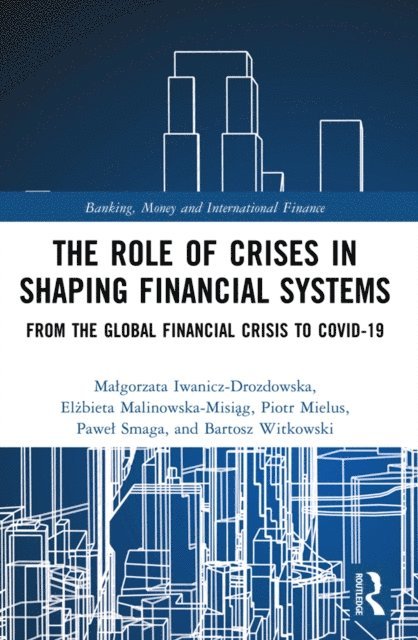
The Role of Crises in Shaping Financial Systems: From the Global Financial Crisis to COVID-19 underscores the role of crises as turning points for the financial sector and its interactions with the real economy. It sheds new light on the financial industry through the lens of three recent crises – the global financial crisis, the sovereign debt crisis, and the COVID-19 pandemic. The book provides in-depth insight into the financial systems in European Economic Area countries, accentuating the role of crises in shaping the condition and development of the financial arena. The authors pay special attention to the differences between “old” and “new” Europe, i.e. countries that joined the EU in 2004 or later. It explores the implications of recent turbulences for financial institutions, financial markets, and public finance, and their relationship with the economy. The book examines low or negative interest rates, non-standard monetary policy, fiscal stimulus, dense safety nets, regulatory inflation, weak profitability of the financial sector, and the sovereign-bank nexus. Post-crisis developments are assessed, comprehensively and empirically, from both macro- and microeconomic perspectives to help readers understand the nature of policy measures and their socio-economic implications.
The authors outline their predictions for the future of financial systems, focusing on the structural changes and legacy of the COVID-19 crisis and global financial interlinkages.
The book adopts both theoretical and practical approaches to explore the key issues and, as such, will appeal to academics and students of financial economics and international finance, as well as policymakers and financial regulators.
727 kr
Läs direkt efter köp
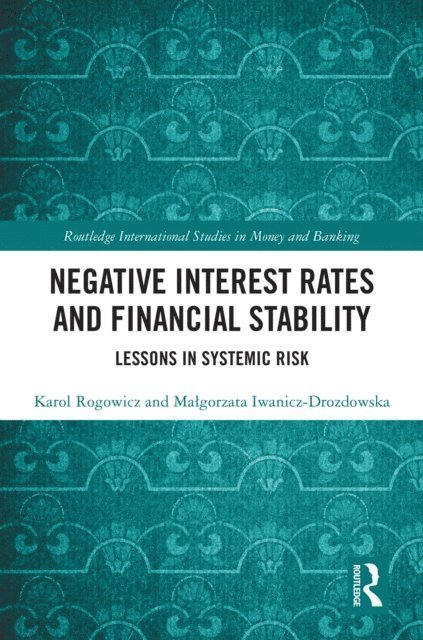
This book sheds new light on a recently introduced monetary tool – negative interest rates policy (NIRP). It provides in-depth insight into this phenomenon, conducted by the central banks in several economies, for example, the Eurozone, Switzerland and Japan, and its possible impact on systemic risk.
Although it has been introduced as a temporary policy instrument, it may remain widely used for a longer period and by a greater range of central banks than initially expected, thus the book explores its effects and implications on the banking sector and financial markets, with a particular focus on potentially adverse consequences. There is a strong accent on the uniqueness of negative policy rates in the context of financial stability concerns. The authors assess whether NIRP has any – or in principle a stronger – impact on systemic risk than conventional monetary policy. The book is targeted at presenting and evaluating the initial experiences of NIRP policy during normal, i.e. pre-COVID, times, rather than in periods in which pre-established macroeconomic relations are rapidly disrupted or, specifically, when the source of the disruption is not purely economic in nature, unlike in systemic crisis.
The authors adopt both theoretical and practical approaches to explore the key issues and outline the policy implications for both monetary and macroprudential authorities, with respect to negative interest rate policy, thus the book will provide a useful guide for policymakers, academics, advanced students and researchers of financial economics and international finance.
727 kr
Läs direkt efter köp
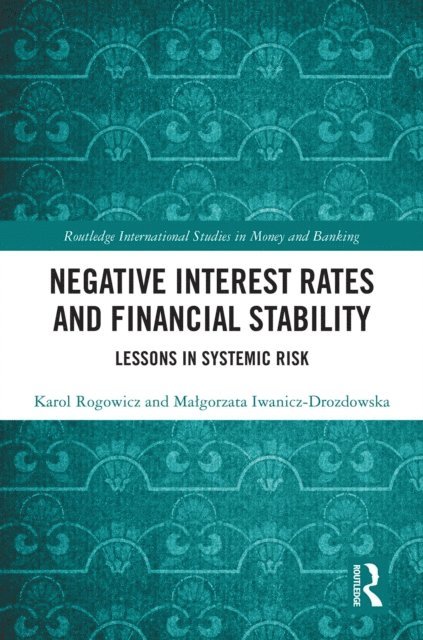
This book sheds new light on a recently introduced monetary tool – negative interest rates policy (NIRP). It provides in-depth insight into this phenomenon, conducted by the central banks in several economies, for example, the Eurozone, Switzerland and Japan, and its possible impact on systemic risk.
Although it has been introduced as a temporary policy instrument, it may remain widely used for a longer period and by a greater range of central banks than initially expected, thus the book explores its effects and implications on the banking sector and financial markets, with a particular focus on potentially adverse consequences. There is a strong accent on the uniqueness of negative policy rates in the context of financial stability concerns. The authors assess whether NIRP has any – or in principle a stronger – impact on systemic risk than conventional monetary policy. The book is targeted at presenting and evaluating the initial experiences of NIRP policy during normal, i.e. pre-COVID, times, rather than in periods in which pre-established macroeconomic relations are rapidly disrupted or, specifically, when the source of the disruption is not purely economic in nature, unlike in systemic crisis.
The authors adopt both theoretical and practical approaches to explore the key issues and outline the policy implications for both monetary and macroprudential authorities, with respect to negative interest rate policy, thus the book will provide a useful guide for policymakers, academics, advanced students and researchers of financial economics and international finance.