Maarten Coegnarts - Böcker
Visar alla böcker från författaren Maarten Coegnarts. Handla med fri frakt och snabb leverans.
3 produkter
3 produkter
1 610 kr
Skickas inom 5-8 vardagar
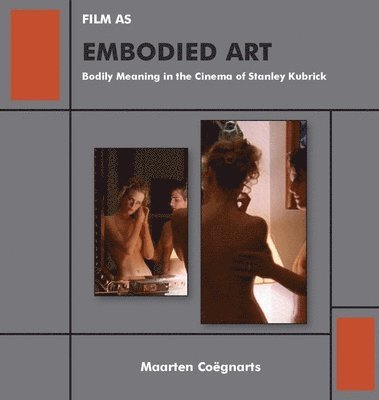
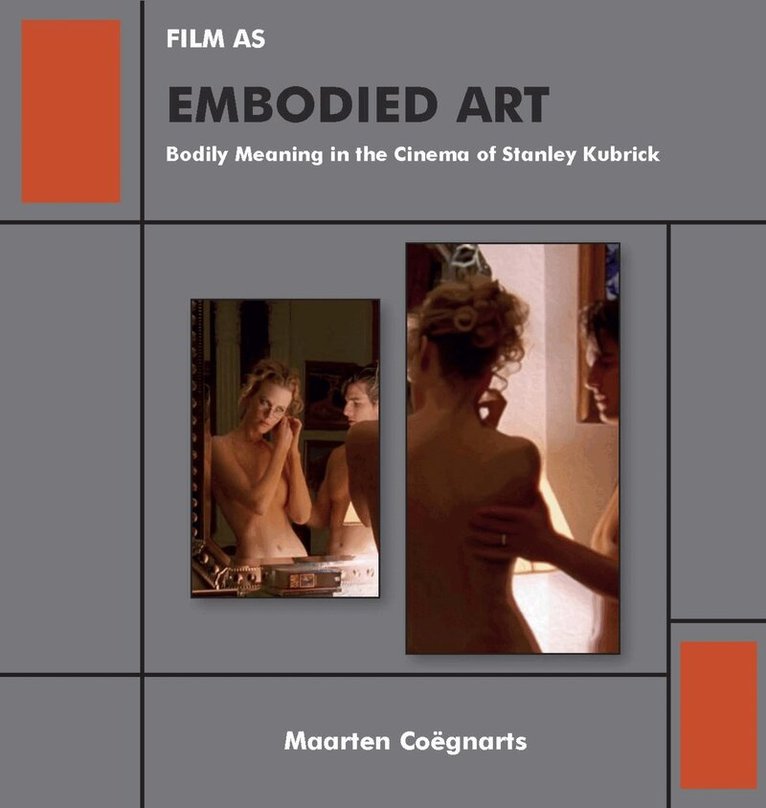
How do the films of Kubrick communicate mental events of characters in a purely visual manner? And how does the music in his films express meaning when music in essence is an abstract and non-representational art form? Drawing on state-of-the-art discoveries within embodied cognitive science, this book sets out to address these and other questions by revealing Kubrick as a genuine artist of embodied meaning-making, a filmmaker who perhaps more than any other director, uses all the resources of filmmaking in such a controlled and dense manner as to elicit the embodied tools necessary to achieve a level of conceptual clarity.
496 kr
Skickas inom 5-8 vardagar
How do the films of Kubrick communicate mental events of characters in a purely visual manner? And how does the music in his films express meaning when music in essence is an abstract and non-representational art form? Drawing on state-of-the-art discoveries within embodied cognitive science, this book sets out to address these and other questions by revealing Kubrick as a genuine artist of embodied meaning-making, a filmmaker who perhaps more than any other director, uses all the resources of filmmaking in such a controlled and dense manner as to elicit the embodied tools necessary to achieve a level of conceptual clarity.
851 kr
Skickas inom 5-8 vardagar
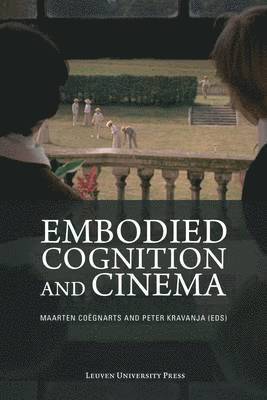
The embodied cognition thesis claims that cognitive functions cannot be understood without making reference to the interactions among the brain, the body, and the environment. The meaning of abstract concepts is grounded in concrete experiences. This book explores the impact of the embodied cognition thesis on the scientific study of film. The authors analyze the main aspects of film (narrative, style, music, sound, time, the viewer, emotion, perception, ethics, the frame) from an embodied perspective. By combining insights from various disciplines such as cognitive film theory, conceptual metaphor theory, and cognitive neuroscience, they show how the process of making meaning in film is embodied and how empathy and embodied simulation play a role in understanding the way in which the viewer interacts with the film. Contributors Maarten Coegnarts (University of Antwerp), Peter Kravanja (KU Leuven), Miklos Kiss (University of Groningen), Juan Chattah (University of Miami), Hannah Chapelle Wojciehowski (University of Texas), Michele Guerra (University of Parma), Mark S. Ward (University of Technology, Sydney), Adriano D'Aloia (Universita Cattolica del Sacro Cuore, Milan), Maria J.Ortiz (University of Alicante), Warren Buckland (Oxford Brookes University), Mark Johnson (University of Oregon)