Machi Zawidzki – författare
Visar alla böcker från författaren Machi Zawidzki. Handla med fri frakt och snabb leverans.
10 produkter
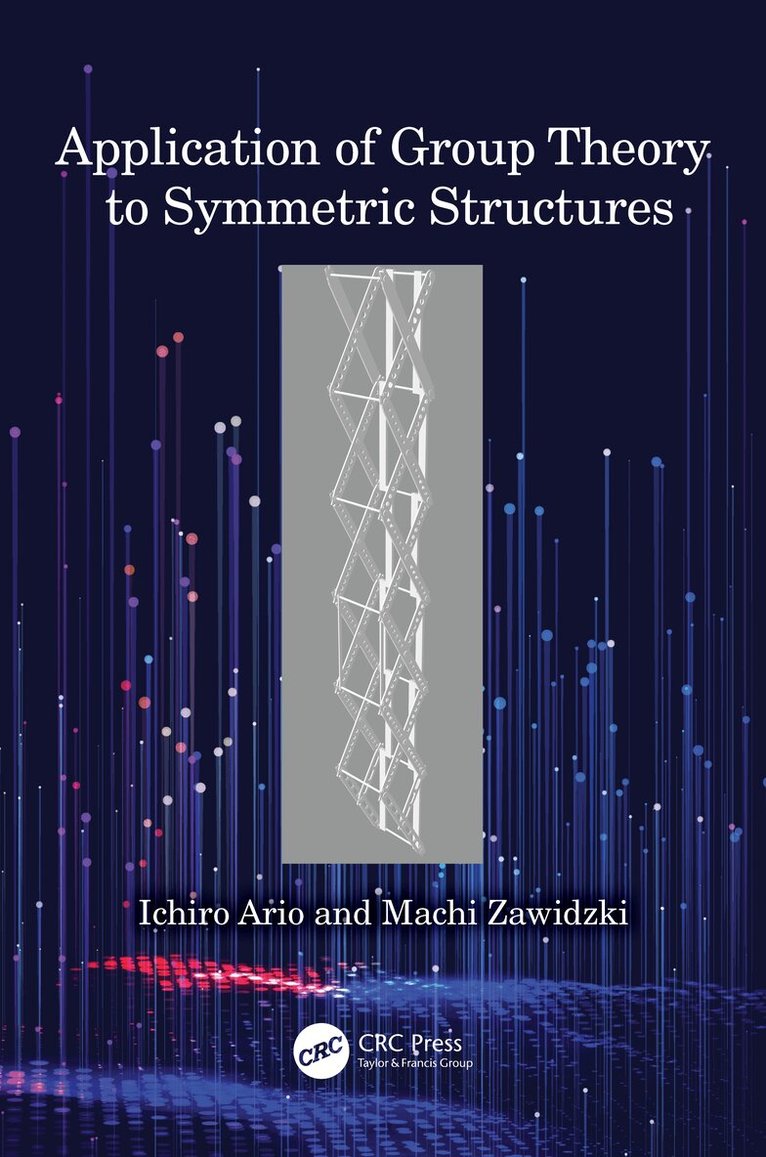
Application of Group Theory to Symmetric Structures
Av Ichiro Ario, Machi Zawidzki
Inbunden, 2024
1517 kr
Lägg i varukorg
Ario and Zawidzki show readers how to handle symmetric structures in engineering using group-theoretic bifurcation theory as a mathematical tool for the finite element analysis of symmetric structures.They guide the reader from the initial mathematical concepts through to application examples. …
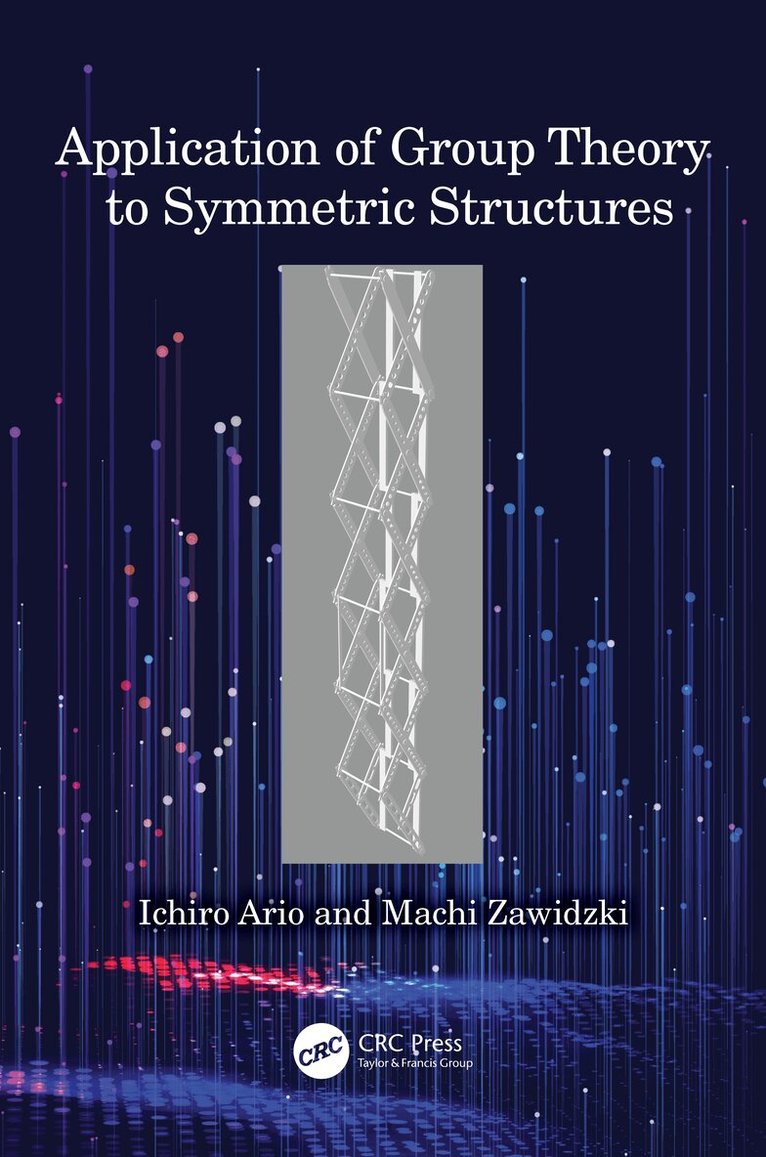
Application of Group Theory to Symmetric Structures
Av Ichiro Ario, Machi Zawidzki
Häftad, 2026
820 kr
Lägg i varukorg
Ario and Zawidzki show readers how to handle symmetric structures in engineering using group-theoretic bifurcation theory as a mathematical tool for the finite element analysis of symmetric structures.They guide the reader from the initial mathematical concepts through to application examples. …
Application of Group Theory to Symmetric Structures
Av Machi Zawidzki, Ichiro Ario
E-bok, 2024
1643 kr
Lägg i varukorg
Ario and Zawidzki show readers how to handle symmetric structures in engineering using group-theoretic bifurcation theory as a mathematical tool for the finite element analysis of symmetric structures. They guide the reader from the initial mathematical concepts through to application examples. …
Application of Group Theory to Symmetric Structures
Av Machi Zawidzki, Ichiro Ario
E-bok, 2024
1680 kr
Lägg i varukorg
Ario and Zawidzki show readers how to handle symmetric structures in engineering using group-theoretic bifurcation theory as a mathematical tool for the finite element analysis of symmetric structures. They guide the reader from the initial mathematical concepts through to application examples. …
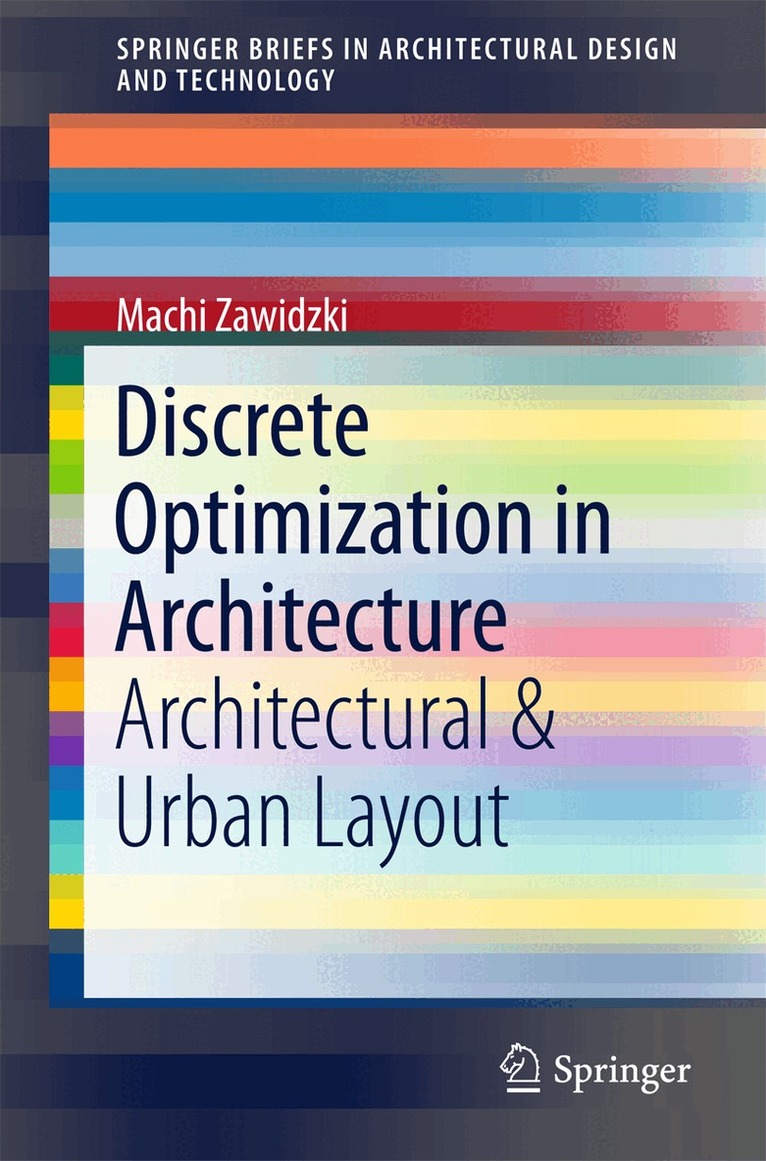
Discrete Optimization in Architecture
Architectural & Urban Layout
Häftad, 2016
552 kr
Lägg i varukorg
This book presents three projects that demonstrate thefundamental problems of architectural design and urban composition – the layoutdesign, evaluation and optimization. Part I describes the functional layoutdesign of a residential building, and an evaluation of the quality of a townsquare …
Discrete Optimization in Architecture
Architectural & Urban Layout
E-bok, 2016
734 kr
Lägg i varukorg
This book presents three projects that demonstrate thefundamental problems of architectural design and urban composition – the layoutdesign, evaluation and optimization. Part I describes the functional layoutdesign of a residential building, and an evaluation of the quality of a townsquare (plaza). …
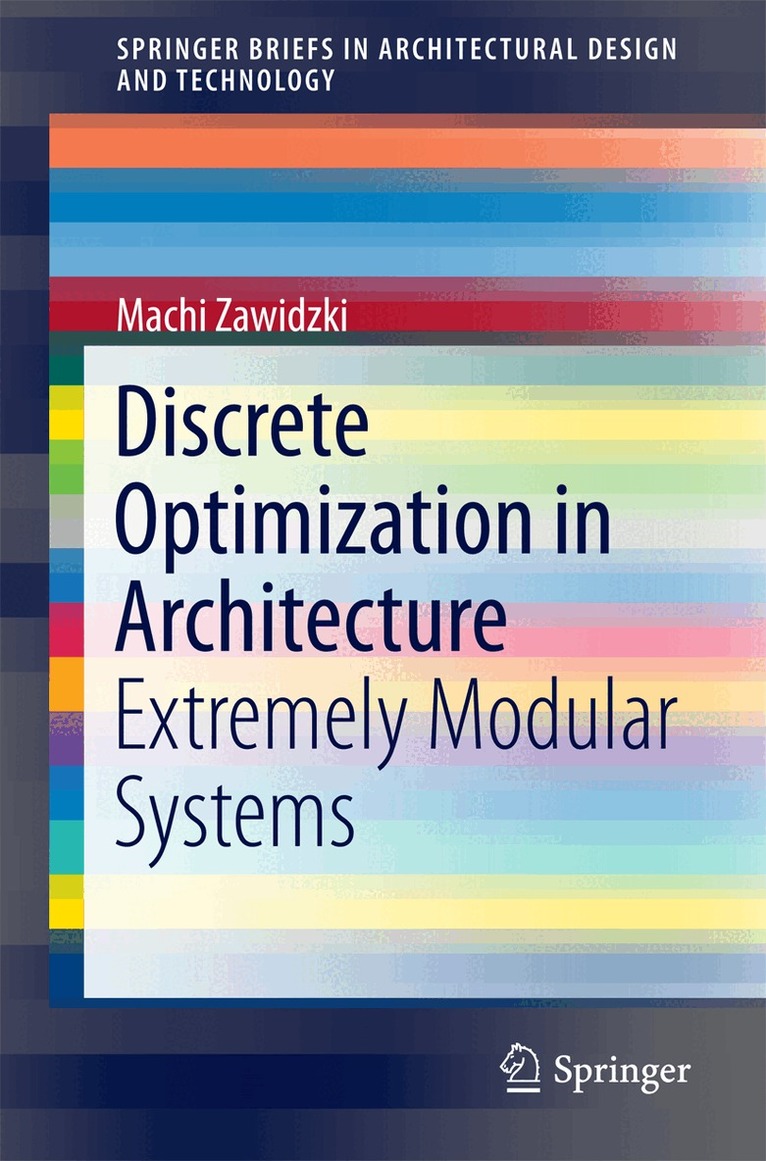
Discrete Optimization in Architecture
Extremely Modular Systems
Häftad, 2016
552 kr
Lägg i varukorg
This book is comprised of two parts, both of which exploremodular systems: Pipe-Z (PZ) and Truss-Z (TZ), respectively. It presents severalmethods of creating PZ and TZ structures subjected to discrete optimization.The algorithms presented employ graph-theoretic and heuristic methods. Theunderlying …
Discrete Optimization in Architecture
Extremely Modular Systems
E-bok, 2016
734 kr
Lägg i varukorg
This book is comprised of two parts, both of which exploremodular systems: Pipe-Z (PZ) and Truss-Z (TZ), respectively. It presents severalmethods of creating PZ and TZ structures subjected to discrete optimization.The algorithms presented employ graph-theoretic and heuristic methods. Theunderlying …
Discrete Optimization in Architecture
Building Envelope
Häftad, 2016
681 kr
Lägg i varukorg
This book explores the extremely modular systems that meet two criteria: they allow the creation of structurally sound free-form structures, and they are comprised of as few types of modules as possible. Divided into two parts, it presents Pipe-Z (PZ) and Truss-Z (TZ) systems. PZ is more …
Discrete Optimization in Architecture
Building Envelope
E-bok, 2016
897 kr
Lägg i varukorg
This book explores the extremely modular systems that meet two criteria: they allow the creation of structurally sound free-form structures, and they are comprised of as few types of modules as possible. Divided into two parts, it presents Pipe-Z (PZ) and Truss-Z (TZ) systems. PZ is more …