Maciej Henneberg – författare
Visar alla böcker från författaren Maciej Henneberg. Handla med fri frakt och snabb leverans.
6 produkter
6 produkter
E-bok
Engelska, 2016682 kr
Läs direkt efter köp
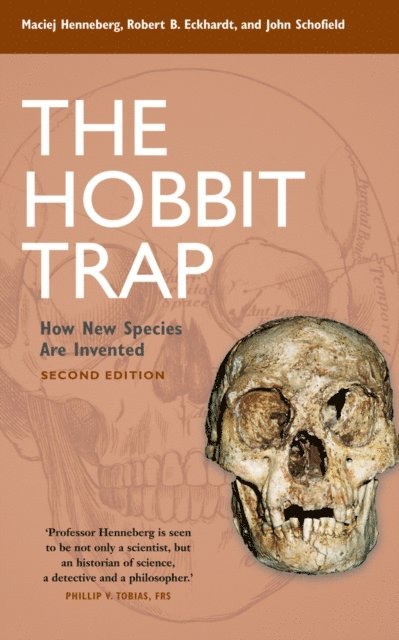
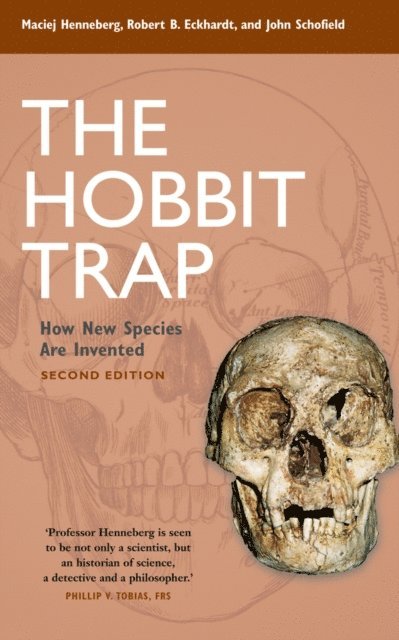
When scientists found the remains of a tiny hominid on an Indonesian in 2004, they claimed they found a totally new species of human ancestor (homo floresiensis), and called it a Hobbit. Film crews rolled in and the little creature took the world by storm, but a group of prominent scientists, including Maciej Henneberg and Robert Eckhardt, smelled a rat. They refuted the data—the size and shape of bones, the inferences about height—and they raised fundamental questions about scientific method, revealing cultural and political pressures that lead to the wide acceptance of unsupported theories. The Hobbit Trap describes how the case against the “new species” theory developed and offers an important critique of the species concept in evolution. In this thoroughly updated second edition, the authors include new data and analysis of the Flores fossils, and expand their important analysis of scientific practice, calling for a new movement to reverse the decline in scientific standards and the rise in scientific politics. This lively and important challenge to conventional wisdom is accessible to the general reader and makes a stimulating addition to courses on the history and philosophy of science, evolution and physical anthropology.
E-bok
PDF, Engelska, 2016682 kr
Läs direkt efter köp
When scientists found the remains of a tiny hominid on an Indonesian in 2004, they claimed they found a totally new species of human ancestor (homo floresiensis), and called it a Hobbit. Film crews rolled in and the little creature took the world by storm, but a group of prominent scientists, including Maciej Henneberg and Robert Eckhardt, smelled a rat. They refuted the data—the size and shape of bones, the inferences about height—and they raised fundamental questions about scientific method, revealing cultural and political pressures that lead to the wide acceptance of unsupported theories. The Hobbit Trap describes how the case against the “new species” theory developed and offers an important critique of the species concept in evolution. In this thoroughly updated second edition, the authors include new data and analysis of the Flores fossils, and expand their important analysis of scientific practice, calling for a new movement to reverse the decline in scientific standards and the rise in scientific politics. This lively and important challenge to conventional wisdom is accessible to the general reader and makes a stimulating addition to courses on the history and philosophy of science, evolution and physical anthropology.
Inbunden, Engelska, 2010
2 179 kr
Skickas inom 10-15 vardagar
When scientists found the remains of a tiny hominid on an Indonesian in 2004, they claimed they found a totally new species of human ancestor (homo floresiensis), and called it a Hobbit. Film crews rolled in and the little creature took the world by storm, but a group of prominent scientists, including Maciej Henneberg and Robert Eckhardt, smelled a rat. They refuted the data—the size and shape of bones, the inferences about height—and they raised fundamental questions about scientific method, revealing cultural and political pressures that lead to the wide acceptance of unsupported theories. The Hobbit Trap describes how the case against the “new species” theory developed and offers an important critique of the species concept in evolution. In this thoroughly updated second edition, the authors include new data and analysis of the Flores fossils, and expand their important analysis of scientific practice, calling for a new movement to reverse the decline in scientific standards and the rise in scientific politics. This lively and important challenge to conventional wisdom is accessible to the general reader and makes a stimulating addition to courses on the history and philosophy of science, evolution and physical anthropology.
Häftad, Engelska, 2010
595 kr
Skickas inom 10-15 vardagar
When scientists found the remains of a tiny hominid on an Indonesian in 2004, they claimed they found a totally new species of human ancestor (homo floresiensis), and called it a Hobbit. Film crews rolled in and the little creature took the world by storm, but a group of prominent scientists, including Maciej Henneberg and Robert Eckhardt, smelled a rat. They refuted the data—the size and shape of bones, the inferences about height—and they raised fundamental questions about scientific method, revealing cultural and political pressures that lead to the wide acceptance of unsupported theories. The Hobbit Trap describes how the case against the “new species” theory developed and offers an important critique of the species concept in evolution. In this thoroughly updated second edition, the authors include new data and analysis of the Flores fossils, and expand their important analysis of scientific practice, calling for a new movement to reverse the decline in scientific standards and the rise in scientific politics. This lively and important challenge to conventional wisdom is accessible to the general reader and makes a stimulating addition to courses on the history and philosophy of science, evolution and physical anthropology.
Häftad, Engelska
1 093 kr
Skickas inom 3-6 vardagar
E-bok
PDF, Engelska, 20241 451 kr
Läs direkt efter köp
Today, it is easy to obtain information about geological, paleontological, archaeological, and biological facts related to human origins from the internet. It is also easy to find interpretations of our evolution, but many are contradictory, superficial, or biased. This book aims to give readers an intellectual framework into which facts related to human evolution, past and present, can be inserted to obtain their understanding and, thus, understanding of our place in nature and our possible futures. This book is not a straightforward narrative on human evolution. It''s a collection of free-flowing essays that delve into the complex, dynamic nature of human life and our place in nature. Some information is repeated, not as a flaw, but as a deliberate choice to show how different facts about ourselves can fit into various lines of reasoning, connected by many intersecting feedbacks.