Maciej J. Ogorzałek – författare
Visar alla böcker från författaren Maciej J. Ogorzałek. Handla med fri frakt och snabb leverans.
3 produkter
3 produkter
Inbunden, Engelska, 2025
1 090 kr
Skickas inom 10-15 vardagar
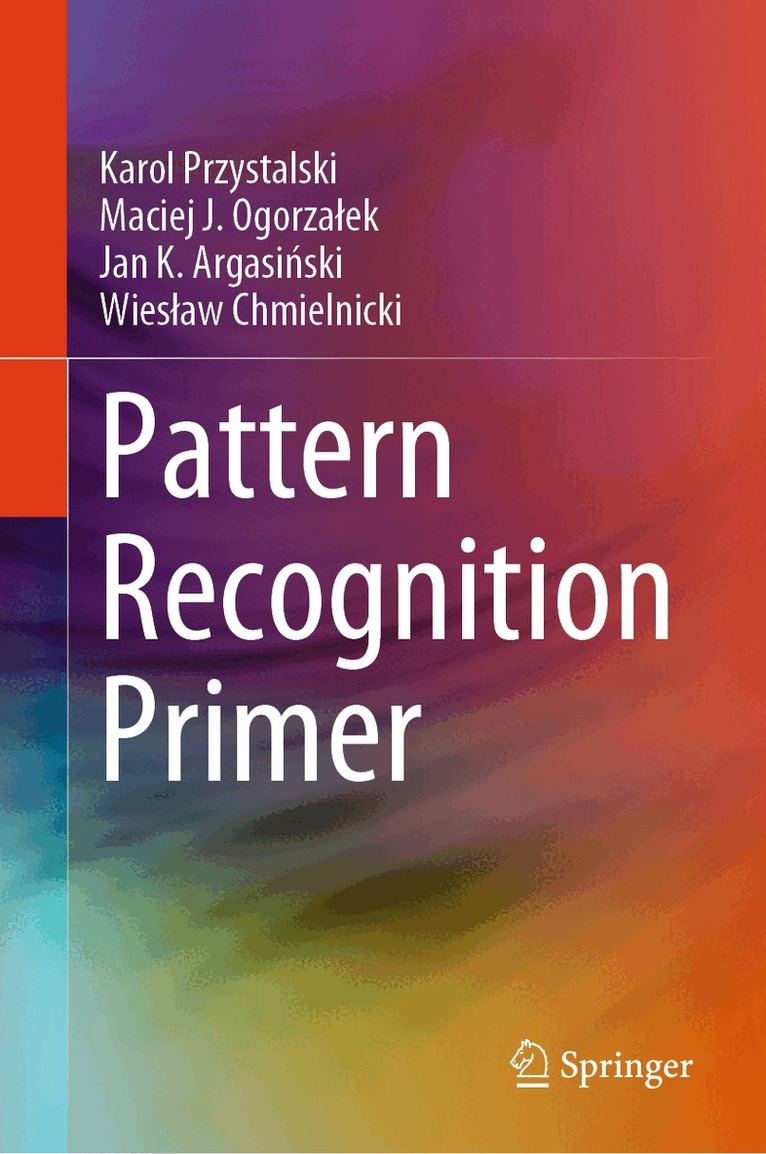
This textbook provides semester-length coverage of pattern recognition/classification, accessible to everyone who would like to understand how pattern recognition and machine learning works. It explores the most commonly used classification methods in an intelligible way. Unlike other books available for this course, this one explains from top to bottom each method with all needed details. Every method described is explained with examples in Python. The presentation is designed to be highly accessible to students from a variety of disciplines, with no experience in machine learning. Each chapter contains easy to understand code samples, as well as exercises to consolidate and test knowledge.
E-bok
Engelska1 367 kr
Läs direkt efter köp
This textbook provides semester-length coverage of pattern recognition/classification, accessible to everyone who would like to understand how pattern recognition and machine learning works. It explores the most commonly used classification methods in an intelligible way. Unlike other books available for this course, this one explains from top to bottom each method with all needed details. Every method described is explained with examples in Python. The presentation is designed to be highly accessible to students from a variety of disciplines, with no experience in machine learning. Each chapter contains easy to understand code samples, as well as exercises to consolidate and test knowledge.
Del 22 - World Scientific Series on Nonlinear Science Series A
Chaos And Complexity In Nonlinear Electronic Circuits
Inbunden, Engelska, 1997
1 312 kr
Skickas inom 5-8 vardagar
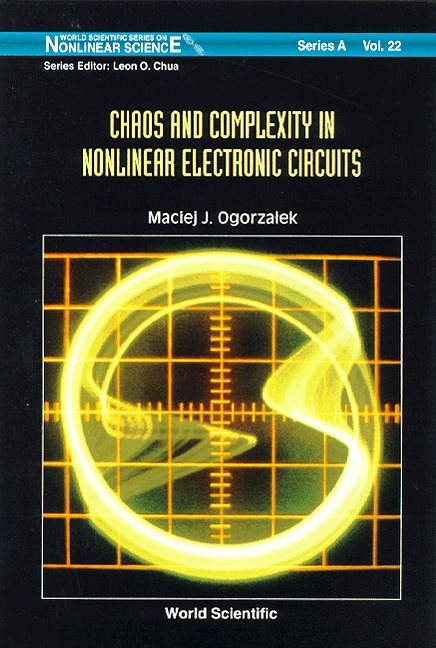
The basic procedures for designing and analysing electronic systems are based largely on the assumptions of linear behavior of the system. Nonlinearities inherent in all real applications very often cause unexpected and even strange behavior. This book presents an electronic engineer's perspective on chaos and complex behavior. It starts from basic mathematical notions which enable understanding of the observed phenomena, and guides the reader through the methodology and tools used in the laboratory and numerical experiments to interpretation and explanation of basic mechanisms. On typical circuit examples, it shows how the theoretical and empirical developments can be used in practice. Attention is drawn to applications of chaotic circuits as noise generators and the possible use of synchronized chaotic systems in information transmission and encryption. Chaos control is considered as a new, emerging area where electronic equipment and chaos theory could turn vital in biomedical and engineering issues.