Malcolm Crook – författare
Visar alla böcker från författaren Malcolm Crook. Handla med fri frakt och snabb leverans.
7 produkter
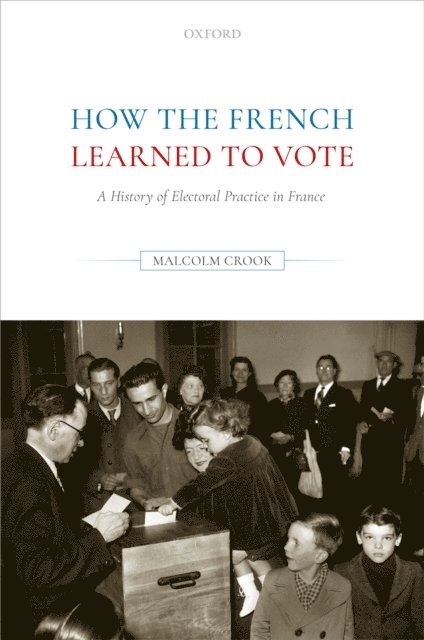
How the French Learned to Vote
A History of Electoral Practice in France
E-bok, 2021
1454 kr
Lägg i varukorg
The right to vote in regular elections is a fundamental principle of democracy. It constitutes a familiar civic ritual all over the world, yet few participants are probably aware of its long and controversial history. This was especially true of France, the country chosen for this study, which …
How the French Learned to Vote
A History of Electoral Practice in France
E-bok, 2021
1454 kr
Lägg i varukorg
The right to vote in regular elections is a fundamental principle of democracy. It constitutes a familiar civic ritual all over the world, yet few participants are probably aware of its long and controversial history. This was especially true of France, the country chosen for this study, which …
How the French Learned to Vote
A History of Electoral Practice in France
Inbunden, 2021
1576 kr
Lägg i varukorg
The right to vote in regular elections is a fundamental principle of democracy. It constitutes a familiar civic ritual all over the world, yet few participants are probably aware of its long and controversial history. This was especially true of France, the country chosen for this study, which …
Elections in the French Revolution
An Apprenticeship in Democracy, 1789-1799
E-bok, 1996
722 kr
Lägg i varukorg
Elections in the French Revolution
An Apprenticeship in Democracy, 1789-1799
Inbunden, 1996
1677 kr
Lägg i varukorg
This book explores the vital but neglected issue of elections in the French Revolution. Based on extensive research in different regions of France, it is the only general survey to examine the full range of local and national contests, from the Estates General to the advent of Napoleon. Focusing on …
Elections in the French Revolution
An Apprenticeship in Democracy, 1789-1799
Häftad, 2002
737 kr
Lägg i varukorg
This book explores the vital but neglected issue of elections in the French Revolution. Based on extensive research in different regions of France, it is the only general survey to examine the full range of local and national contests, from the Estates General to the advent of Napoleon. Focusing on …
Napoleon Comes to Power
Democracy and Dictatorship in Revolutionary France, 1795-1804
Häftad, 1998
179 kr
Tillfälligt slut
This latest addition to the Past in Perspective Series traces the rise to power of Napoleon and also examines the events before and after the coup d'etat of 1799. Recent research has suggested that the Bonapartist dictatorship was by no means a foregone conclusion, the inevitable outcome of a …