Mamma Andersson – författare
Visar alla böcker från författaren Mamma Andersson. Handla med fri frakt och snabb leverans.
2 produkter
2 produkter
376 kr
Skickas inom 5-8 vardagar
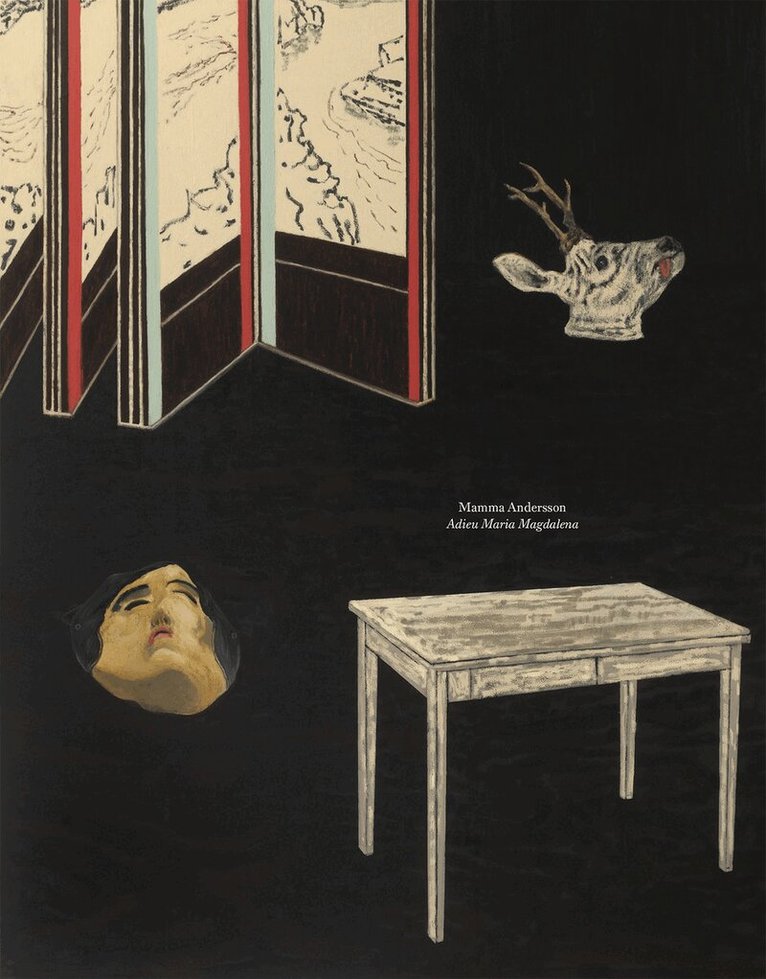
Adieu Maria Magdalena considers recurring themes and motifs from Mamma Andersson’s oeuvre and suggests complex and potent feelings related to loss. Finding inspiration in work by other Scandinavian painters, including Carl Fredrik Hill and Vilhelm Hammershøi, Andersson explores the tension between interiority and the external world, imbuing her compositions with a haunting stillness and introspection. Departing from earlier oil-on-board paintings, the paintings in this body of work primarily utilize canvas, a support that allows Andersson to create at a larger scale and expand compositional possibilities within the pictorial space. Employing trompe l’oeil, the artist produces a subtly claustrophobic effect in domestic spaces by layering uncanny interior scenes taken from her own home and her imagination, an interplay of surfaces and imagery that probes the nature of representation. This catalogue, published on the occasion of the artist’s first solo exhibition in Paris, at David Zwirner, and a companion to three other volumes of recent work, marks a metaphorical farewell to a previous phase in her life. The author Karl Ove Knausgaard, a frequent collaborator of Andersson’s, provides an accompanying text, offering an oneiric perspective on the artist’s evocation of layered dimensions.
308 kr
Skickas inom 5-8 vardagar
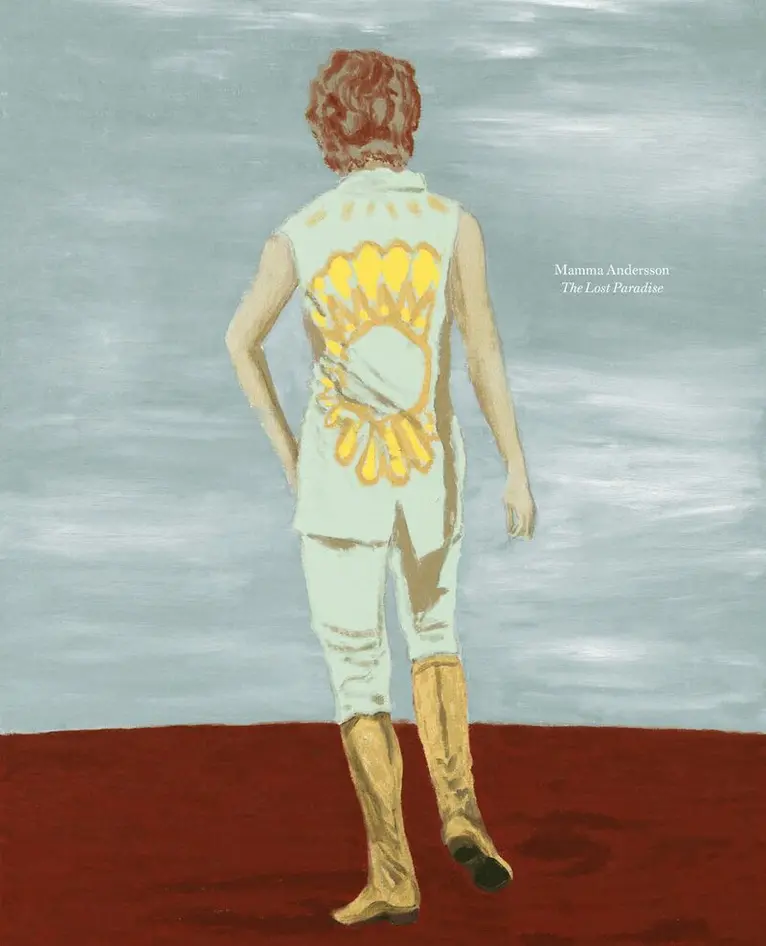
Andersson’s works embody a new genre of landscape painting that recalls late nineteenth-century romanticism while also embracing a contemporary interest in layered, psychological compositions. Her panoramic scenes draw inspiration from a wide range of archival photographic source materials, filmic imagery, theater sets, and period interiors, as well as the sparse topography of northern Sweden, where she grew up. The paintings utilize a selection of motifs from throughout her career: barren branches and thick-barked pine trees, domestic interiors, horses, and young women. Resembling still lifes, they further a tradition of quiet, dreamlike domestic scenes by Scandinavian artists such as Vilhelm Hammershøi (1864–1916) and Edvard Munch (1863–1944). Part of a self-conscious effort to capture an experience rather than a specific event, the compositions are freer and more abstract.Splendid color reproductions bring the textured brushstrokes, loose washes, and stark graphic lines to life on the page. The book also features a new essay by critically acclaimed author Karl Ove Knausgaard. The Lost Paradise is published on the occasion of an eponymous exhibition presented at David Zwirner, New York, in 2020.