Manuela Martini – författare
2 278 kr
Skickas inom 3-6 vardagar
284 kr
Läs direkt efter köp
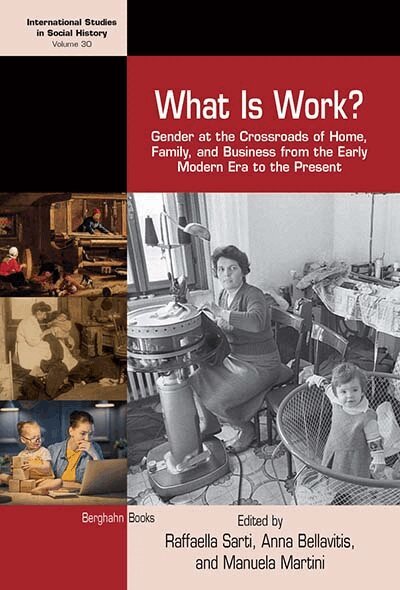
Every society throughout history has defined what counts as work and what doesn’t. And more often than not, those lines of demarcation are inextricable from considerations of gender. What Is Work? offers a multi-disciplinary approach to understanding labor within the highly gendered realm of household economies. Drawing from scholarship on gender history, economic sociology, family history, civil law, and feminist economics, these essays explore the changing and often contested boundaries between what was and is considered work in different Euro-American contexts over several centuries, with an eye to the ambiguities and biases that have shaped mainstream conceptions of work across all social sectors.
What is Work?
Gender at the Crossroads of Home, Family, and Business from the Early Modern Era to the Present
521 kr
Skickas inom 3-6 vardagar
2 100 kr
Skickas inom 5-8 vardagar
1 671 kr
Skickas inom 10-15 vardagar
2 110 kr
Läs direkt efter köp
1 671 kr
Skickas inom 10-15 vardagar
1 893 kr
Skickas inom 10-15 vardagar
2 366 kr
Läs direkt efter köp
This book explores the global development of the production and trade of silk and related industries from a historical perspective. From the sixteenth to the twentieth century, it takes long-term movements and global dynamics into account. Covering a wide geographical area, including East-Asia, Northern and Southern Europe, and North-America, the respective contributions examine economic activities related to silk production, silk processing, trading and consumption of silk and silk fabrics, while also highlighting diverse paths of industrialization and economic development.
The book is divided into three parts, the first of which features contributions on silk markets and trade, covering topics such as auction sales and Sino-European trade. The second part addresses issues of work organization, institutional developments and the gendered division of labour, discussing topics such as systems of home-based and factory production and the organization of quality control. In turn, the third part highlights technological innovations and knowledge transfer. This book appeals to scholars and students of economic history who are interested in a better understanding of the key features and patterns in the development of the silk industry and trade and, more widely, in the global economic history of the early modern and modern periods.
43 kr
Läs direkt efter köp
44 kr
Läs direkt efter köp
43 kr
Läs direkt efter köp
55 kr
Läs direkt efter köp
42 kr
Läs direkt efter köp
42 kr
Läs direkt efter köp
48 kr
Läs direkt efter köp
48 kr
Läs direkt efter köp