Marc Henrard – författare
Visar alla böcker från författaren Marc Henrard. Handla med fri frakt och snabb leverans.
2 produkter
2 produkter
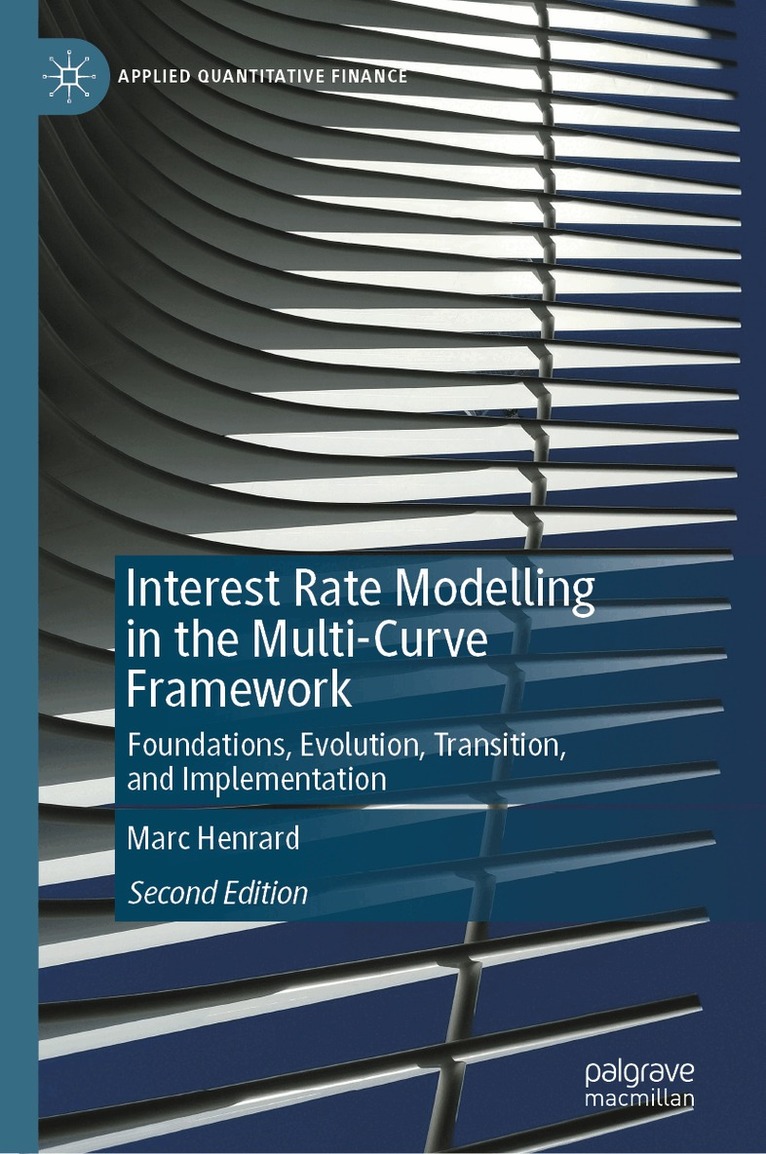
Interest Rate Modelling in the Multi-Curve Framework
Foundations, Evolution, Transition, and Implementation
Inbunden, Engelska, 2026
863 kr
Kommande
A new standard in interest rate modelling, called the multi-curve framework, emerged after the financial crisis. The framework covers two important market features: the collateralisation of derivative trades and the spread between different rate benchmarks. This book starts from the collateral mechanisms and builds the full framework from the foundations through all the technical and financial details. It kicks off with the collateral discounting in all its variants: domestic cash, foreign cash, or other assets and then introduces the different benchmarks and their associated spreads. Following the discontinuation of certain benchmarks, part of the book is dedicated to the transition and the emergence of the overnight benchmark dominance in certain currencies. Based on the theoretical framework of the first chapters, the important curve calibration mechanism is analysed in detail. Many instruments are investigated with all their practical peculiarities. Most of the book is dedicated to the understanding of the “static” interest rate curves. The book’s last part deals with the building blocks of any dynamic model explaining their future behaviour and apply some of those models to the most liquid instruments. Based on more than 25 years of experience as a trader and quantitative analyst in the related markets, the author includes many details on implementation in libraries and using the framework in risk management, which will be of interest to traders, risk managers, quantitative analysts, and actuaries alongside professors, researchers, and students of banking, insurance, risk management, and quantitative finance.
362 kr
Skickas inom 5-8 vardagar
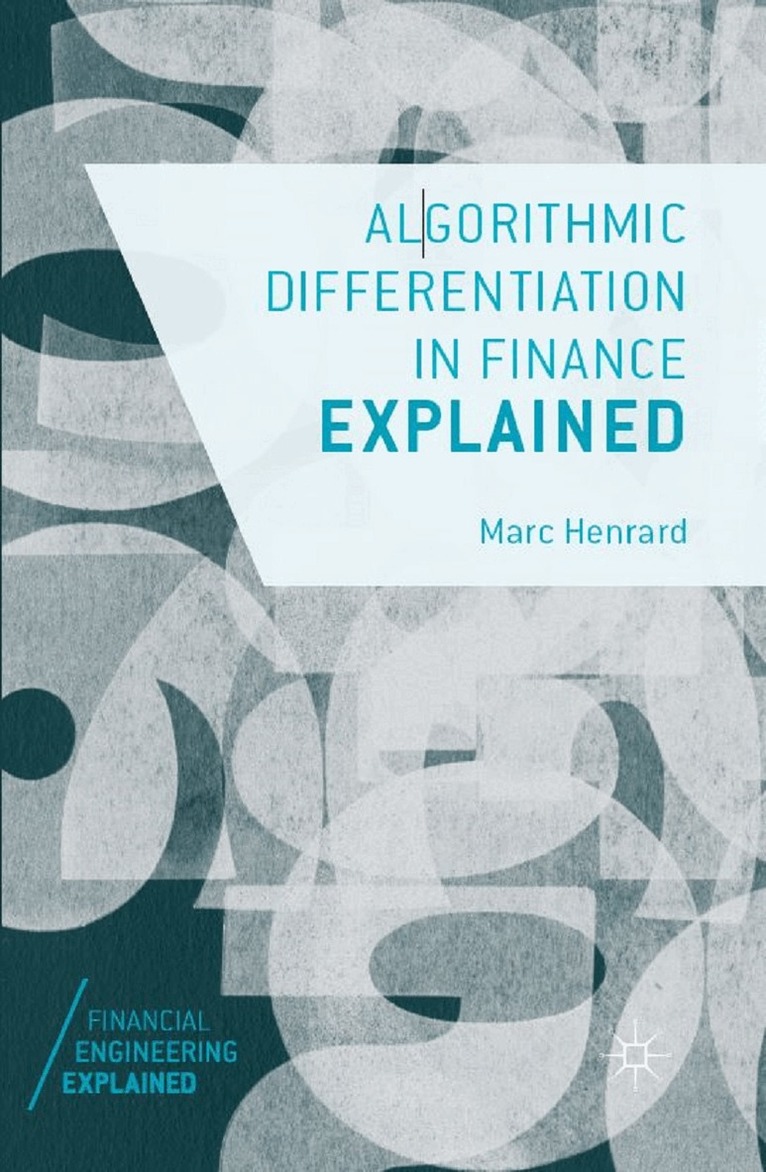
This book provides the first practical guide to the function and implementation of algorithmic differentiation in finance. Written in a highly accessible way, Algorithmic Differentiation Explained will take readers through all the major applications of AD in the derivatives setting with a focus on implementation.Algorithmic Differentiation (AD) has been popular in engineering and computer science, in areas such as fluid dynamics and data assimilation for many years. Over the last decade, it has been increasingly (and successfully) applied to financial risk management, where it provides an efficient way to obtain financial instrument price derivatives with respect to the data inputs. Calculating derivatives exposure across a portfolio is no simple task. It requires many complex calculations and a large amount of computer power, which in prohibitively expensive and can be time consuming. Algorithmic differentiation techniques can be very successfully in computing Greeks and sensitivities of a portfolio with machine precision. Written by a leading practitioner who works and programmes AD, it offers a practical analysis of all the major applications of AD in the derivatives setting and guides the reader towards implementation. Open source code of the examples is provided with the book, with which readers can experiment and perform their own test scenarios without writing the related code themselves.