Marc Luy – författare
Visar alla böcker från författaren Marc Luy. Handla med fri frakt och snabb leverans.
5 produkter
5 produkter
Del 18 - European Studies of Population
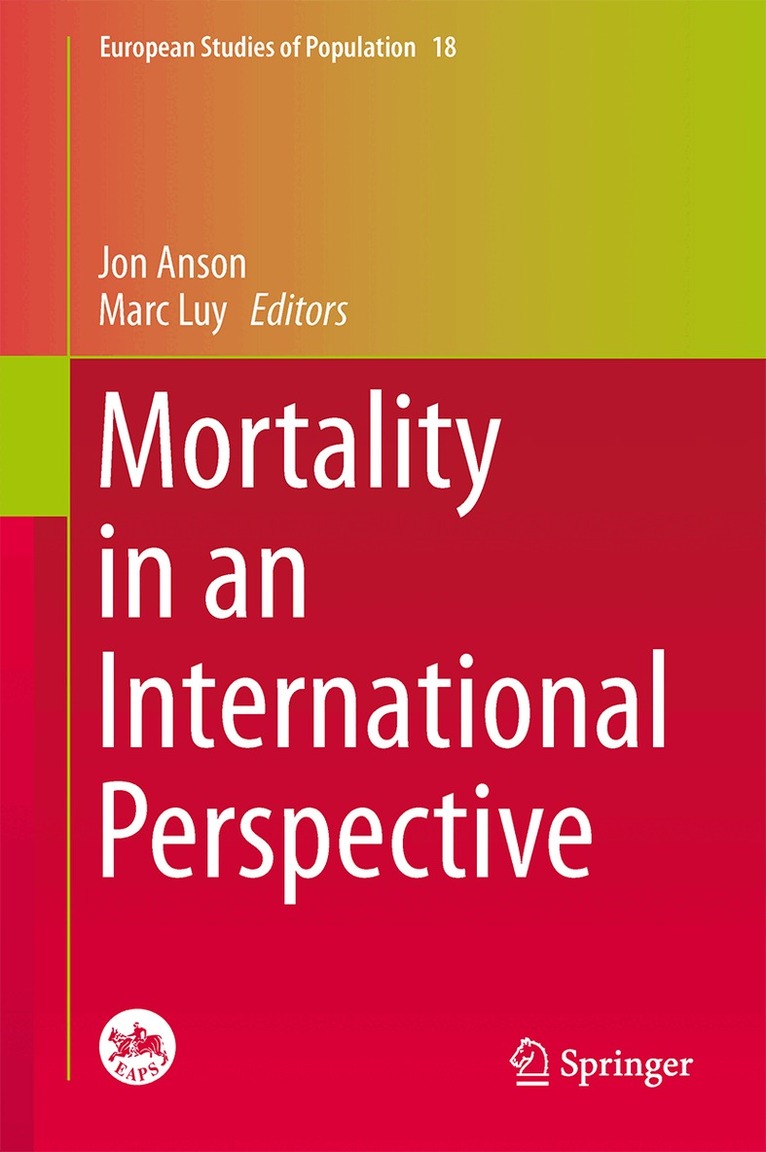
Mortality in an International Perspective
Inbunden, Engelska, 2014
1 121 kr
Skickas inom 10-15 vardagar
This volume presents a state of the art coverage of the measurement and evolution of mortality over time. It describes in great detail the changes in the cause patterns of mortality, the changes in mortality patterns at different ages, and specific analyses of mortality in particular countries. Derived from a meeting of the European Working Group on Health, Morbidity and Mortality held at the Vienna Institute of Demography, September 2011, it presents a cross-section of the work and concerns of mortality researchers across Europe, ranging from London and Madrid in the west to Moscow in the east, with a few additions from further afield. Although most of the papers focus on a particular population, the range of the papers is broad; taken together they present an inter-disciplinary cross-section of this multi-faceted field. Coverage includes estimating life expectancy in small areas, with an application to recent changes in US counties; socioeconomic determinants of mortality in Europeusing the latest available data and short-term forecasts; predicting mortality from profiles of biological risk and performance measures of functioning; infant mortality measurement and rate of progress on international commitment using evidence from Argentina; avoidable factors contributing to maternal deaths in Turkey; changes in mortality at older ages: the case of Spain (1975- 2006); variable scales of avoidable mortality within the Russian population; long-term mortality decline in East Asia, and much more. Perspectives in Mortality Research will serve as a valuable resource for professionals and students in sociology, demography, public health and personal finance.
E-bok
PDF, Engelska, 20141 408 kr
Läs direkt efter köp
This volume presents a state of the art coverage of the measurement and evolution of mortality over time. It describes in great detail the changes in the cause patterns of mortality, the changes in mortality patterns at different ages, and specific analyses of mortality in particular countries. Derived from a meeting of the European Working Group on Health, Morbidity and Mortality held at the Vienna Institute of Demography, September 2011, it presents a cross-section of the work and concerns of mortality researchers across Europe, ranging from London and Madrid in the west to Moscow in the east, with a few additions from further afield. Although most of the papers focus on a particular population, the range of the papers is broad; taken together they present an inter-disciplinary cross-section of this multi-faceted field. Coverage includes estimating life expectancy in small areas, with an application to recent changes in US counties; socioeconomic determinants of mortality in Europeusing the latest available data and short-term forecasts; predicting mortality from profiles of biological risk and performance measures of functioning; infant mortality measurement and rate of progress on international commitment using evidence from Argentina; avoidable factors contributing to maternal deaths in Turkey; changes in mortality at older ages: the case of Spain (1975- 2006); variable scales of avoidable mortality within the Russian population; long-term mortality decline in East Asia, and much more. Perspectives in Mortality Research will serve as a valuable resource for professionals and students in sociology, demography, public health and personal finance.
Häftad, Engelska, 2016
1 430 kr
Skickas inom 5-8 vardagar
This volume presents a state of the art coverage of the measurement and evolution of mortality over time. It describes in great detail the changes in the cause patterns of mortality, the changes in mortality patterns at different ages, and specific analyses of mortality in particular countries. Derived from a meeting of the European Working Group on Health, Morbidity and Mortality held at the Vienna Institute of Demography, September 2011, it presents a cross-section of the work and concerns of mortality researchers across Europe, ranging from London and Madrid in the west to Moscow in the east, with a few additions from further afield. Although most of the papers focus on a particular population, the range of the papers is broad; taken together they present an inter-disciplinary cross-section of this multi-faceted field. Coverage includes estimating life expectancy in small areas, with an application to recent changes in US counties; socioeconomic determinants of mortality in Europeusing the latest available data and short-term forecasts; predicting mortality from profiles of biological risk and performance measures of functioning; infant mortality measurement and rate of progress on international commitment using evidence from Argentina; avoidable factors contributing to maternal deaths in Turkey; changes in mortality at older ages: the case of Spain (1975- 2006); variable scales of avoidable mortality within the Russian population; long-term mortality decline in East Asia, and much more. Perspectives in Mortality Research will serve as a valuable resource for professionals and students in sociology, demography, public health and personal finance.
E-bok
PDF, Tyska, 2009509 kr
Läs direkt efter köp
Insa Cassens, Marc Luy, Rembrandt Scholz 1945 ging der Zweite Weltkrieg zu Ende, das besiegte Deutschland wurde unter den Besatzungsmächten USA, Großbritannien, Frankreich und der Sowjetunion auf- teilt. Zwei Blöcke entstanden: Die Integration der westlichen Besatzungszonen in die Gemeinschaft der Westmächte und die des östlichen Teils in das System der UdSSR fand im Jahr 1949 ihren Höhepunkt mit den Gründungen der Bundesre- blik Deutschland (BRD) und der Deutschen Demokratischen Republik (DDR). In der parlamentarischen Demokratie einerseits und der kommunistischen Volks- mokratie andererseits waren die Menschen in diesen zwei Staaten in den folgenden 60 Jahren gänzlich unterschiedlichen politischen, wirtschaftlichen und gesellschaft- chen Rahmenbedingungen ausgesetzt. Beim Mauerfall 1989 trafen so auch zwei Bevölkerungen aufeinander, die sich inzwischen bezüglich vieler demografischer, ökonomischer und sozialer Charakteristika deutlich unterschieden. Wie haben sich diese Unterschiede nach einer solchen gesellschaftspolitischen Umbruchsituation entwickelt? In welcher Form und mit welcher zeitlichen Verzögerung haben Anp- sungsprozesse zwischen den wiedervereinigten Staaten stattgefunden? Diese sp- nenden Forschungsfragen standen im Mittelpunkt eines Workshops, der gemeinsam vom Rostocker Zentrum zur Erforschung des Demografischen Wandels und der Deutschen Gesellschaft für Demographie im Rahmen der Statistischen Woche 2006 in Dresden organisiert wurde. Antworten und Ergebnisse sind nun im vorliegenden Buch zusammengestellt und stehen der interessierten Öffentlichkeit zur Verfügung.
Häftad, Tyska, 2009
715 kr
Skickas inom 10-15 vardagar