Margaret E Cooper – författare
Visar alla böcker från författaren Margaret E Cooper. Handla med fri frakt och snabb leverans.
4 produkter
4 produkter
1 643 kr
Kommande
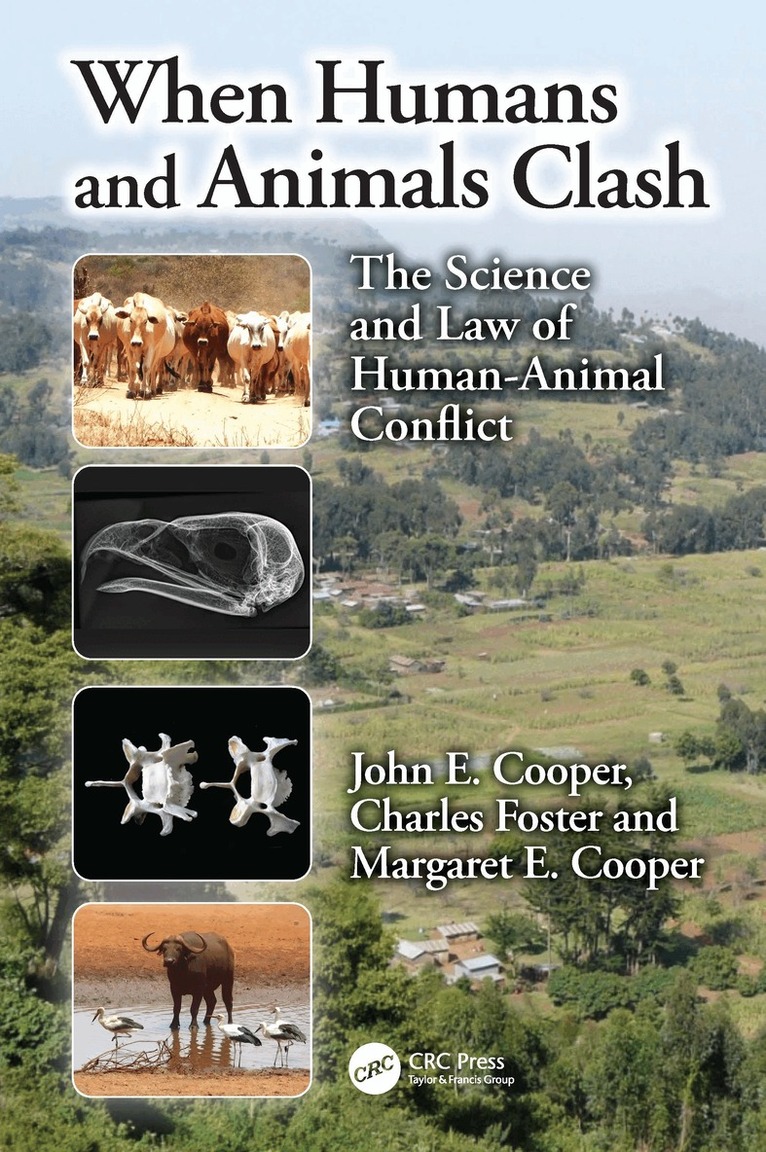
When humans and animals clash there is often massive physical, economic, political and sociological damage. And they increasingly do – as a result of creeping urbanisation, agriculture, climate change, war, political turbulence and economic migration.Since the causes of human-animal conflict are complex and multifactorial, any attempt to understand and mitigate it must be holistic and multidisciplinary. When Humans and Animals Clash: The Science and Law of Human-Animal Conflict is just that – a compendium of advice about how to identify the culprits, allocate blame and avoid wrongful allegations, address the causes, assess compensation and consider other forms of reparation, make legal and ethical judgments, and formulate policy. It draws on hard-won experience in many geographical and conceptual domains, including veterinary medicine and human medicine and pathology, law, and moral philosophy. It is bracingly practical, yet never loses sight of the big picture. This is the most comprehensive guide for all those confronted by human-animal conflict - practitioners of veterinary and human medicine, policy-makers, wildlife rangers, administrators and farmers.There is a vast, sprawling, fast-spawning literature on human-animal conflict: here it all is, distilled.
2 981 kr
Kommande
When humans and animals clash there is often massive physical, economic, political and sociological damage. And they increasingly do – as a result of creeping urbanisation, agriculture, climate change, war, political turbulence and economic migration.Since the causes of human-animal conflict are complex and multifactorial, any attempt to understand and mitigate it must be holistic and multidisciplinary. When Humans and Animals Clash: The Science and Law of Human-Animal Conflict is just that – a compendium of advice about how to identify the culprits, allocate blame and avoid wrongful allegations, address the causes, assess compensation and consider other forms of reparation, make legal and ethical judgments, and formulate policy. It draws on hard-won experience in many geographical and conceptual domains, including veterinary medicine and human medicine and pathology, law, and moral philosophy. It is bracingly practical, yet never loses sight of the big picture. This is the most comprehensive guide for all those confronted by human-animal conflict - practitioners of veterinary and human medicine, policy-makers, wildlife rangers, administrators and farmers.There is a vast, sprawling, fast-spawning literature on human-animal conflict: here it all is, distilled.
1 200 kr
Skickas inom 10-15 vardagar
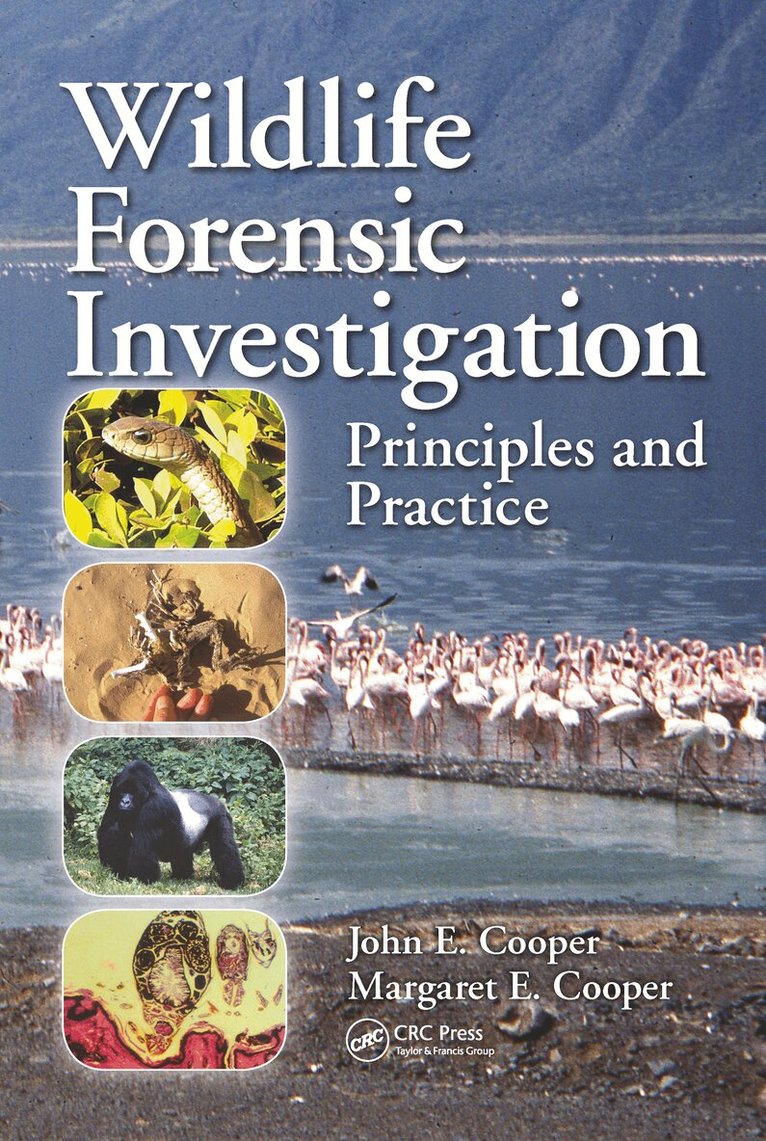
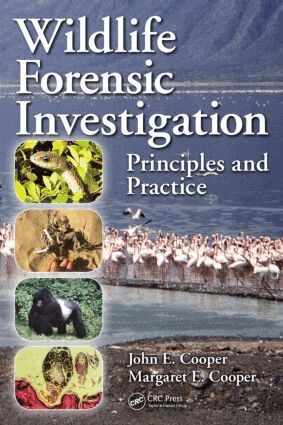
Wildlife forensics is the application of forensic science to the conservation and protection of non-domesticated animals, both in the wild and in captivity. Providing an in-depth introduction to this rapidly evolving field, Wildlife Forensic Investigation: Principles and Practice also chronicles aspects of the history of management, conservation, and environmental protection, with an emphasis on their global importance in the twenty-first century. The book examines the crucial role of wildlife forensic investigation with regard to live animals, dead animals and samples and covers national, regional, and international legislation. While the text particularly focuses on forensic science as it relates to wild animals, it also includes mention of plants and habitats because of their relevance to conservation. The book discusses animal welfare as well as the damage that can be inflicted on humans and property by wildlife.Offering access to sound evidence based on good science and obtained using the best available practices, the book is enhanced by case studies from experts who describe some of their own work. This resource is essential for those involved in a range of endeavours, including investigating wildlife crime, identifying animal remains, ascertaining the circumstances of death of wild species, and other legal proceedings and activities concerning wildlife.The forensic skills described in this book can be applied to a wide range of activities (not necessarily involving the legal process), including environmental impact assessments, insurance claims, governmental and other enquiries, checking of trading standards and the inspection of (for instance) pet-shops, animal boarding establishments, and zoological collections.The authors point out that one of the most important requirements of those persons involved in wildlife forensic work is to retain an open mind. Such personnel should also be conscious of new developments and evolving techniques and be able to anticipate situations where their investigative and scientific skills might be used to advantage—so-called "horizon scanning". Examples of these are given.
2 117 kr
Skickas inom 10-15 vardagar
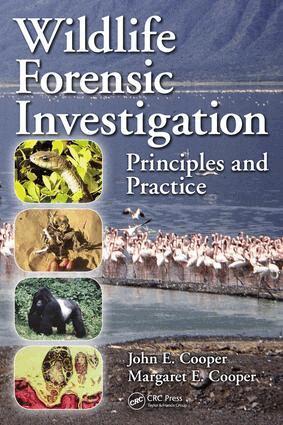
Wildlife forensics is the application of forensic science to the conservation and protection of non-domesticated animals, both in the wild and in captivity. Providing an in-depth introduction to this rapidly evolving field, Wildlife Forensic Investigation: Principles and Practice also chronicles aspects of the history of management, conservation, and environmental protection, with an emphasis on their global importance in the twenty-first century. The book examines the crucial role of wildlife forensic investigation with regard to live animals, dead animals and samples and covers national, regional, and international legislation. While the text particularly focuses on forensic science as it relates to wild animals, it also includes mention of plants and habitats because of their relevance to conservation. The book discusses animal welfare as well as the damage that can be inflicted on humans and property by wildlife.Offering access to sound evidence based on good science and obtained using the best available practices, the book is enhanced by case studies from experts who describe some of their own work. This resource is essential for those involved in a range of endeavours, including investigating wildlife crime, identifying animal remains, ascertaining the circumstances of death of wild species, and other legal proceedings and activities concerning wildlife.The forensic skills described in this book can be applied to a wide range of activities (not necessarily involving the legal process), including environmental impact assessments, insurance claims, governmental and other enquiries, checking of trading standards and the inspection of (for instance) pet-shops, animal boarding establishments, and zoological collections.The authors point out that one of the most important requirements of those persons involved in wildlife forensic work is to retain an open mind. Such personnel should also be conscious of new developments and evolving techniques and be able to anticipate situations where their investigative and scientific skills might be used to advantage—so-called "horizon scanning". Examples of these are given.