Margaret E. Keck - Böcker
Visar alla böcker från författaren Margaret E. Keck. Handla med fri frakt och snabb leverans.
6 produkter
6 produkter
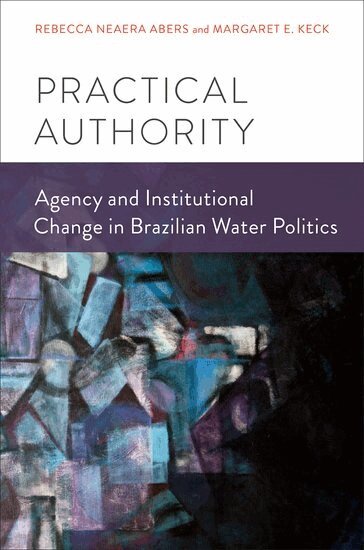
Practical Authority
Agency and Institutional Change in Brazilian Water Politics
Inbunden, Engelska, 2013
1 801 kr
Skickas inom 5-8 vardagar
New institutions don't come into being by themselves: They have to be organized. On the basis of research from a decade-long, multi-site study of efforts to transform freshwater management in Brazil, Practical Authority asks how new institutional arrangements established by law become operational in practice. The book explores how this happens by putting both agency and structures in motion. It looks at what actors in complex policy environments actually do to get new institutions off the ground. New configurations of authority in a policy area very often have to be produced relationally, on the ground, in practice. New organizations have to acquire problem-solving capabilities and recognition from others, what the authors call "practical authority." The story told here has a multiplicity of protagonists, many of whom are normally invisible in political studies, such as the state officials and university professors who struggled to move water reform forward. The book explores the interaction between their efforts to influence the design and passage of new legislation and the hard labor of creating the new water management organizations the laws called for. It follows three decades of law making at the national and state level and examines the creation of sixteen river basin committees throughout the country. By bringing together state and society actors around territorially specific problems, these committees were expected to promote a new vision of integrated water management. But none of the ones examined here followed the trajectory their organizers expected. Some adapted creatively to challenges, circumventing roadblocks encountered along the way; others never got off the ground. Rather than explain these differences on the basis of the varying conditions actors faced, the authors propose a focus on the process, and practice, of institution building.
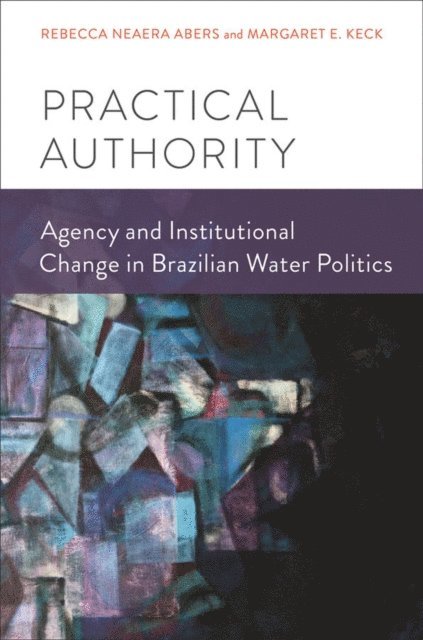
Practical Authority
Agency and Institutional Change in Brazilian Water Politics
Häftad, Engelska, 2013
572 kr
Skickas inom 5-8 vardagar
New institutions don't come into being by themselves: They have to be organized. On the basis of research from a decade-long, multi-site study of efforts to transform freshwater management in Brazil, Practical Authority asks how new institutional arrangements established by law become operational in practice. The book explores how this happens by putting both agency and structures in motion. It looks at what actors in complex policy environments actually do to get new institutions off the ground. New configurations of authority in a policy area very often have to be produced relationally, on the ground, in practice. New organizations have to acquire problem-solving capabilities and recognition from others, what the authors call "practical authority." The story told here has a multiplicity of protagonists, many of whom are normally invisible in political studies, such as the state officials and university professors who struggled to move water reform forward. The book explores the interaction between their efforts to influence the design and passage of new legislation and the hard labor of creating the new water management organizations the laws called for. It follows three decades of law making at the national and state level and examines the creation of sixteen river basin committees throughout the country. By bringing together state and society actors around territorially specific problems, these committees were expected to promote a new vision of integrated water management. But none of the ones examined here followed the trajectory their organizers expected. Some adapted creatively to challenges, circumventing roadblocks encountered along the way; others never got off the ground. Rather than explain these differences on the basis of the varying conditions actors faced, the authors propose a focus on the process, and practice, of institution building.
520 kr
Skickas inom 5-8 vardagar
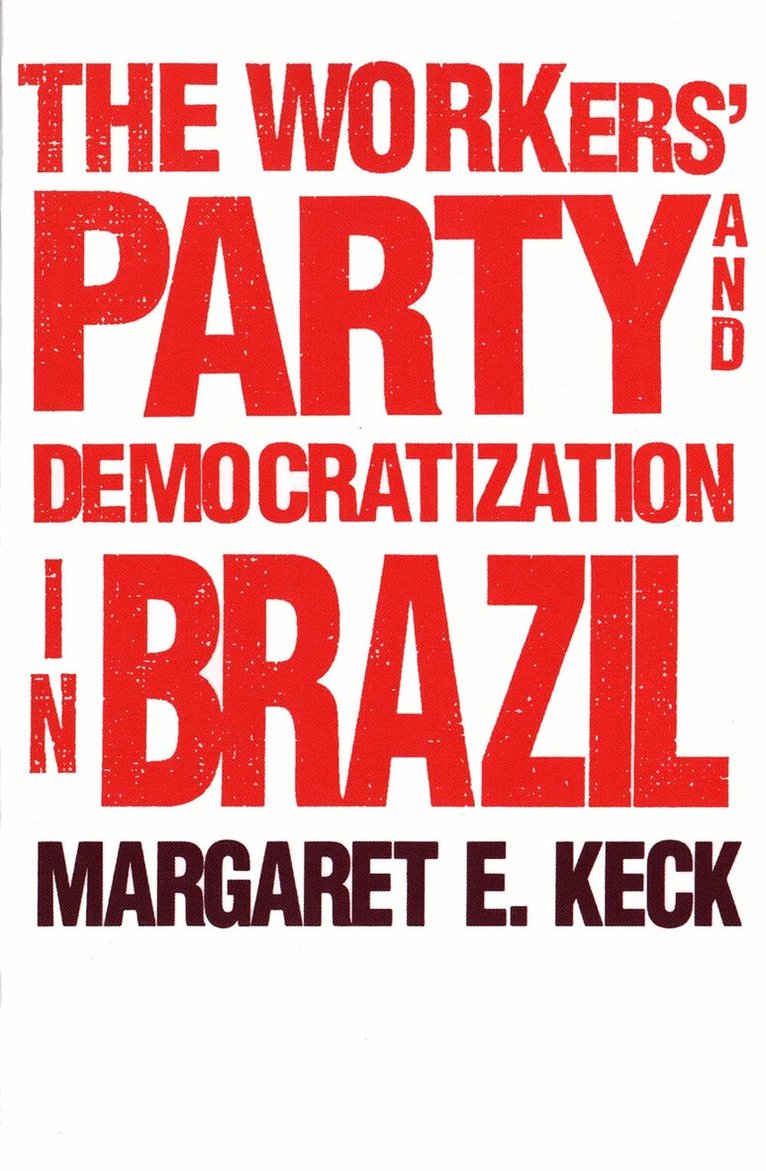
As the first legal mass party on the left in Brazil's recent history, the Workers' Party has both reflected and contributed to the country's transition from military rule to democracy. The party has posed an important challenge to traditionally elitist patterns of politics in Brazil; in 1989 its candidate came within six percentage points of winning the presidential election. The book—the first major study of the Workers' Party—sheds new light on significant changes in Brazilian political organization and society over the past two decades. Drawing on the written source material as well as on extensive interviews, Margaret E. Keck describes the origins and formative years of the Workers' Party. She places the birth of the party in the context of the burgeoning political opposition to military rule in Brazil, showing how the development of the party was both constrained and sustained by the process of democratization. Keck discusses the essential differences between the Workers' Party and all other Brazilian parties created during the transition: its ongoing relation with an increasingly well organized and combative sector of the labor movement; its appeal to such new popular movements as women's groups and environmental groups; and its unique internal structure, which is more elaborate and democratic than that of all the other parties. Her history of the Workers' Party and the labor movement with which it is associated not only clarifies political movements in Brazil and Latin America but also gives insights into attempts in any country to create democratic parties that represent the popular classes.
243 kr
Skickas inom 7-10 vardagar
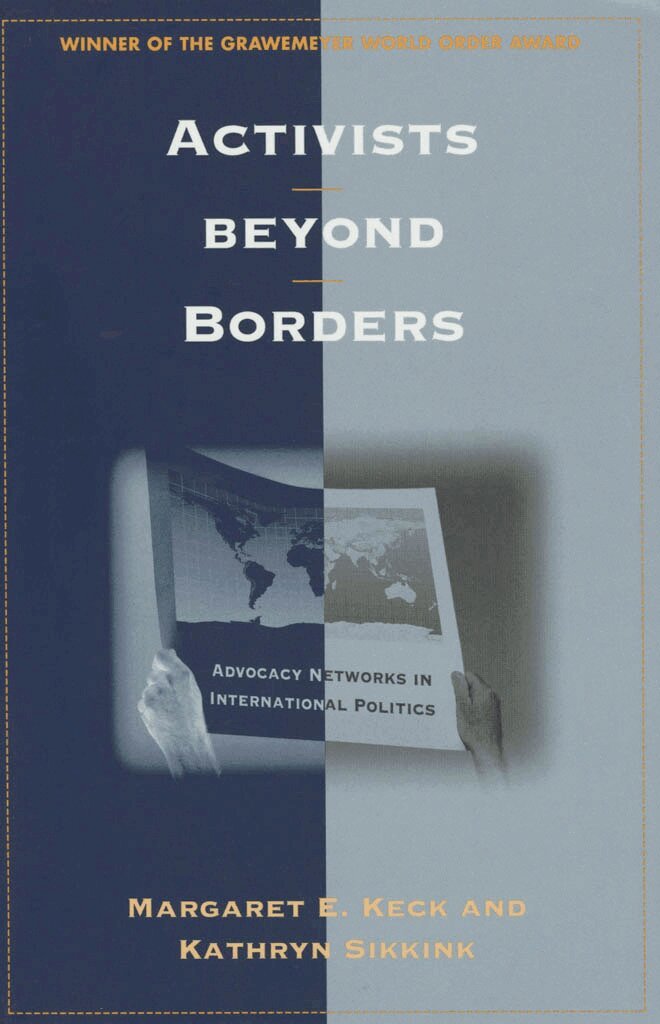
Valuable reading for anyone concerned with contemporary dynamics of social change. â• International AffairsMargaret E. Keck and Kathryn Sikkink examine a type of pressure group that has been largely ignored by political analysts: networks of activists that coalesce and operate across national frontiers. Their targets may be international organizations or the policies of particular states. Historical examples of such transborder alliances include anti-slavery and woman suffrage campaigns. In the past two decades, transnational activism has had a significant impact in human rights, especially in Latin America, and advocacy networks have strongly influenced environmental politics as well. The authors also examine the emergence of an international campaign around violence against women.
361 kr
Skickas inom 7-10 vardagar
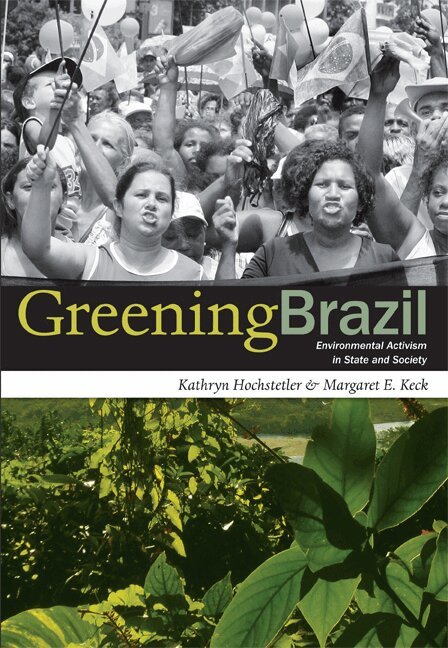
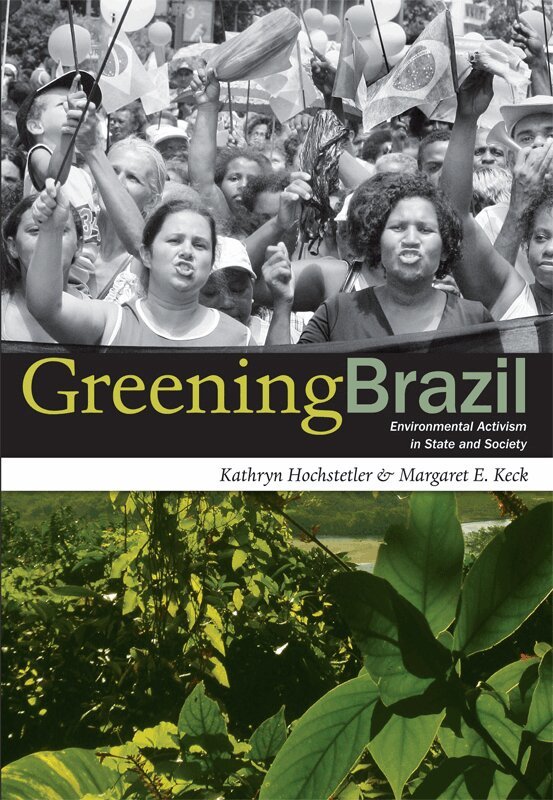
Greening Brazil challenges the claim that environmentalism came to Brazil from abroad. Two political scientists, Kathryn Hochstetler and Margaret E. Keck, retell the story of environmentalism in Brazil from the inside out, analyzing the extensive efforts within the country to save its natural environment, and the interplay of those efforts with transnational environmentalism. The authors trace Brazil’s complex environmental politics as they have unfolded over time, from their mid-twentieth-century conservationist beginnings to the contemporary development of a distinctive socio-environmentalism meant to address ecological destruction and social injustice simultaneously. Hochstetler and Keck argue that explanations of Brazilian environmentalism-and environmentalism in the global South generally-must take into account the way that domestic political processes shape environmental reform efforts. The authors present a multilevel analysis encompassing institutions and individuals within the government-at national, state, and local levels-as well as the activists, interest groups, and nongovernmental organizations that operate outside formal political channels. They emphasize the importance of networks linking committed actors in the government bureaucracy with activists in civil society. Portraying a gradual process marked by periods of rapid advance, Hochstetler and Keck show how political opportunities have arisen from major political transformations such as the transition to democracy and from critical events, including the well-publicized murders of environmental activists in 1988 and 2004. Rather than view foreign governments and organizations as the instigators of environmental policy change in Brazil, the authors point to their importance at key moments as sources of leverage and support.
1 240 kr
Skickas inom 7-10 vardagar
Greening Brazil challenges the claim that environmentalism came to Brazil from abroad. Two political scientists, Kathryn Hochstetler and Margaret E. Keck, retell the story of environmentalism in Brazil from the inside out, analyzing the extensive efforts within the country to save its natural environment, and the interplay of those efforts with transnational environmentalism. The authors trace Brazil’s complex environmental politics as they have unfolded over time, from their mid-twentieth-century conservationist beginnings to the contemporary development of a distinctive socio-environmentalism meant to address ecological destruction and social injustice simultaneously. Hochstetler and Keck argue that explanations of Brazilian environmentalism-and environmentalism in the global South generally-must take into account the way that domestic political processes shape environmental reform efforts. The authors present a multilevel analysis encompassing institutions and individuals within the government-at national, state, and local levels-as well as the activists, interest groups, and nongovernmental organizations that operate outside formal political channels. They emphasize the importance of networks linking committed actors in the government bureaucracy with activists in civil society. Portraying a gradual process marked by periods of rapid advance, Hochstetler and Keck show how political opportunities have arisen from major political transformations such as the transition to democracy and from critical events, including the well-publicized murders of environmental activists in 1988 and 2004. Rather than view foreign governments and organizations as the instigators of environmental policy change in Brazil, the authors point to their importance at key moments as sources of leverage and support.